Metabolic Nutrition Trends Worth Watching
Explore eight metabolic nutrition trends—from fiber and protein quality to glucose awareness, gut-health foods, and GLP-1 nutrition—with practical limits and shopping guidance.
By MetabolicFoods Editorial Team
A grocery cart built around sweetened yogurt, protein bars, flavored oatmeal, and wellness-branded drinks can look health-focused at first glance. A more useful question is whether those foods make it easier to build satisfying, nutrient-dense meals consistently.
That question sits behind many of the metabolic nutrition trends worth watching. Some reflect strong evidence about dietary patterns. Others are useful only in specific contexts, and a few become less helpful when marketing runs ahead of the science. Rather than ranking foods as “good” or “bad,” this guide looks at what each trend can contribute—and where its limits begin.
1. Nutrition Is Moving Beyond Calorie Counts
Calories describe energy, but they do not tell you how much protein, fiber, sodium, added sugar, or micronutrients a food provides. They also do not describe how a food fits into the rest of a meal.
A snack made from plain Greek yogurt, fruit, and nuts can have the same energy as a serving of candy while serving a very different nutritional role. That does not make calories irrelevant or candy forbidden. It shows why calorie totals work better as one piece of information than as a complete measure of food quality.
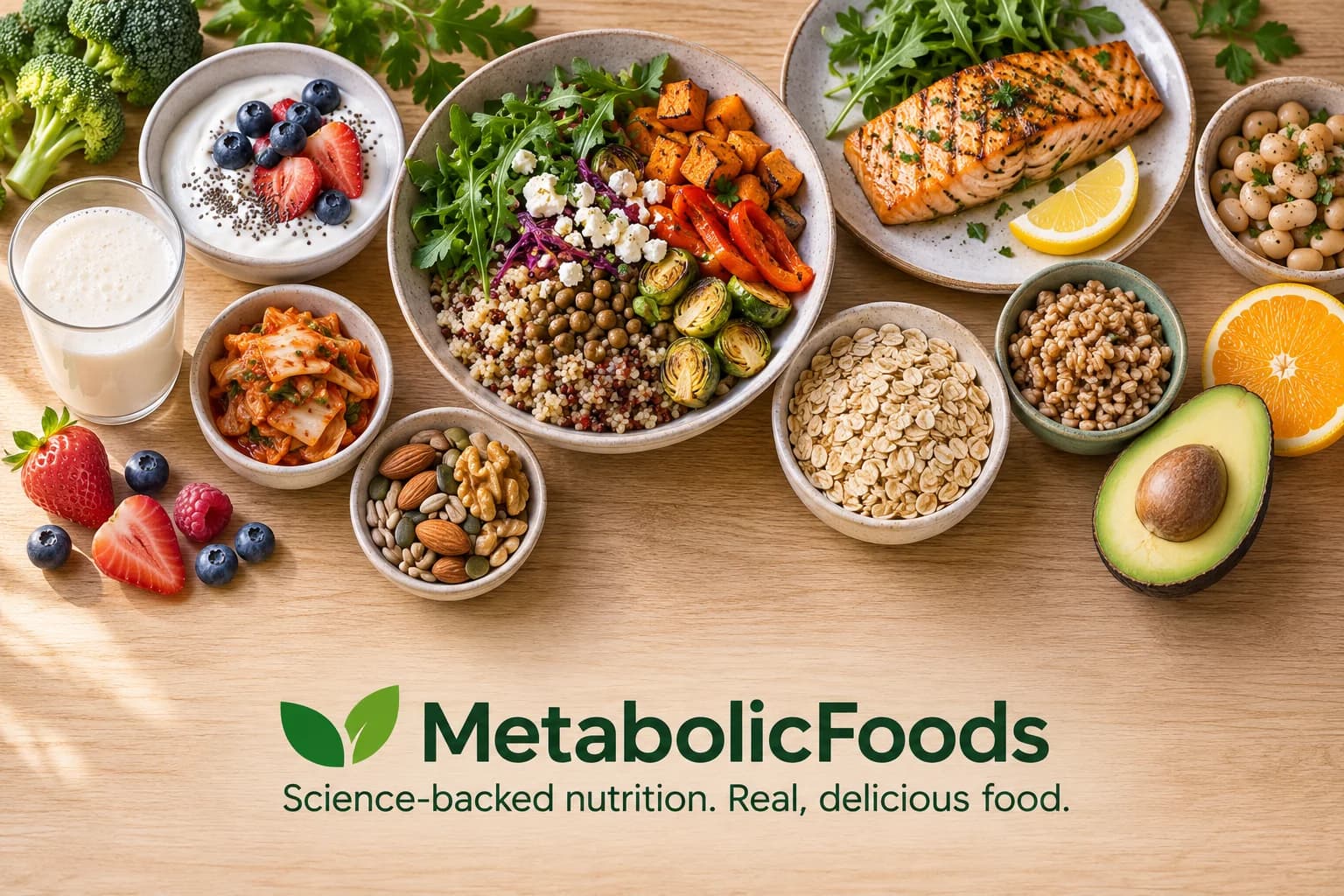
The practical shift is toward evaluating meals and dietary patterns. Protein foods, fiber-rich carbohydrates, vegetables or fruit, and flavor-building fats can work together in many combinations. Our balanced-plate example shows one flexible way to put those roles on a plate without counting every gram.
2. Fiber Is Becoming a More Visible Nutrition Target
Higher-fiber dietary patterns are associated with better cardiometabolic and digestive outcomes, but fiber is not a single uniform ingredient. Different fibers vary in viscosity, fermentability, and physiological effects. Beans, lentils, oats, fruit, vegetables, nuts, seeds, and whole grains also bring different nutrients and food structures.
That makes variety more useful than chasing the largest fiber number on one package. A realistic pattern might include oats or berries at breakfast, beans or lentils at lunch, vegetables at dinner, and nuts, seeds, or whole-grain foods where they fit.
Foods with added or isolated fiber can still be convenient. The label simply needs to be read in context. A cereal that provides whole grains, useful fiber, and modest added sugar may play a different role from a highly sweetened snack that contains a small amount of isolated fiber. Compare serving size, fiber, added sugar, sodium, and the ingredient list rather than relying on a “high fiber” message alone.
Most adults do not need to transform their intake overnight. If your current intake is low, increase fiber gradually and include adequate fluids. Our guide to how much fiber you need explains the standard intake targets and why individual tolerance matters.
3. Protein Is Being Judged by More Than One Number
High-protein claims now appear on cereals, pasta, snacks, coffee drinks, and desserts. Protein can support fullness and help preserve lean mass during energy-restricted weight loss, but a protein claim does not automatically make a product nutritionally stronger.
Start with the amount per realistic serving, then look at the source, the rest of the label, and the food’s intended role. A sweetened protein bar may be useful during travel, but it is not automatically a better everyday choice than eggs, Greek yogurt, tofu, fish, edamame, lentils, or beans.
Distribution across the day is another practical consideration. Some people find it easier to meet their needs by including a meaningful protein source at breakfast, lunch, and dinner instead of trying to make up most of the day’s intake at night. That is a flexible strategy, not a requirement that every meal hit one universal target. See our protein-per-meal guide for the evidence and its limits.
More protein is not always better. Very high intakes can crowd out fiber-rich foods, and bars or shakes can displace meals that provide a wider range of nutrients. Needs vary with body size, age, activity, health status, appetite, and goals.
4. Glucose Awareness Is Becoming More Nuanced
Interest in post-meal glucose has increased alongside low-glycemic products and continuous glucose monitors. The useful part of this trend is learning that carbohydrate-containing foods differ and that the full meal matters. The unhelpful extreme is treating every temporary rise in glucose as damage or trying to flatten glucose at any nutritional cost.
Soda, white bread, oats, black beans, sweet potatoes, and berries all contain carbohydrate, but they differ in fiber, protein, water, micronutrients, preparation, and typical portion size. Pairing a carbohydrate source with protein, fat, or fiber can change the glucose response, but it does not erase the carbohydrate and does not guarantee the same response in every person.
For everyday meals, build around higher-fiber carbohydrate sources more often, include a useful protein source, and add non-starchy vegetables when they fit. Think overnight oats with chia and yogurt, a lentil grain bowl with roasted vegetables, or tacos with beans, fish, cabbage, and avocado.
The glycemic index provides controlled information about individual carbohydrate foods, but it does not fully predict a person’s response or account for the entire meal. A food’s GI is context, not a moral score.
CGM is an established clinical tool for many people with diabetes, with recommendations depending on diabetes type, medication use, and individual circumstances. For people without diabetes, a consumer CGM can generate interesting data, but one short experiment does not diagnose a condition or reveal a universally “correct” diet. Unexpected results, symptoms, or concerns about glucose belong with a qualified clinician rather than an app-based food ranking.
5. Lower Added Sugar Is Replacing Blanket Sugar Avoidance
Added sugars can accumulate quickly in drinks, breakfast foods, flavored dairy products, sauces, and snacks. The Nutrition Facts label lists added sugars separately, making it easier to compare products that serve the same purpose.
Reducing added sugar does not require avoiding fruit, plain dairy, or every sweet-tasting food. Whole fruit provides fiber, water, vitamins, and plant compounds. Plain yogurt can be paired with berries, cinnamon, or nuts without turning sweetness into a pass-or-fail test.
Sugar substitutes can help some people reduce sugar-sweetened drinks or foods, but they are not a metabolic cure and they are not tolerated equally. Some sugar alcohols and added fibers can cause digestive symptoms, especially in larger amounts. Use our added-sugar label guide and sugar-alcohol guide to evaluate the actual product rather than the “zero sugar” claim alone.
6. Gut Health Is Shifting Toward Food Variety
Gut-health marketing often centers on one probiotic strain, supplement, or “superfood.” The evidence is more complicated. Diet can influence the gut microbiome, but responses vary, and no single food is guaranteed to produce a particular microbiome profile or health outcome.
A food-first approach can still be practical. Include a variety of tolerated plant foods—such as beans, lentils, oats, fruit, vegetables, nuts, seeds, and whole grains—rather than forcing a special ingredient into every meal. Foods containing prebiotic fibers, including onions, garlic, oats, legumes, asparagus, and slightly green bananas, can fit within that variety.
Fermented foods such as yogurt, kefir, kimchi, and sauerkraut may also fit. A small randomized trial found that a high-fermented-food diet increased microbiome diversity and reduced several inflammatory markers, but one trial does not establish a required daily dose or prove that every fermented product has the same effect. Read our guide to fermented foods and gut health for the study details and limitations.
If you currently eat little fiber, increase it gradually. People with digestive conditions or highly restrictive diets may need individualized guidance instead of broad microbiome rules.
7. Functional Foods Are Facing a Higher Standard
“Functional food” is widely used in nutrition writing for foods positioned as offering a benefit beyond basic nutrition, but it is not a standalone FDA regulatory category. Products still need to be evaluated through the claims, labels, and legal categories that actually apply to them.
Foods with added fiber, plant sterols, probiotics, omega-3 fats, or extra protein can be useful when they solve a real problem. A shelf-stable bean soup, lower-sugar yogurt with live cultures, or high-fiber frozen meal may make a busy day easier. The added feature should not distract from serving size, sodium, saturated fat, added sugar, or the overall ingredient list.
Terms such as “protein” and “high fiber” may be regulated nutrient-content claims when used under defined conditions. Other front-label language can be broader or less informative. Even when an individual statement is permitted, it does not summarize the whole product. Our guide to functional foods explains how to separate a studied ingredient from a package that simply looks scientific.
8. GLP-1 Nutrition Is Prioritizing Adequacy, Not More Restriction
As GLP-1 medications have become more widely discussed, nutrition guidance has increasingly focused on meeting nutrient needs when appetite and food intake fall. A 2025 joint advisory from four nutrition and obesity organizations emphasizes managing gastrointestinal side effects, preventing nutrient deficiencies, and protecting muscle and bone through appropriate nutrition and resistance training.
This is not a universal GLP-1 diet, and medication decisions belong with a qualified clinician. In practice, someone who becomes full quickly may benefit from smaller meals that prioritize a tolerated protein source, nutrient-dense foods, hydration, and fiber adjusted to comfort. Yogurt, eggs, fish, tofu, soups, smoothies, oatmeal, beans, and soft cooked vegetables may be easier on some days, but tolerance is individual.
Protein alone is not a complete muscle-preservation plan, and simply adding more restriction can worsen nutritional gaps. People experiencing persistent vomiting, severe abdominal pain, inability to keep fluids down, or other concerning symptoms should contact their medical team promptly. Our GLP-1-friendly protein guide offers more detailed food ideas and safety context.
Turn Nutrition Trends Into a Better Grocery Routine
Trends are useful when they improve decisions, not when they create a new set of food rules. Start with a short grocery structure: choose two or three protein staples, two fiber-rich carbohydrate sources, several vegetables or fruits, and one practical backup meal or snack.
At home, build through addition. Add beans to soup, vegetables to pasta, berries to breakfast, or a protein source to an afternoon snack. Compare similar packaged foods using the serving size, Nutrition Facts, and ingredient list. Our healthy grocery guide turns that approach into a reusable shopping list.
The strongest trend is not a single ingredient, device, or supplement. It is choosing foods you enjoy, can afford, tolerate, and prepare often enough to support a varied eating pattern. Use the science to ask better questions, then keep the routine simple enough to repeat.
Sources
- Added Sugars on the Nutrition Facts LabelU.S. Food and Drug AdministrationVerified
- Nutrigenomics approaches to functional foodsJournal of the American Dietetic AssociationVerified
- Diabetes Technology: Standards of Care in Diabetes—2026Diabetes CareVerified
- Carbohydrate quality and human health: a series of systematic reviews and meta-analysesThe LancetJanuary 10, 2019Verified
- Nutritional priorities to support GLP-1 therapy for obesity: a joint Advisory from the American College of Lifestyle Medicine, the American Society for Nutrition, the Obesity Medicine Association, and The Obesity SocietyAmerican Journal of Clinical NutritionMay 30, 2025Verified
- Effect of short- and long-term protein consumption on appetite and appetite-regulating gastrointestinal hormones, a systematic review and meta-analysis of randomized controlled trialsPhysiology & BehaviorAugust 5, 2020Verified
- Gut-microbiota-targeted diets modulate human immune statusCellJuly 12, 2021Verified
- Label Claims for Conventional Foods and Dietary SupplementsU.S. Food and Drug AdministrationVerified
- Effects of energy-restricted high-protein, low-fat compared with standard-protein, low-fat diets: a meta-analysis of randomized controlled trialsThe American Journal of Clinical NutritionDecember 1, 2012Verified
- Mixed meal ingestion diminishes glucose excursion in comparison with glucose ingestion via several adaptive mechanisms in people with and without type 2 diabetesDiabetes, Obesity and MetabolismVerified
Continue reading
Healthy Grocery Shopping Guide for Metabolic Health
Build a practical grocery cart around protein, fiber-rich plants, convenient produce, and versatile staples—then use food labels to compare packaged options without overcomplicating the trip.

What Are Functional Foods, Really?
"Functional food" appears on packaging with a confidence the term hasn't earned. Here is how researchers use it, why it is not an FDA category, and what the label claims behind it actually mean.
Is Quinoa Low Glycemic? What the GI Tells You
Plain cooked quinoa can fit a lower-glycemic eating pattern, but serving size, preparation, and the rest of the meal still matter.