GLP-1 Friendly Protein Foods for a Smaller Appetite
GLP-1 friendly protein foods deliver meaningful protein in small, comfortable portions. Here are practical options, from Greek yogurt and eggs to canned fish, tofu, and simple shakes, plus how to build meals when appetite is low.
By MetabolicFoods Editorial Team
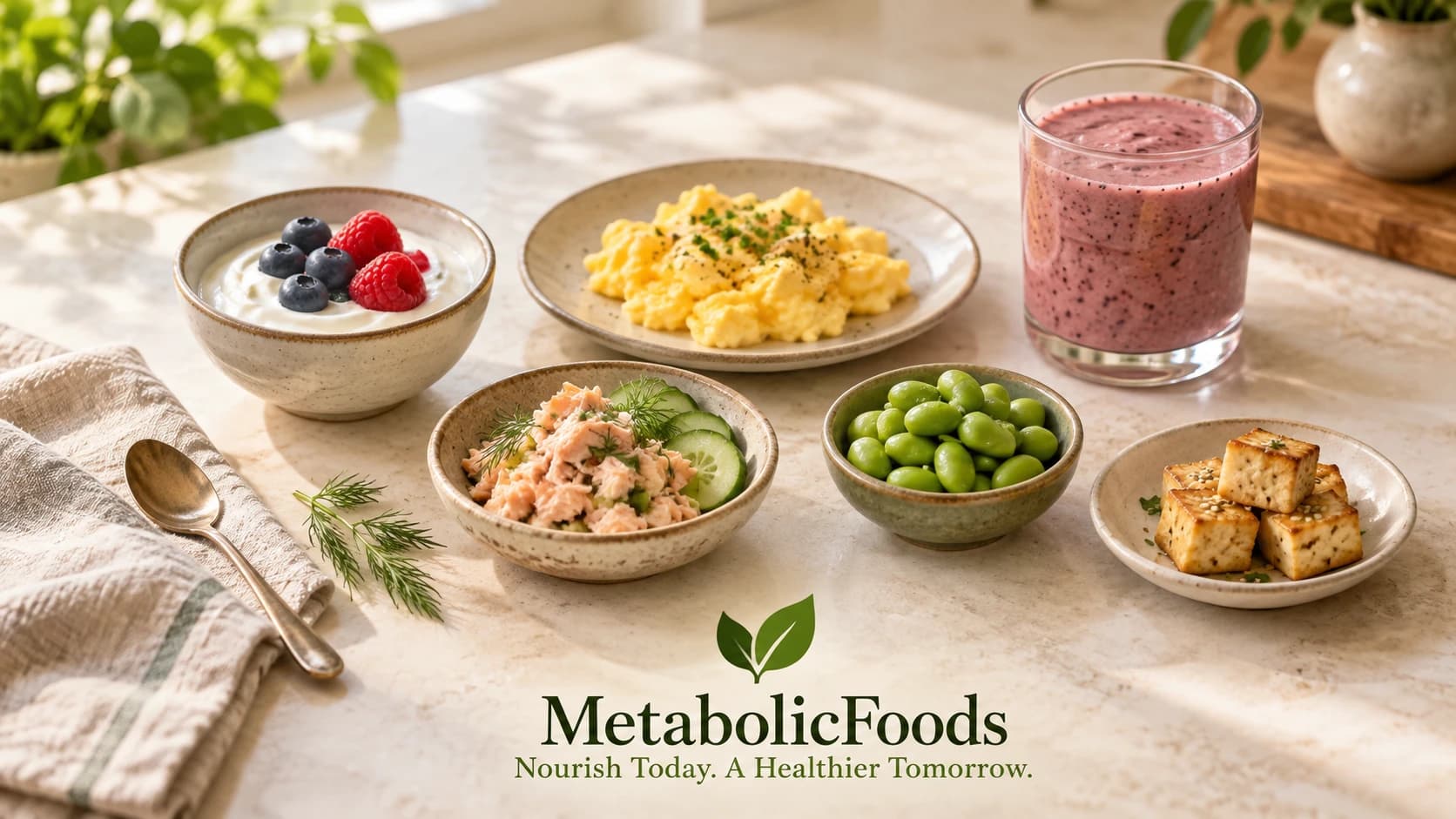
A smaller appetite can make nutrition feel unexpectedly complicated. When a few bites leave you full, the usual advice to simply "eat more protein" is not especially useful. GLP-1 friendly protein foods are foods that deliver meaningful protein in portions that are comfortable to eat, easy to prepare, and flexible enough to fit real meals.
For people using a GLP-1 medication, reduced appetite, fullness, nausea, and shifting food preferences are common, which can make it harder to meet protein needs consistently. Food cannot replace individualized medical guidance, but choosing protein-dense, low-effort options can make everyday eating more manageable. The goal is not to force large meals. It is to make the food you do eat count.
What Makes a Protein Food GLP-1 Friendly?
There is no single official definition. In practical terms, GLP-1 friendly protein foods provide a useful amount of protein without requiring a large volume of food or a complicated recipe. They are often soft, portable, mild in flavor, or easy to divide into smaller portions.
Protein matters during weight loss because it helps preserve muscle, and a joint advisory from four obesity and nutrition societies on GLP-1 therapy pairs adequate protein with regular strength training, noting that protein alone is likely not enough. But tolerance matters just as much. A grilled chicken breast may be nutrient-dense, yet it can be unappealing when appetite is low or you feel full quickly. Greek yogurt, eggs, or a blended soup with beans may be a better choice that day.
The best option depends on your appetite, budget, dietary pattern, cooking access, and symptoms. A food that works well at breakfast may not work at dinner. Variety is useful because food preferences can shift from week to week.
High-Protein Foods That Work in Smaller Portions
Greek Yogurt, Cottage Cheese, and Skyr
Plain Greek yogurt, skyr, and cottage cheese are among the most practical starting points. They provide substantial protein in a relatively small serving and require no cooking, which is why the advisory lists Greek yogurt and cottage cheese among its lower-volume protein options. Choose plain versions when possible, then add fruit, cinnamon, nuts, or a small amount of nut butter based on your appetite.
These foods can be especially useful when solid meals feel like too much. A small bowl of Greek yogurt with berries offers protein, carbohydrates, and fiber without the heaviness of a larger breakfast. If dairy does not agree with you, look for higher-protein soy yogurt or other fortified alternatives, but compare labels carefully. Protein varies widely across plant-based products.
Eggs and Egg-Based Meals
Eggs are compact, familiar, and adaptable. Scrambled eggs, egg bites, a vegetable omelet, or hard-boiled eggs can work as a meal or snack depending on portion size. Pairing eggs with fiber-rich foods, such as sautéed vegetables, beans, fruit, or whole-grain toast, creates a more complete meal without adding much volume.
Preparation can matter. Soft-scrambled eggs with little added fat may feel easier than a heavily cheese-filled omelet. Start with the amount you can comfortably eat, then build from there.
Fish and Seafood
Salmon, canned light tuna, shrimp, cod, and sardines are all on the FDA's "Best Choices" list, and they provide protein in portions that do not need to be large. According to the FDA's advice about eating fish, fish also supply vitamin B12, vitamin D, and selenium, and fatty fish such as salmon and sardines provide omega-3 fats.
Canned fish is particularly practical when you need low-prep options. Mix tuna or salmon with Greek yogurt, mustard, herbs, and chopped celery for a quick filling. Serve it with whole-grain crackers, cucumbers, or a small portion of beans. For a warm meal, flaky white fish or salmon can be easier to eat than a dense cut of meat.
Chicken, Turkey, and Lean Meats
Chicken and turkey remain reliable protein staples, especially when cooked in ways that stay tender. Rotisserie chicken, shredded chicken, turkey meatballs, and ground turkey can be easier to manage than large, dry portions of meat. Add them to soups, grain bowls, tacos, or lettuce wraps rather than treating protein as a separate oversized main course.
Lean beef can fit, too, if you enjoy it and tolerate it well. The GLP-1 advisory notes that avoiding large or high-fat meals can help with side effects, so a smaller portion of lean beef may sit better than a rich burger or heavily marbled steak. This is not a rule for everyone. Individual tolerance should guide the choice.
Beans, Lentils, Tofu, and Edamame
Plant proteins bring an additional advantage: fiber. Beans, lentils, chickpeas, tofu, tempeh, and edamame can support satisfying meals while contributing to a higher-fiber eating pattern. Lentil soup, a small bean-and-chicken bowl, tofu stir-fry, or edamame alongside a simple meal are approachable ways to use them.
The trade-off is volume and digestion. Beans and lentils are nutritious, but a large serving may feel uncomfortable if you are dealing with bloating, constipation, or pronounced fullness. Begin with a smaller portion and increase gradually, especially if your usual fiber intake has been low. Drinking enough fluids is also important when increasing fiber.
Protein Shakes and Simple Smoothies
A protein shake can be a useful bridge when a full meal is not appealing, and the advisory mentions high-protein shakes and other fortified products as options when food alone falls short. A shake is not inherently better than real food, but it can be practical, particularly at breakfast or after exercise. Look for a product with a meaningful amount of protein and little added sugar, then consider whether the ingredient list and taste are realistic for regular use.
A homemade smoothie offers more control. Blend milk or fortified soy milk with Greek yogurt or protein powder, frozen berries, and a small amount of oats or nut butter if tolerated. Keep portions modest. Very large smoothies are easy to drink quickly but may feel uncomfortable afterward.
Build Meals Around Protein First, Then Add What Helps
When appetite is unpredictable, meal planning does not need to begin with a full plate. Start with the protein you are most likely to eat, then add a small, appealing carbohydrate, produce, or healthy fat.
For example, cottage cheese can become a quick lunch with sliced tomatoes and whole-grain toast. A salmon pouch can become a rice bowl with avocado and cucumber. Two eggs can become dinner with black beans, salsa, and a corn tortilla. These combinations provide more than protein alone: carbohydrates support energy, produce contributes vitamins and fiber, and fats add flavor and satisfaction.
Smaller, more frequent meals may work better than three large ones, an approach the advisory suggests for managing digestive side effects. Some people find that a protein-focused breakfast, a light lunch, and a simple dinner are manageable, with one planned snack if needed. There is no universal schedule. Consistency matters more than perfection.
Grocery Choices That Make Protein Easier
Keep a mix of fresh, frozen, canned, and shelf-stable foods available. Fresh fish and poultry are useful, but they are not the only practical choices. Frozen shrimp, turkey meatballs, shelled edamame, plain Greek yogurt, eggs, canned beans, canned fish, and low-sodium soups can reduce the work required to assemble a meal.
When comparing packaged products, look beyond front-label claims. Check protein per serving, serving size, added sugar, sodium, saturated fat, and the ingredient list. A protein bar or shake may be convenient, but these products vary substantially. The best choice is one that fits your needs and is easy to use consistently, not the one with the most aggressive marketing.
When Food Feels Hard to Manage
Some symptoms need prompt medical attention rather than a diet tweak. MedlinePlus advises calling your doctor or getting emergency care for severe stomach problems, including ongoing pain in the upper or middle stomach that may spread to the back, and notes that being unable to keep liquids down can lead to dehydration. Persistent vomiting or signs of dehydration deserve the same urgency.
If nausea, constipation, reflux, or poor appetite is making it difficult to eat enough, speak with your prescribing clinician or a registered dietitian. Adjusting meal timing, food texture, hydration, or medication management may be more appropriate than pushing through discomfort.
For everyday meals, think smaller, softer, and more nutrient-dense when needed. A few dependable GLP-1 friendly protein foods in your refrigerator, freezer, or pantry can turn a low-appetite day into an adequately nourished one without making food feel like another task.
Sources
- Semaglutide InjectionMedlinePlus, U.S. National Library of MedicineVerified
- Nutritional priorities to support GLP-1 therapy for obesity: a joint Advisory from the American College of Lifestyle Medicine, the American Society for Nutrition, the Obesity Medicine Association, and The Obesity SocietyAmerican Journal of Clinical NutritionMay 30, 2025Verified
- Advice about Eating FishU.S. Food and Drug AdministrationVerified
Continue reading
High Protein Vegetarian Meal Prep That Lasts
A practical high protein vegetarian meal prep plan: pick two protein anchors, prep one fiber-rich base, and turn them into five meals that hold up through the week, with USDA-based protein estimates and safe storage tips.
How to Read Added Sugar Labels: A Practical Guide
Learn how to read added sugar labels: where the line sits on the Nutrition Facts panel, what the Daily Value means, how serving sizes work, and which package claims need a closer look.
Fermented Foods With Probiotics: A Practical Shopping Guide
Not every fermented food contains live microbes, and live cultures are not automatically probiotics. How to read labels for yogurt, kefir, kimchi, sauerkraut, miso, tempeh, and kombucha.