How to Read Added Sugar Labels: A Practical Guide
Learn how to read added sugar labels: where the line sits on the Nutrition Facts panel, what the Daily Value means, how serving sizes work, and which package claims need a closer look.
By MetabolicFoods Editorial Team
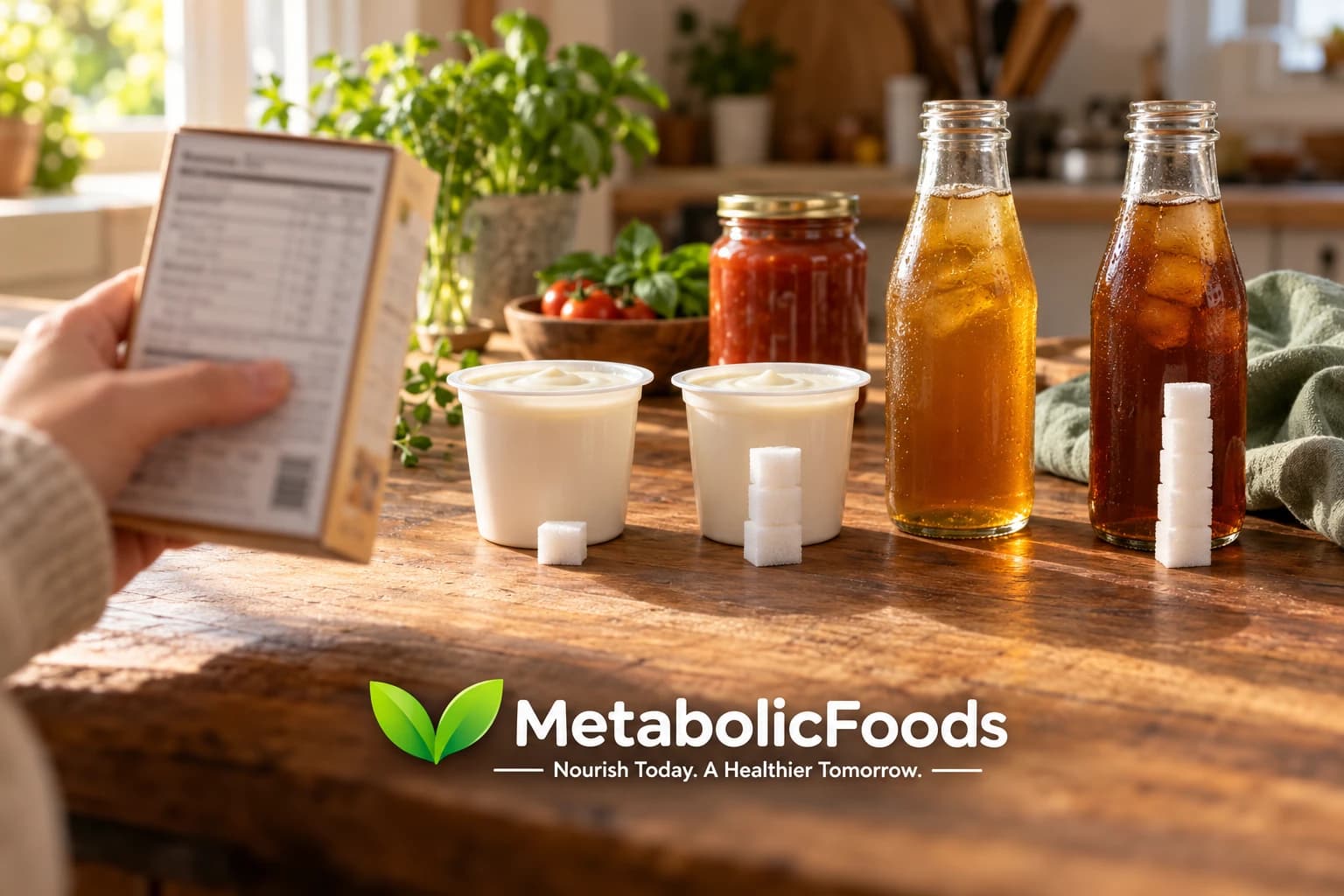
A yogurt cup can look like a high-protein breakfast, and a jar of pasta sauce can look like a simple dinner shortcut. Both may fit your routine. But if you want to know how to read added sugar labels, the useful information is not on the front of the package. It is in the Nutrition Facts panel, where a few lines can tell you whether sweetness comes mostly from the food itself or from sugars added during processing.
Added sugar is not a reason to label a food as good or bad. It is one part of the nutrition picture, alongside fiber, protein, ingredients, portion size, sodium, and how the food fits into the rest of your day. Reading it well helps you compare similar products without turning grocery shopping into a chemistry exam.
What "Added Sugars" Means on a Nutrition Label
On US packaged foods, added sugars appear indented beneath Total Sugars in the Nutrition Facts panel, written as "Includes X g Added Sugars." The word "includes" matters: added sugars are counted inside the total, not on top of it. Total sugars covers sugars naturally present in ingredients, such as those in plain milk and fruit, plus sugars added during processing. The added-sugars line isolates the second group.
According to the FDA, added sugars include sugars added during processing, such as sucrose or dextrose, as well as sugars from syrups, honey, and concentrated fruit or vegetable juices. They do not include the naturally occurring sugars in milk, fruits, and vegetables.
For example, plain Greek yogurt contains some total sugar because milk naturally contains lactose, while listing 0 grams of added sugars. A flavored Greek yogurt with the same base may have more total sugar and several grams of added sugars from cane sugar, fruit preparations, syrups, or other sweeteners. Our guide to low-sugar yogurt brands shows how those numbers look on real labels.
The distinction matters because foods with naturally occurring sugars can also provide protein, fiber, vitamins, minerals, or other valuable nutrients. A banana and a frosted breakfast pastry can both contain sugar, but they are not nutritionally interchangeable. The label gives you context; it does not replace it.
How to Read Added Sugar Labels Step by Step
Start with the serving size. Every number on the Nutrition Facts panel applies to that amount. FDA rules require a package that holds less than twice the standard reference amount to be labeled as a single serving, so a 20-ounce bottled drink is generally labeled as one serving. Packages holding two to three times the reference amount must show two columns: one per serving and one for the whole package. Larger packages list servings per container, and if you eat or drink two servings, double the added sugar, calories, fiber, sodium, and other listed nutrients.
Next, find Total Sugars, then look directly below it for Includes Added Sugars. The added-sugars line is shown in grams and as a percent Daily Value. Grams tell you the amount in one serving. Percent Daily Value helps put that amount in context.
The Daily Value for added sugars is 50 grams per day on a 2,000-calorie diet. That means a product with 10 grams of added sugars provides 20% of the Daily Value. The Daily Value is a labeling reference, not a target or a personal prescription. The 2025–2030 Dietary Guidelines for Americans are stricter: they state that no amount of added sugars is recommended as part of a healthy diet and that one meal should contain no more than 10 grams of added sugars. Your own needs and any medical guidance you have been given may differ.
A practical grocery-store rule is to compare similar foods using the same serving size whenever possible. If two oatmeal packets are both prepared as one packet, the one with 1 gram of added sugar and more fiber will generally be easier to fit into a lower-sugar breakfast than one with 12 grams of added sugar and little fiber. If serving sizes differ, do the quick math before deciding.
Use Grams First, Then Check the Percent Daily Value
Percent Daily Value is especially useful when a number feels abstract. Five grams of added sugar may sound small, but it is 10% of the daily reference amount. A 20-ounce drink with 30 grams is 60%, and three times the per-meal limit in the current Dietary Guidelines.
That does not mean every product above a certain number must be avoided. A dessert is meant to be a dessert. The bigger question is frequency and trade-off: Is this a food you eat once a week, or a breakfast and afternoon snack you rely on most days?
Look Beyond the Sugar Line
Added sugar is more informative when you read it alongside the rest of the label. A flavored instant oatmeal with 8 grams of added sugar, 4 grams of fiber, and 5 grams of protein brings more along with its sugar than a sweet cereal with the same added sugar but almost no fiber or protein. On the other hand, unsweetened oats topped with berries, nuts, and cinnamon start at zero added sugar and let you control the sweetness yourself.
For metabolic health, it can help to think about the whole meal, not just one number. Our guide to building a lower-glycemic meal covers how carbohydrate, fiber, protein, and fat fit together on a plate. This is not about making every snack perfect. It is about recognizing which options make it easier to build meals around minimally processed foods.
Why Total Sugar Can Be Misleading
A high total-sugar number does not automatically mean a food is high in added sugar. Unsweetened applesauce, plain dairy foods, and fruit contain naturally occurring sugars. Conversely, a product can seem relatively modest in total sugar yet still get most of that sugar from added sweeteners.
Consider a hypothetical pair: an unsweetened applesauce cup with 11 grams of total sugar and 0 grams of added sugars, and a sweetened version of the same applesauce with 19 grams of total sugar, 8 grams of it added. The first gets its sweetness from apples. The second contains the same apples plus added sweetener. The total-sugar line alone would not tell you why the numbers differ, but the added-sugars line makes the comparison clear.
Dried fruit is a useful edge case. When the ingredient list contains only fruit, it has no added sugars, yet removing the water concentrates its natural sugar. USDA data list seedless raisins at about 66 grams of sugar per 100 grams, compared with roughly 16 grams for fresh grapes. Some dried fruits are also sweetened, which the added-sugars line will show. Either way, portion size still matters.
Check the Ingredient List When You Need More Context
The Nutrition Facts panel is the fastest tool, but the ingredient list can explain where the added sugar comes from. Ingredients are listed in descending order by weight, so an ingredient near the beginning makes up more of the product. The Dietary Guidelines suggest looking for ingredients that include the word "sugar" or "syrup" or end in "-ose," and list many other names, including high-fructose corn syrup, agave syrup, rice syrup, dextrose, cane sugar, fruit juice concentrate, honey, and molasses. A sweetener that sounds more natural is still an added sugar when it is used to sweeten a product.
You do not need to memorize every name. If the label lists added sugars, you already know they are present. The ingredient list becomes most helpful when comparing two products with similar numbers or when you want to see whether sugar appears near the beginning of the list. Single-ingredient sweeteners such as honey and maple syrup are labeled a little differently: their added-sugar information appears as a percent Daily Value, with the gram amount sometimes shown in a footnote.
The ingredient list can also reveal a useful difference between products. A tomato sauce with 3 grams of added sugar per serving and one with 10 grams will taste and count differently, especially if pasta is in regular rotation. The right choice depends on your preferences and the rest of the meal, but the label lets you choose intentionally.
Common Label Traps at the Grocery Store
Some categories deserve a closer look because they are marketed as healthy, convenient, or energizing. According to the CDC, sugar-sweetened beverages and desserts and sweet snacks are the leading sources of added sugars in the US diet, and the Dietary Guidelines advise avoiding sugar-sweetened beverages such as sodas, fruit drinks, and energy drinks. Coffee drinks, bottled smoothies, flavored waters, sports drinks, and teas are worth comparing by the full container.
Breakfast foods are another place where labels vary widely. Granola, cereal, oatmeal packets, breakfast bars, and flavored yogurt can range from no added sugar to a substantial amount. Look for a combination of lower added sugar, meaningful fiber, and enough protein to suit the meal. If you choose a sweeter option because you enjoy it, adding eggs, plain yogurt, nuts, or fruit brings extra protein or fiber to the meal.
Sauces and condiments are not usually the biggest source on their own, but repeated use adds up. Barbecue sauce, ketchup, teriyaki sauce, salad dressing, and marinades are worth comparing between brands. This is a place where portion size matters: the two tablespoons on the label may be very different from the amount actually used on a plate.
"Reduced sugar" and "no added sugar" claims also need context. Under FDA rules, "reduced sugar" means the product has at least 25% less sugar than a reference food, not that it is low in sugar. "No added sugar" means no sugars or sugar-containing ingredients, such as jam or concentrated fruit juice, were added during processing, but the food may still contain substantial naturally occurring sugar. Read the panel rather than relying on the package claim.
Make Added Sugar a Comparison Tool, Not a Scorecard
The most sustainable approach is to use added sugar as one filter among several. When choosing a daily staple, such as yogurt, cereal, protein powder, or a snack bar, favor options with less added sugar when they also deliver the protein, fiber, and ingredients you want. When choosing a food for pleasure, choose one you genuinely enjoy and eat it without trying to disguise it as a health food.
Small swaps often work better than sweeping rules. Buy plain yogurt and add fruit. Keep an unsweetened oatmeal option for weekday breakfasts. Compare pasta sauces once, then repurchase the one that meets your taste and nutrition priorities. These choices reduce decision fatigue while leaving room for flexibility.
A label cannot tell you everything about a food, and added sugar alone cannot define your diet. But once you know where to find it and how to place it beside serving size, fiber, protein, and ingredients, the package becomes less persuasive than the evidence in front of you. That is guidance you can actually use on your next grocery trip.
Sources
- Added Sugars on the Nutrition Facts LabelU.S. Food and Drug AdministrationVerified
- Dietary Guidelines for Americans, 2025–2030U.S. Department of Agriculture and U.S. Department of Health and Human ServicesJanuary 7, 2026Verified
- 21 CFR 101.12 — Reference amounts customarily consumed per eating occasionU.S. Food and Drug Administration (eCFR)Verified
- Added SugarsCenters for Disease Control and PreventionApril 29, 2026Verified
- Daily Value on the Nutrition and Supplement Facts LabelsU.S. Food and Drug AdministrationVerified
- How to Understand and Use the Nutrition Facts LabelU.S. Food and Drug AdministrationVerified
- 21 CFR 101.60 — Nutrient content claims for the calorie content of foodsU.S. Food and Drug Administration (Code of Federal Regulations)Verified
- 21 CFR 101.4 — Food; designation of ingredientsU.S. Food and Drug Administration (eCFR)Verified
- USDA FoodData CentralU.S. Department of AgricultureVerified
- 21 CFR 101.9 — Nutrition labeling of foodU.S. Food and Drug Administration (eCFR)Verified
Continue reading
7 Best Low Sugar Yogurt Brands to Look For
Compare seven lower-sugar yogurt brands by protein, ingredients, and sweeteners, plus a simple label-reading method for smarter grocery choices.
How to Build a Lower-Glycemic Meal
Glycemic index describes individual foods. Here is what the research says about how combining and sequencing foods within a meal changes the outcome.
Glycemic Index vs. Glycemic Load: What's the Difference?
Glycemic index and glycemic load are quoted everywhere and rarely explained. Here is what each one measures, what short-term trials found, and why the long-term evidence deserves more caution than it usually gets.