7 Best Low Sugar Yogurt Brands to Look For
Compare seven lower-sugar yogurt brands by protein, ingredients, and sweeteners, plus a simple label-reading method for smarter grocery choices.
By MetabolicFoods Editorial Team
A yogurt with 4 grams of sugar can be a very different grocery choice from one with 4 grams of added sugar. That distinction is the starting point for finding the best low sugar yogurt brands. Plain dairy yogurt naturally contains lactose, a milk sugar, while many flavored cups contain added sugar, sweeteners, fruit preparations, or a mix. For most shoppers, the goal is not necessarily zero sugar. It is a yogurt that fits their protein, ingredient, and taste preferences without feeling like a compromise.
What makes a yogurt low in sugar?
"Low sugar" sounds like an official label term, but it is not one. The FDA defines claims such as "sugar free," "no added sugar," and "reduced sugar," and it generally allows only defined nutrient content claims on food labels. "Low sugar" is not among them. A practical approach is to compare products within the same category and at the same serving size.
Plain Greek yogurt and skyr are a useful benchmark. The plain products in this guide list about 3 to 6 grams of total sugar per serving, with 0 grams of added sugar, and about 14 to 17 grams of protein per 5.3-ounce cup.
Flavored yogurts vary much more. Some reach very low sugar numbers through ultra-filtration, lactose-free processing, or sweeteners such as stevia, monk fruit, or allulose. Others are sweetened mainly with sugar and fruit. The Nutrition Facts label lists total sugars and added sugars separately, so use both numbers rather than relying on front-of-package claims.
Yogurt is also only one part of a meal. Protein, fiber, what you eat alongside it, and portion size all shape how a breakfast or snack fits your day. Many people who prefer to limit sweeteners are happiest with plain yogurt and their own fruit, even when a zero-sugar flavored option lists fewer grams of sugar.
Best low sugar yogurt brands, by shopping goal
These brands are widely available in the US and offer options that can work well in a lower-sugar eating pattern. The numbers below come from each brand's own product pages. Nutrition varies by product line, flavor, and container size, and formulas change, so treat them as a starting point and check the label on the container you buy.
Fage Total for a simple plain Greek yogurt
Fage Total is a useful choice for shoppers who want a short ingredient list and a thick, traditional Greek yogurt texture. The plain 0% version is made from skimmed milk and live yogurt cultures, and a 5.3-ounce cup lists 5 grams of total sugar, 0 grams of added sugar, and 16 grams of protein.
The trade-off is that it is not sweet on its own. That is a benefit for ingredient control, but it may take a little meal-building. Add cinnamon and berries for a lightly sweet bowl, or use it as a savory base for dips, dressings, and baked potato toppings.
Chobani for plain and zero-sugar options
Chobani Non-Fat Plain Greek Yogurt is another practical staple. A 5.3-ounce cup provides 5 grams of total sugar, 0 grams of added sugar, and 14 grams of protein. It is easy to find in single cups and larger tubs, and a whole milk plain version is available if you prefer a richer texture.
Chobani also makes Zero Sugar yogurt, a lactose-free product sweetened with allulose, stevia, and monk fruit. The vanilla tub lists 13 grams of protein per three-quarter-cup serving. It can be a convenient sweet option, but the sweetness profile will not appeal to everyone. Plain Greek yogurt remains the more flexible choice for shoppers who prefer minimally sweet foods.
Too Good & Co. for very low total sugar
Too Good & Co., the brand formerly called Two Good, is designed around reduced sugar. Its blended cups list 2 grams of sugar, 0 grams of added sugar, and 12 grams of protein per 5.3-ounce cup, and the brand states that they contain no artificial sweeteners. Technically, the product is labeled as a yogurt-cultured ultra-filtered milk rather than Greek yogurt.
For someone moving away from conventional sweetened yogurt, it can be one of the easier transitions because it is flavored, portable, and broadly available. Ingredient lists differ by flavor, so check the label if you want to avoid particular sweeteners or additives.
Oikos Triple Zero for higher-protein flavored cups
Oikos Triple Zero is a familiar option for people who want a flavored yogurt with no added sugar. The 5.3-ounce flavored cups list 15 grams of protein, and the vanilla cup lists 5 grams of total sugar with 0 grams added. It is sweetened with stevia leaf extract.
This line may fit best when protein is your first priority and you want a ready-to-eat sweet flavor. Check the label for the specific variety, since sugar, protein, and serving size can differ across flavors and container sizes.
Siggi's for skyr texture and moderate sweetness
Siggi's makes Icelandic-style skyr, a strained cultured dairy product with a notably thick texture. The plain nonfat cup is made from skim milk and live active cultures and lists 4 grams of total sugar, 0 grams of added sugar, and 16 grams of protein per 5.3 ounces. Flavored cups generally contain more sugar than the plain version.
Siggi's can be a good middle ground for shoppers who do not want a strongly sweetened yogurt. Choose plain for the lowest-sugar route, or compare flavored varieties carefully if you want a little sweetness.
Icelandic Provisions for plain skyr
Icelandic Provisions is another skyr brand worth checking in the dairy case. Its plain skyr lists 3 grams of total sugar, 0 grams of added sugar, and 17 grams of protein per 5.3-ounce cup. Flavored versions contain more sugar, so the plain varieties are the better fit for a strict lower-sugar target.
Plain skyr works especially well for breakfasts built around whole foods, such as skyr with berries, chopped walnuts, and oats or chia. That combination adds fiber and texture without relying on a sugary granola layer.
Kite Hill Unsweetened for a dairy-free option
For dairy-free shoppers, Kite Hill's Plain Unsweetened Almond Milk Yogurt lists 1 gram of total sugar and 0 grams of added sugar per three-quarter-cup serving. The key trade-off is protein: the large tub lists 5 grams of protein per serving, far less than Greek yogurt or skyr. Kite Hill also sells a Greek-style plant-based line marketed with more protein, so compare labels if protein matters to you. Be aware that the brand's smaller "Plain" cup is a different product that contains added cane sugar.
An unsweetened dairy-free yogurt can still be a useful base for a snack or breakfast. Consider pairing it with nuts, seeds, soy foods, or another protein source.
How to compare yogurt labels in the store
Start with the serving size. A large tub may list nutrition for three-quarters of a cup, while a single cup is often 5.3 ounces. Comparing sugar per serving only works when portions are similar.
Next, look at total sugars and added sugars together. Plain dairy yogurt with 5 grams of total sugar and 0 grams of added sugar is not the same as a flavored yogurt with 5 grams of total sugar that includes added sugar or fruit concentrates. Neither is automatically wrong, but they serve different preferences.
Then check protein. Greek yogurt and skyr are among the more protein-dense options in the dairy case, while many plant-based yogurts contain much less unless protein has been added. If you are not sure how much protein you need, our guide on how much protein you need is a good place to start.
Finally, read the ingredient list with your own priorities in mind. Some people value only milk and cultures. Others are comfortable with stevia, monk fruit, or other sweeteners to keep sugar lower. If you have digestive sensitivities, it may also be useful to notice sugar alcohols, added fibers, or gums and see how you respond. Many labels also mention live and active cultures, but that alone does not make a yogurt a probiotic in the scientific sense. Our article on prebiotics vs. probiotics explains the difference.
Make low-sugar yogurt a more complete meal
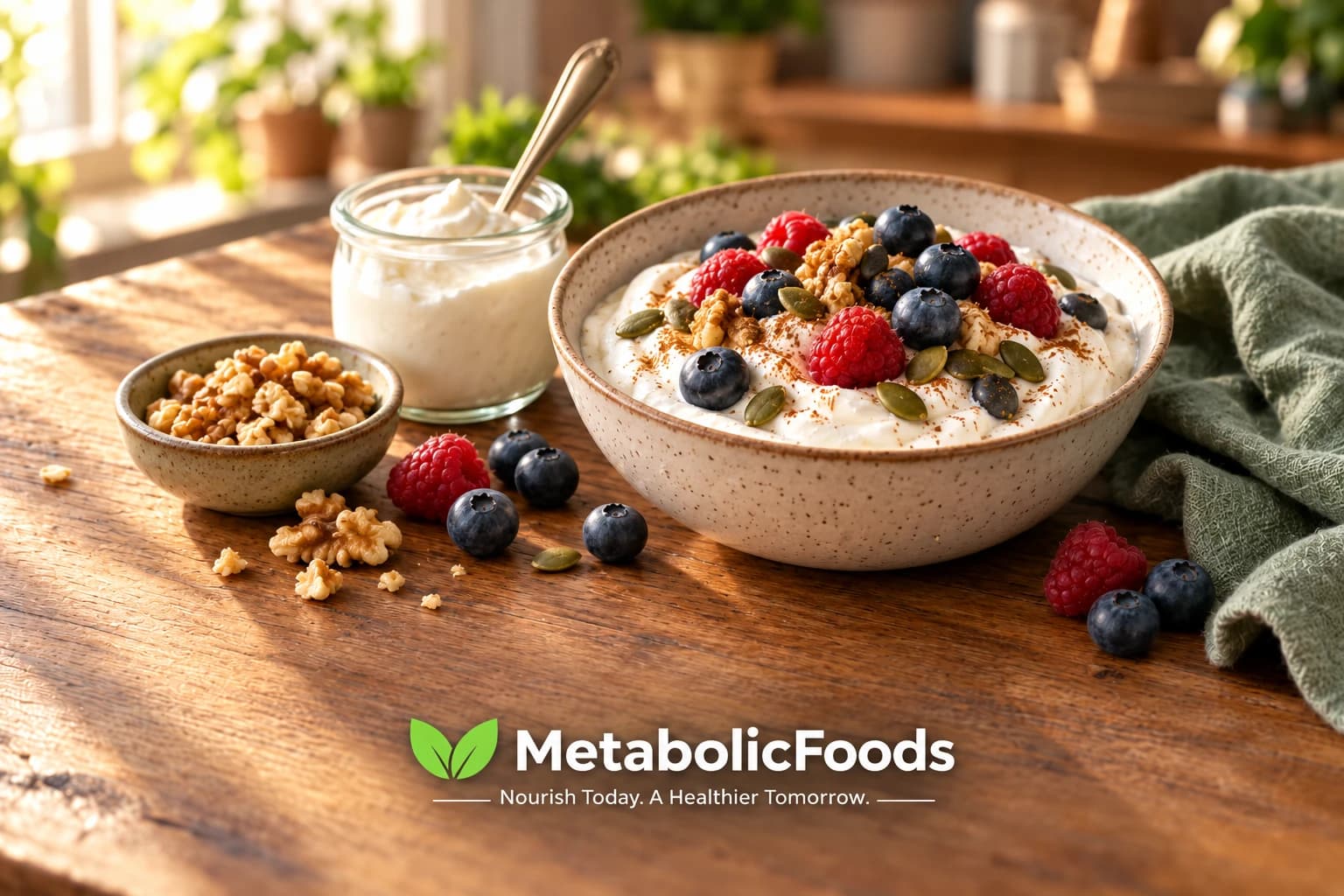
A plain yogurt bowl does not need much to become more satisfying. Mix Greek yogurt or skyr with blueberries, raspberries, pumpkin seeds, and cinnamon. The berries bring sweetness and fiber, while the seeds add crunch. Our Greek yogurt berry protein bowl is an easy template, and our list of high protein breakfasts without eggs has more yogurt-based ideas.
For a savory option, stir plain yogurt with lemon, herbs, and a pinch of salt, then spoon it over lentils, roasted vegetables, salmon, or a grain bowl. This is one of the easiest ways to use a high-protein yogurt without turning it into dessert.
The best choice is the one you will actually enjoy consistently: a plain, high-protein yogurt you customize at home, or a lower-sugar flavored cup that makes a busy morning easier. Use the label to make that choice deliberately, then let the rest of the meal do its share of the work.
Sources
- Icelandic Provisions Plain Skyr — product nutritionIcelandic ProvisionsVerified
- Kite Hill Plain Almond Milk Yogurt 5.3 oz — product nutritionKite HillVerified
- Kite Hill Plain Unsweetened Almond Milk Yogurt 32 oz — product nutritionKite HillVerified
- Expert consensus document: The International Scientific Association for Probiotics and Prebiotics consensus statement on the scope and appropriate use of the term probioticNature Reviews Gastroenterology & HepatologyJune 10, 2014Verified
- Oikos Triple Zero Vanilla — product nutritionOikosVerified
- siggi's Plain Nonfat Skyr 5.3 oz — product nutritionsiggi'sVerified
- How to Understand and Use the Nutrition Facts LabelU.S. Food and Drug AdministrationVerified
- 21 CFR 101.13 — Nutrient content claims; general principlesU.S. Food and Drug Administration (Code of Federal Regulations)Verified
- 21 CFR 101.60 — Nutrient content claims for the calorie content of foodsU.S. Food and Drug Administration (Code of Federal Regulations)Verified
- FAGE Total 0% Nonfat Greek Yogurt — product nutritionFAGE USAVerified
- Too Good & Co. Blended Yogurt-Cultured Ultra-Filtered Milk Cups — product nutritionToo Good & Co.Verified
- Chobani Zero Sugar Greek Yogurt, Vanilla — product nutritionChobaniVerified
Continue reading
How to Build a Lower-Glycemic Meal
Glycemic index describes individual foods. Here is what the research says about how combining and sequencing foods within a meal changes the outcome.
Glycemic Index vs. Glycemic Load: What's the Difference?
Glycemic index and glycemic load are quoted everywhere and rarely explained. Here is what each one measures, what short-term trials found, and why the long-term evidence deserves more caution than it usually gets.
What Is Prebiotic Fiber? Foods, Benefits, and Tips
What is prebiotic fiber? Learn how it differs from probiotics and total fiber, which everyday foods supply it, and how to add more gradually and comfortably.