10 High Protein Breakfasts Without Eggs to Try
No eggs, no problem. Ten practical breakfasts built around Greek yogurt, cottage cheese, tofu, beans, lentils, and more, plus how to build a protein-forward morning meal.
By MetabolicFoods Editorial Team

A carton of eggs is not a requirement for a satisfying morning meal. A high protein breakfast without eggs can be just as practical and filling when it starts with a reliable protein source and includes fiber-rich carbohydrates or produce.
For many adults, breakfast protein is less about chasing a perfect number and more about building a meal that holds up through the morning. Controlled trials show that protein reduces hunger and increases fullness in the hours after eating. Separately, research on muscle protein synthesis, the normal process of building and repairing muscle, associates roughly 20 to 25 grams of protein per meal with the largest response in young adults, and studies in older adults have looked at how protein is spread across meals as one factor alongside total amount and quality. The right amount for you depends on your body size, activity level, overall diet, and health needs. Our article Protein at Breakfast: How Much Do You Really Need? explains this research in more detail.
The most useful approach is simple: choose a protein anchor first, then add foods that bring fiber, flavor, and staying power.
What Makes an Egg-Free Breakfast High in Protein?
Not every food marketed as high protein provides enough protein to carry a meal. A granola bar with 10 grams of protein may be a convenient snack, for example, but it often needs yogurt, milk, nuts, or another protein food beside it to become breakfast.
Start with an anchor that provides a substantial share of the meal's protein on its own. Dairy foods such as Greek yogurt and cottage cheese work well for many people. Soy foods, beans, fish, poultry, and protein powders can also fit. Then round out the plate with fruit, vegetables, whole grains, or legumes. Research on meal composition shows that pairing carbohydrate foods with protein, fat, or fiber can change the post-meal blood sugar response compared with eating refined carbohydrates on their own. Our guide How to Build a Lower-Glycemic Meal covers this in more detail.
Packaging claims deserve a quick second look. Compare protein per serving, serving size, added sugar, sodium, and the ingredient list. A protein-forward choice does not need to be flawless, but it should make sense for the meal you are actually building.
The protein figures below are estimates based on USDA FoodData Central data for each food. Brands and portions vary, so check the label on what you buy.
10 High Protein Breakfasts Without Eggs
1. Greek Yogurt Bowl With Berries and Seeds
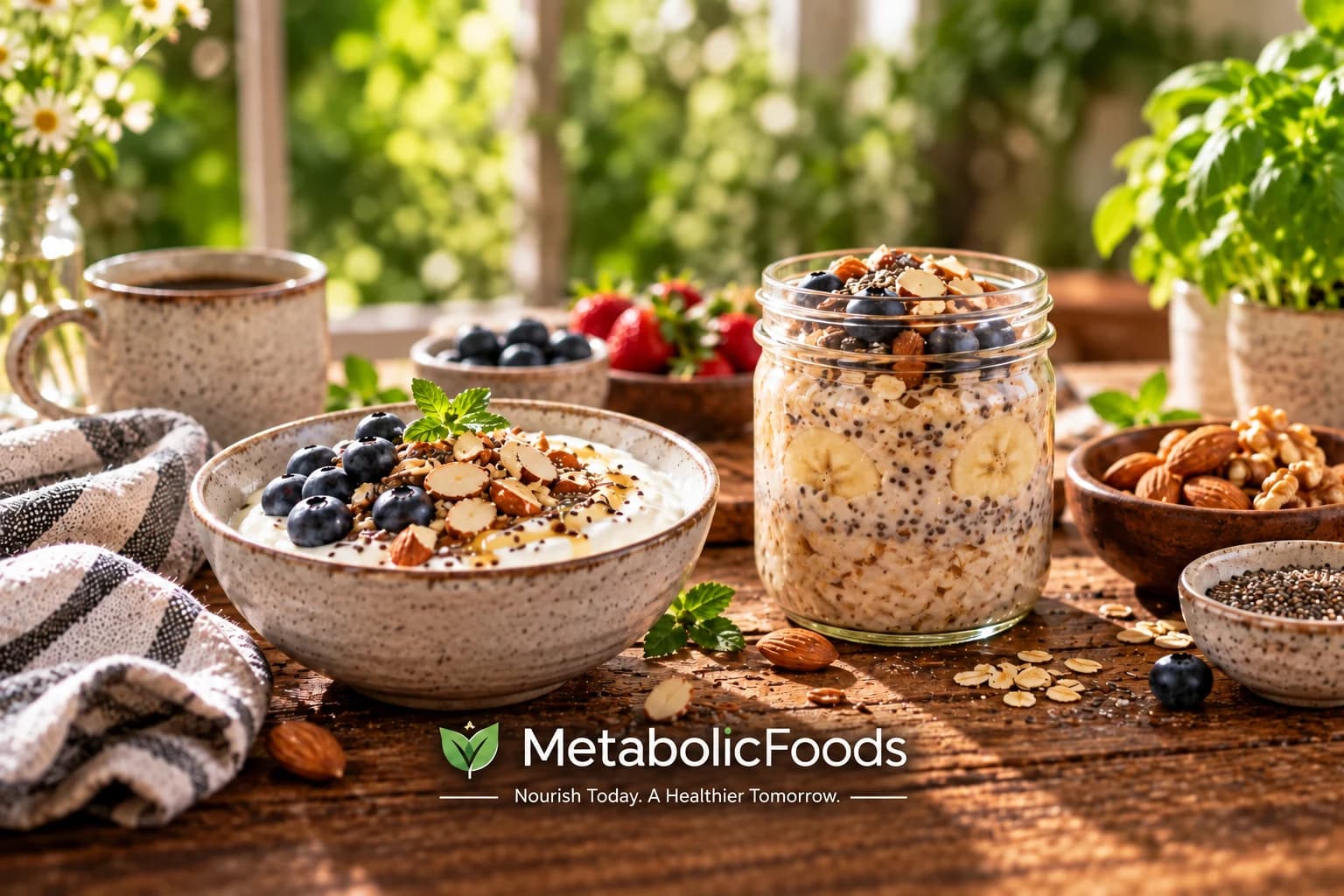
Plain Greek yogurt is one of the easiest starting points. A 170-gram (6-ounce) serving of plain nonfat Greek yogurt provides about 17 grams of protein. Top it with berries, chia seeds or ground flaxseed, and a small handful of walnuts or almonds. If you want more protein, stir in cottage cheese or use a higher-protein yogurt.
Choose plain or lightly sweetened yogurt when possible. Flavored varieties can be convenient, but some contain enough added sugar to turn a balanced bowl into something closer to dessert. Our Greek Yogurt Berry Protein Bowl recipe comes to about 20 grams of protein per serving.
2. Cottage Cheese Toast With Tomato and Salmon
Cottage cheese brings substantial protein with very little preparation: about half a cup of 2% cottage cheese provides roughly 12 grams. Spread it on whole-grain toast, add sliced tomato, cucumber, black pepper, and smoked salmon. This is a useful savory option for people who do not enjoy sweet breakfasts.
Smoked salmon adds protein and omega-3 fats, but it can be high in sodium. USDA data list smoked salmon (lox) at about 2,000 milligrams of sodium per 100 grams. If sodium is a concern, use a smaller portion and add more cottage cheese, or swap in leftover baked salmon or shredded chicken.
3. Overnight Oats Made With Greek Yogurt
Oats are fiber-rich, but they are not especially high in protein: half a cup of dry rolled oats provides roughly 5 grams. Mix rolled oats with Greek yogurt, milk or fortified soy milk, chia seeds, and cinnamon, then refrigerate overnight. Add fruit in the morning.
Making them with Greek yogurt and milk adds far more protein than oats made with water or a low-protein plant milk. For a higher-protein option, add a scoop of plain or vanilla protein powder, adjusting the liquid so the mixture stays creamy rather than pasty. Our Berry & Chia Overnight Oats recipe comes to about 18 grams of protein per serving.
4. Tofu Scramble With Vegetables
Firm tofu is an egg-free breakfast staple with a neutral flavor that takes well to seasonings. Crumble it into a skillet with mushrooms, spinach, peppers, turmeric, garlic powder, and black pepper. Serve it with black beans, avocado, or a slice of whole-grain toast.
In USDA data, 100 grams of firm tofu made with calcium sulfate provides about 17 grams of protein and about 680 milligrams of calcium. Look for calcium-set tofu, with calcium sulfate on the ingredient list, if you want an additional calcium source, especially if you do not regularly consume dairy.
5. Protein Smoothie That Includes Fiber
A smoothie can be a complete breakfast, but it needs more than fruit and juice. Blend milk or fortified soy milk with Greek yogurt or protein powder, frozen berries, spinach, and chia or ground flaxseed. Nut butter can add richness, although by weight peanut butter contains more than twice as much fat as protein.
Some people find a drink less filling than a bowl they eat with a spoon. Making the smoothie thicker and pairing it with a piece of fruit or a few whole-grain crackers can help when you need a more substantial meal.
6. Black Bean Breakfast Tacos
Warm black beans with cumin, chili powder, and a squeeze of lime, then spoon them into corn tortillas with salsa, avocado, cabbage, and a sprinkle of cheese. Beans offer both protein and fiber.
If your goal is a higher protein meal, add cottage cheese, shredded chicken, tofu, or a side of plain Greek yogurt mixed with lime and cilantro. This is also an efficient way to use leftover beans from dinner.
7. Savory Lentil Bowl With Greens
Lentils may not be a traditional breakfast food in the US, but they are a practical choice. Reheat cooked lentils with sautéed greens, roasted vegetables, and tahini-lemon dressing. Add feta, grilled chicken, or tofu based on your protein needs and preferences.
A lentil bowl is especially useful for people who want more fiber without relying on sweet breakfast foods. Canned lentils can make this meal fast, and draining and rinsing canned legumes can cut some of their sodium.
8. Chia Pudding With Yogurt or Protein Powder
Chia pudding offers fiber and fat, but chia seeds are not enough to make a high-protein meal by themselves: two tablespoons provide roughly 4 grams of protein. Make the pudding with dairy milk or fortified soy milk, then layer it with Greek yogurt. Alternatively, blend protein powder into the liquid before adding chia.
Use fruit for sweetness and texture rather than large amounts of syrup or sweetened coconut. The result is a make-ahead breakfast that works well for busy mornings and can be portioned into containers for several days.
9. Turkey and Hummus Breakfast Wrap
Fill a whole-grain wrap with sliced turkey, hummus, spinach, shredded carrots, and roasted red peppers. Add cheese or a side of fruit if you need a larger meal. It is simple, portable, and more balanced than a pastry-and-coffee breakfast.
Deli turkey varies widely in sodium, so it is worth checking the label. Leftover roasted turkey or chicken you cook without much salt can be a lower-sodium alternative, and hummus adds a modest amount of plant protein plus fiber.
10. High-Protein Cereal With Milk and Nuts
A high-protein cereal can be useful when time is short, but it is best viewed as a foundation rather than the entire strategy. Pair it with dairy milk, ultra-filtered milk, or fortified soy milk, then add berries and nuts. This can bring the meal closer to a meaningful protein range without much preparation.
Check whether the protein comes from recognizable ingredients such as wheat, soy, peas, dairy, or nuts, and notice the fiber content. Some cereals deliver protein but remain low in fiber and high in added sugar.
Build the Meal Around Your Morning
A high-protein breakfast does not need to look the same every day. On a morning when you will be sitting at a desk, Greek yogurt with fruit and seeds may be enough. Before a long commute, workout, or active shift, you may want a larger meal that includes more carbohydrates, such as overnight oats, a bean wrap, or toast alongside cottage cheese.
If you are increasing protein and fiber at the same time, make the change gradually and drink enough fluids. Eating a lot of fiber in a short time can cause gas, bloating, and cramps, and beans, lentils, chia, and higher-fiber cereals all add up quickly. Our guide How to Increase Fiber Gradually Without Gut Upset has practical steps.
Keep a few dependable foods on hand: plain Greek yogurt, cottage cheese, tofu, canned beans or lentils, frozen fruit, whole-grain bread, and a protein powder you genuinely like. With those basics available, breakfast becomes less about finding a perfect recipe and more about making an informed choice you can repeat.
Sources
- Effects of Diet, Lifestyle, Chrononutrition and Alternative Dietary Interventions on Postprandial Glycemia and Insulin ResistanceNutrientsFebruary 16, 2022Verified
- Protein Intake and Frailty: A Matter of Quantity, Quality, and TimingNutrientsSeptember 23, 2020Verified
- Fiber (MedlinePlus Medical Encyclopedia)MedlinePlus, U.S. National Library of MedicineVerified
- USDA FoodData CentralU.S. Department of AgricultureVerified
- How to Reduce Sodium in Your DietAmerican Heart AssociationVerified
- Legumes and PulsesHarvard T.H. Chan School of Public Health, The Nutrition SourceVerified
- Effect of short- and long-term protein consumption on appetite and appetite-regulating gastrointestinal hormones, a systematic review and meta-analysis of randomized controlled trialsPhysiology & BehaviorAugust 5, 2020Verified
- How much protein can the body use in a single meal for muscle-building? Implications for daily protein distributionJournal of the International Society of Sports NutritionFebruary 27, 2018Verified
Continue reading
Protein at Breakfast: How Much Do You Really Need?
Total daily protein and per-meal protein are two different questions. Here is what the research on muscle protein synthesis says about the second one, and what it looks like on a plate.
How Much Protein Do You Actually Need?
The official protein number is often called "too low" and just as often misread. Here is what the RDA actually defines, why some researchers read it differently, and the one effect of protein the trials agree on.
How to Increase Fiber Gradually Without Gut Upset
Adding fiber too fast can bring gas, bloating, and cramps. Here is how to increase it step by step, read labels, and choose gentler starting foods.