High Protein Vegetarian Meal Prep That Lasts
A practical high protein vegetarian meal prep plan: pick two protein anchors, prep one fiber-rich base, and turn them into five meals that hold up through the week, with USDA-based protein estimates and safe storage tips.
By MetabolicFoods Editorial Team
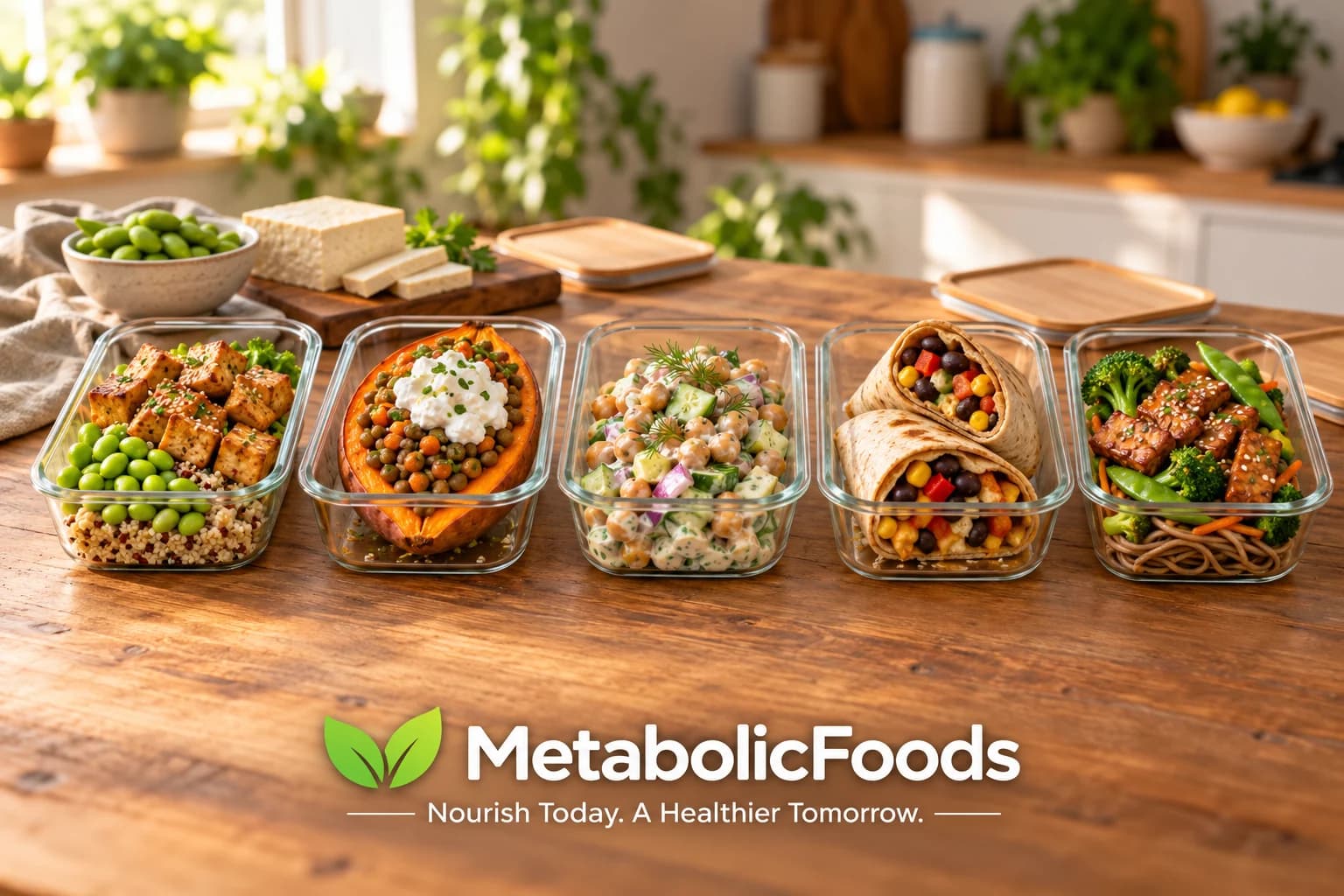
A good high protein vegetarian meal prep plan should do more than produce a row of identical containers. It should make weekday meals easier to assemble, provide enough protein to be satisfying, and include fiber-rich foods. The practical challenge is that many vegetarian staples are protein-containing rather than protein-dense, so portions and combinations matter.
For most people, the most useful approach is to build a few versatile components, then turn them into different meals throughout the week. Tofu can become a grain bowl one day and a stir-fry the next. Lentils can work in a soup, salad, or stuffed sweet potato. Variety is not a bonus feature here. It is often what makes meal prep sustainable.
What Makes Vegetarian Meal Prep High in Protein?
Vegetarian eating can provide plenty of protein, but meals built mostly around vegetables, fruit, rice, or pasta may fall short of the amount some people expect from a main meal. Protein needs vary with body size, age, activity level, health status, and total food intake. Rather than chasing one universal target, use the Nutrition Facts label and look at how much protein is actually in the portion you plan to eat.
A useful starting point is to build meals around a clear protein anchor, then add vegetables, high-fiber carbohydrates, and fats for flavor and satisfaction. Controlled trials show that protein reduces hunger and increases fullness in the hours after eating, and research on muscle protein synthesis associates roughly 20 to 25 grams of protein per meal with the largest muscle-building response in young adults. The right amount for you is individual. Our article on protein at breakfast explains this per-meal research.
The most dependable vegetarian protein anchors include:
- Extra-firm tofu, tempeh, and edamame
- Lentils, chickpeas, black beans, and other beans
- Greek yogurt, cottage cheese, milk, and cheese for lacto-vegetarians
- Eggs and egg whites for ovo-vegetarians
- Seitan, textured vegetable protein, and pea-protein products
Not every protein source needs to be highly processed or complete on its own. Many plant foods lack one or more essential amino acids, which is why Harvard's Nutrition Source recommends eating a variety of protein-containing plant foods each day. Still, soy foods, dairy, eggs, and seitan can be especially useful in meal prep because they deliver substantial protein without requiring oversized portions.
For a sense of scale, here are estimates based on USDA FoodData Central data:
- Tempeh: about 20 grams of protein per 100 grams
- Firm tofu made with calcium sulfate: about 17 grams per 100 grams
- Edamame, shelled and cooked: about 9 grams per half cup
- Cooked lentils: about 9 grams per half cup
- Cooked chickpeas: about 7 grams per half cup
Start With a Simple High Protein Vegetarian Meal Prep Formula
The easiest way to avoid meals that look healthy but leave you hungry is to plan each container in layers. Begin with a protein anchor, add a fiber-rich base, include colorful produce, and finish with a sauce or fat source that makes the meal enjoyable.
For example, a bowl with half a cup of chickpeas, brown rice, roasted vegetables, and tahini may be nutritious, but at about 7 grams of protein from the chickpeas, it is not particularly high in protein. Add baked tofu, edamame, a Greek yogurt sauce, or a larger portion of chickpeas and lentils, and the meal better matches a high-protein goal.
Choose Two Protein Anchors, Not Five
A common meal-prep mistake is buying a different protein for every meal. That can create extra cost, half-used ingredients, and more cooking than necessary. Choose two anchors for the week, such as tofu and lentils, or cottage cheese and black beans. Prepare them in different flavor directions so the meals do not feel repetitive.
For tofu, press it if time allows, cube it, and roast it at a high temperature until the edges brown. A simple mix of soy sauce, garlic, ginger, and a small amount of oil works for Asian-inspired bowls. Smoked paprika, cumin, and lime work well for taco-style meals.
For lentils, brown or green varieties hold their shape in salads and bowls, while red lentils are better for soups, curries, and sauces. Canned beans save time; draining and rinsing them can cut some of their sodium. If you use canned products often, compare labels, because sodium levels vary between products.
Prep One Fiber-Rich Base
High-protein eating is not only about protein. Fiber is linked to more regular bowel movements, and pairing carbohydrate foods with fiber, protein, and fat can change the post-meal blood-sugar response compared with eating refined carbohydrates on their own. Whole grains, beans, vegetables, and seeds make fiber easier to get.
Cook one or two bases that can carry several meals: quinoa, farro, brown rice, barley, roasted sweet potatoes, or a mix of grains and cauliflower rice. If blood-sugar awareness is a priority, pair these carbohydrate foods with protein, fiber, and fat rather than treating them as a meal on their own.
Cooking and then cooling starchy foods such as grains and potatoes can also increase resistant starch, a type of carbohydrate that reaches the large intestine and is fermented by gut microbes. In one small study, rice that was refrigerated and then reheated had more than double the resistant starch of freshly cooked rice. This is not a reason to keep food past its safe storage window, but it is one practical side benefit of properly stored leftovers.
Make Produce Convenient, Not Aspirational
Washed greens, roasted broccoli, shredded cabbage, bell peppers, carrots, and frozen vegetables all earn a place in meal prep. The best choice is the one you will actually eat by Thursday. Roasted vegetables are especially useful because they can be served warm in a bowl or cold in a salad.
Keep tender ingredients separate when needed. Store dressing away from greens, avocado away from cut apples, and crunchy toppings such as seeds or roasted chickpeas in a small container. These small details prevent a well-planned meal from becoming soggy and unappealing.
Five Meal Ideas That Hold Up Through the Week
A few repeatable combinations can cover lunches and dinners without requiring a new recipe every night.
Tofu, Edamame, and Quinoa Bowls
Combine roasted tofu, shelled edamame, quinoa, shredded cabbage, carrots, and cucumber. A peanut-lime sauce or sesame-ginger dressing adds flavor and fat. Using both tofu and edamame creates a stronger protein base than relying on either alone.
Lentil and Cottage Cheese Sweet Potatoes
Fill roasted sweet potatoes with seasoned lentils, chopped spinach, salsa, and cottage cheese. The cottage cheese adds protein and creaminess, while lentils and sweet potatoes contribute fiber and potassium. This meal works best when the cottage cheese is packed separately and added just before eating.
Greek Yogurt Chickpea Salad Boxes
Use plain Greek yogurt as the base for a creamy chickpea salad with celery, red onion, dill, lemon, and mustard. Serve it with whole-grain crackers, sliced vegetables, and a side of fruit. For a larger protein boost, add hard-boiled eggs or cubed baked tofu.
Black Bean and Egg Breakfast Burritos
Scrambled eggs, black beans, sautéed peppers, spinach, and shredded cheese make a freezer-friendly breakfast burrito. Whole-grain tortillas can add some fiber, though labels vary considerably. Wrap burritos individually, freeze them promptly, and reheat them thoroughly before eating.
Tempeh Peanut Noodle Bowls
Tempeh has a firmer texture and slightly nutty flavor that works well with peanut sauce. Pair it with whole-grain or legume-based noodles, broccoli, snap peas, and shredded carrots. If you use a packaged sauce, check the label for added sugar and sodium, then adjust the rest of the meal accordingly.
Portioning Matters More Than Perfect Macros
Meal prep is useful only if the portions fit your appetite and schedule. Someone eating these meals after a long workout may want a larger grain portion or an extra snack. Someone who sits most of the day may prefer more nonstarchy vegetables and a moderate serving of grains. Neither approach is automatically better.
Instead of treating meal containers as fixed rules, make them adaptable. Keep extra edamame, yogurt, nuts, fruit, or whole-grain toast available for days when hunger is higher. That flexibility is often more realistic than making every container very small.
Protein powder can also be a practical tool, particularly in overnight oats, yogurt bowls, or smoothies. It is not required for successful vegetarian meal prep, and some products contain added sugar or have a taste that does not work in savory foods. Think of it as a convenience ingredient, not the foundation of every meal.
Store High-Protein Meals Safely
The USDA Food Safety and Inspection Service advises that leftovers can be kept in the refrigerator for 3 to 4 days or frozen for 3 to 4 months. If you prep for a full workweek, freeze part of the batch on day one rather than counting on every Friday lunch to still be safe to eat.
To cool cooked food quickly, divide large batches into shallow containers. Hot food can go directly into the refrigerator; leaving it out on the counter to cool first gives bacteria more time to grow. Refrigerate cooked food within 2 hours. Thaw frozen meals in the refrigerator when possible, and reheat leftovers until they reach 165°F (74°C), measured with a food thermometer.
Pack single servings when possible, and avoid leaving meal-prep containers at room temperature for extended periods.
A high-protein vegetarian routine does not need to depend on specialty foods or complicated recipes. Start with a protein source you enjoy, prepare enough for several meals, and build around vegetables and fiber-rich staples. The most effective plan is the one that still tastes good when you open the refrigerator on a busy Wednesday.
Sources
- Effect of cooling of cooked white rice on resistant starch content and glycemic responseAsia Pacific Journal of Clinical NutritionJanuary 1, 2015Verified
- Leftovers and Food SafetyUSDA Food Safety and Inspection ServiceVerified
- New definition of resistant starch types from the gut microbiota perspectives - a reviewCritical Reviews in Food Science and NutritionJanuary 25, 2022Verified
- Effects of Diet, Lifestyle, Chrononutrition and Alternative Dietary Interventions on Postprandial Glycemia and Insulin ResistanceNutrientsFebruary 16, 2022Verified
- USDA FoodData CentralU.S. Department of AgricultureVerified
- ProteinHarvard T.H. Chan School of Public Health, The Nutrition SourceVerified
- How to Reduce Sodium in Your DietAmerican Heart AssociationVerified
- Effect of short- and long-term protein consumption on appetite and appetite-regulating gastrointestinal hormones, a systematic review and meta-analysis of randomized controlled trialsPhysiology & BehaviorAugust 5, 2020Verified
- Treatment for ConstipationNational Institute of Diabetes and Digestive and Kidney Diseases (NIH)Verified
- How much protein can the body use in a single meal for muscle-building? Implications for daily protein distributionJournal of the International Society of Sports NutritionFebruary 27, 2018Verified
Continue reading
10 High Protein Breakfasts Without Eggs to Try
No eggs, no problem. Ten practical breakfasts built around Greek yogurt, cottage cheese, tofu, beans, lentils, and more, plus how to build a protein-forward morning meal.
Protein at Breakfast: How Much Do You Really Need?
Total daily protein and per-meal protein are two different questions. Here is what the research on muscle protein synthesis says about the second one, and what it looks like on a plate.
How Much Protein Do You Actually Need?
The official protein number is often called "too low" and just as often misread. Here is what the RDA actually defines, why some researchers read it differently, and the one effect of protein the trials agree on.