Balanced Plate Meal Example for Better Energy
A balanced plate meal example you can actually cook: salmon, lentils, and vegetables, plus three everyday variations and simple fixes when a meal leaves you hungry.
By MetabolicFoods Editorial Team
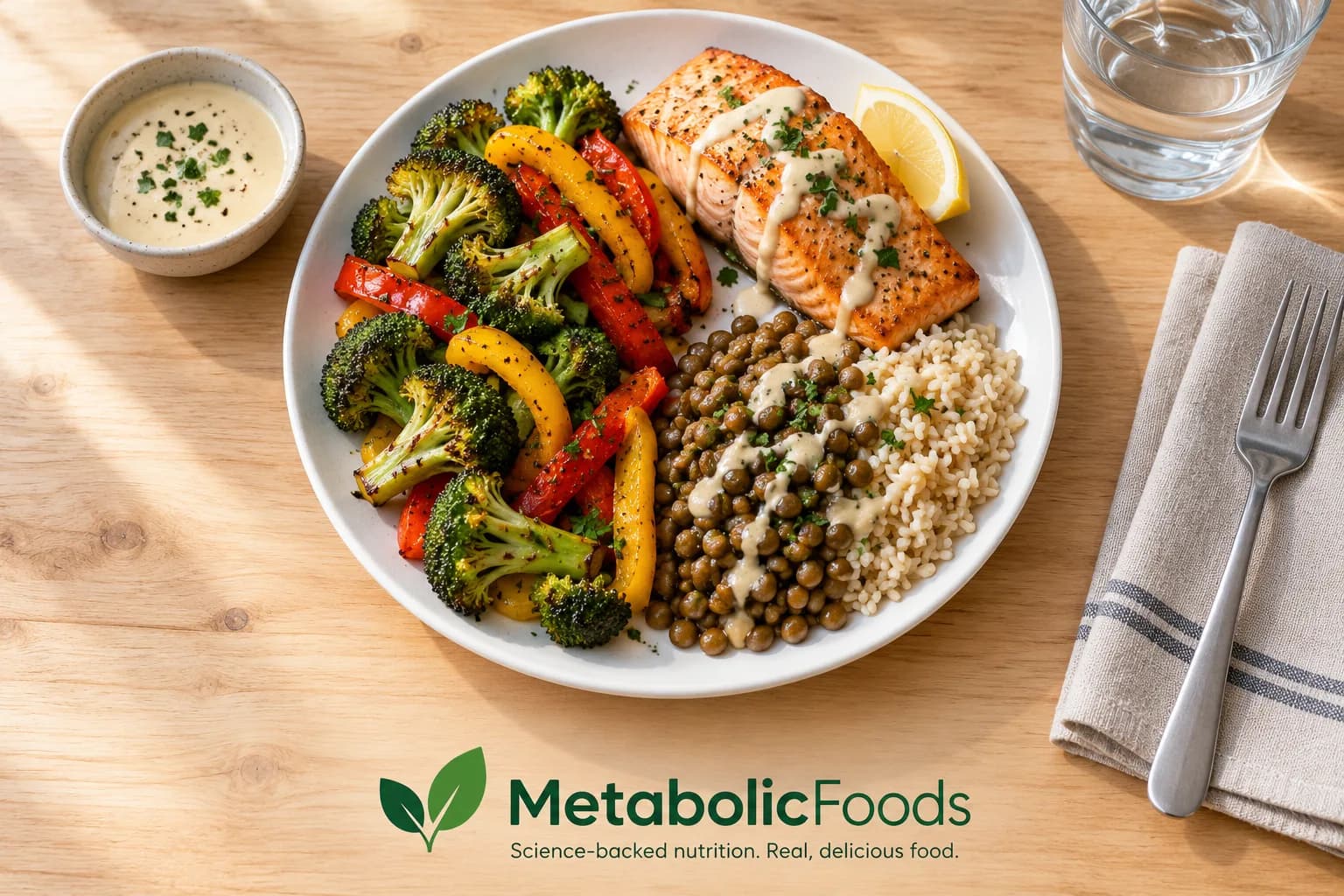
A balanced plate meal example does not need to look like a perfectly measured nutrition diagram. It can be a weeknight salmon bowl, a chicken-and-bean salad, or a familiar breakfast built with a few purposeful choices. The goal is to combine foods that support fullness, steady energy, and nutrient intake without turning every meal into a calculation.
For many people, the most useful version of a balanced plate is simple: start with a generous portion of non-starchy vegetables, add a satisfying protein, include a fiber-rich carbohydrate, and finish with a source of unsaturated fat or a flavorful dressing. Portions can shift based on appetite, activity, budget, culture, and health goals. The pattern matters more than exact ratios.
A Balanced Plate Meal Example: Salmon, Lentils, and Vegetables
Picture this dinner: roasted salmon, lentils, roasted broccoli and peppers, a small scoop of brown rice, and a lemon-tahini sauce. It is a practical example because each part of the meal has a clear role.
The salmon provides high-quality protein, which can help make a meal more satisfying and supports muscle maintenance. It also supplies unsaturated fats, including the omega-3 fats EPA and DHA. Lentils add carbohydrate, but they also bring plant protein and substantial fiber: a cooked cup has roughly 18 grams of protein and 15 grams of fiber. Lentils also have a low glycemic index, so they generally raise blood sugar more gradually than a refined carbohydrate eaten alone.
Broccoli and peppers add volume, vitamin C, potassium, and a wide range of plant compounds with relatively few calories. The brown rice offers additional carbohydrate for energy, while tahini brings flavor and fat that makes the vegetables and grains more enjoyable. The meal is not “perfect” because of any one ingredient. It works because the components complement one another.
A useful visual starting point is the plate method used in diabetes education and in Harvard’s Healthy Eating Plate: make about half the plate non-starchy vegetables, one quarter protein, and one quarter fiber-rich carbohydrate. Add fat through foods such as avocado, nuts, seeds, olive oil, tahini, or fatty fish. This is a flexible guide, not a rule. Someone who exercises intensely may need more carbohydrate; someone with a smaller appetite may prefer a smaller grain portion and more energy-dense foods. If you want a number for the protein quarter, see how much protein per meal is a reasonable target.
Why the Balanced Plate Approach Can Support Metabolic Health
Meals built around protein, fiber, and minimally processed carbohydrate tend to be more filling than meals centered on refined grains, added sugars, or snack foods. Fiber supports regularity and feeds beneficial gut microbes, and soluble fiber in particular can slow digestion. Protein can help reduce the urge to keep grazing after a meal. Dietary fats add satisfaction and help the body absorb fat-soluble nutrients from vegetables; in one study, salads eaten with fat-free dressing delivered almost no carotenoids to the bloodstream compared with the same salads eaten with fat.
This does not mean a balanced meal prevents every blood-sugar rise. All carbohydrate-containing foods can raise blood glucose to some degree, and individual responses to the same food can differ considerably. Cooking method, portion size, sleep, stress, activity, and the rest of the meal can all matter. Still, pairing carbohydrate with protein, fiber, and fat is a practical strategy for many people who want more stable energy and fewer sharp hunger swings.
The approach also moves attention away from calorie counting alone. Calories can be useful information in some contexts, but they do not show whether a meal contains enough protein, whether it is rich in fiber, or whether it will keep you full through the afternoon. Food quality and meal structure deserve a place in the conversation.
Build the Plate From Foods You Actually Buy
A balanced plate should work with your grocery routine, not require specialty ingredients. Start by choosing one item from each role: protein, produce, fiber-rich carbohydrate, and flavor-building fat.
For protein, options include eggs, Greek yogurt, cottage cheese, chicken, turkey, fish, tofu, tempeh, edamame, beans, lentils, or canned tuna and salmon. The best choice depends on preference, budget, and how much cooking you want to do. Canned fish, rotisserie chicken, and no-salt-added beans can make the pattern easier on busy days.
For vegetables, fresh, frozen, and canned all count. Frozen broccoli, spinach, green beans, cauliflower rice, and mixed vegetables are often economical and reduce prep time. If you choose canned vegetables, draining and rinsing can lower some of the sodium. Salad kits can also work well, although it is worth checking the dressing and topping packet if you are limiting added sugar or sodium.
For carbohydrates, look beyond the label “whole grain.” Beans, lentils, chickpeas, oats, barley, quinoa, sweet potatoes, winter squash, fruit, and intact whole grains can all fit. A high-fiber food is usually more useful than a product that merely markets itself as healthy. Check the Nutrition Facts panel for fiber, added sugars, protein, and serving size rather than relying on front-of-package claims.
Three Everyday Balanced Plate Variations
At breakfast, try plain Greek yogurt with berries, chia seeds, walnuts, and a side of oats or high-fiber cereal. The yogurt delivers protein, berries and oats contribute fiber-rich carbohydrate, and the nuts and seeds add fat and texture. If dairy is not a fit, unsweetened soy yogurt plus nut butter and fruit can provide a similar structure, though protein amounts vary widely by brand.
For lunch, build a large salad with chicken or tofu, chickpeas, chopped vegetables, avocado, and a whole-grain pita or a scoop of farro. A salad made mostly of leafy greens may look substantial but can leave you hungry if it lacks protein and carbohydrate. Adding both can turn it into a complete meal rather than a side dish with dressing.
For dinner, make tacos with corn tortillas, black beans or seasoned ground turkey, cabbage slaw, salsa, avocado, and sautéed peppers. Corn tortillas are not inherently better or worse than flour tortillas. The more meaningful question is what else is on the plate, how many tortillas you enjoy, and whether the meal includes enough fiber and protein to satisfy you. For more evening ideas built on the same pattern, see these low-glycemic dinner recipes.
Common Adjustments When the First Version Does Not Work
If you are hungry again an hour after eating, the meal may need more protein, fiber, total food volume, or fat. A bowl of vegetables with a small piece of chicken can be nutritious but insufficient. Adding beans, a baked potato, an olive-oil-based dressing, or a larger protein portion may make it more sustaining.
If a meal feels too heavy or leaves you sluggish, look at the balance rather than blaming one food. A large portion of creamy sauce, fried foods, or refined starch may be crowding out vegetables and protein. On the other hand, a meal that is very high in fiber can cause discomfort for people who are not used to it. Increase beans, whole grains, and cruciferous vegetables gradually, and drink enough fluid.
If blood-sugar awareness is a priority, begin with the plate pattern but pay attention to your own response. Choose less processed carbohydrate more often, pair it with protein and vegetables, and avoid treating fruit or beans as foods to fear. A registered dietitian or qualified clinician can offer individualized support, especially for anyone managing a diagnosed condition or taking glucose-lowering medication.
Make Balanced Meals Easier to Repeat
Consistency usually comes from preparation, not willpower. Keep a few dependable building blocks available: a cooked protein, washed or frozen vegetables, canned beans, a whole grain or starchy vegetable, and a sauce you enjoy. Batch-cooking is optional. Even assembling a meal from leftovers, frozen vegetables, and pantry staples can follow the same pattern.
A balanced plate is not a pass-or-fail test, and one pizza night or takeout lunch does not erase your overall habits. Use the next meal as another opportunity to add protein, plants, and fiber-rich carbohydrate in proportions that leave you satisfied. Build meals that fit real life, then make the supportive choice easier to repeat.
Sources
- Omega-3 Fatty Acids: Fact Sheet for Health ProfessionalsNIH Office of Dietary SupplementsVerified
- Personalized Nutrition by Prediction of Glycemic ResponsesCellNovember 19, 2015Verified
- Carotenoid bioavailability is higher from salads ingested with full-fat than with fat-reduced salad dressings, as measured with electrochemical detectionThe American Journal of Clinical NutritionAugust 1, 2004Verified
- International Tables of Glycemic Index and Glycemic Load Values: 2008Diabetes CareDecember 1, 2008Verified
- The role of protein in weight loss and maintenanceThe American Journal of Clinical NutritionApril 29, 2015Verified
- USDA FoodData CentralU.S. Department of AgricultureVerified
- Healthy Eating PlateHarvard T.H. Chan School of Public HealthVerified
- Diabetes Meal PlanningCenters for Disease Control and PreventionVerified
Continue reading
Are Dates Healthy? Benefits, Sugar, and Portions
Dates provide fiber, potassium, and polyphenols along with concentrated natural sugar. Learn what the research says about blood sugar, portions, and practical ways to eat them.
Hidden Sugar Ingredients to Spot on Food Labels
Learn which ingredient names signal added sugar, how concentrates and sugar alcohols are labeled, and how to compare packaged foods in context.
Is Sourdough Bread Low Glycemic? What the Research Shows
Is sourdough bread low glycemic? Sometimes. Fermentation may soften the blood sugar response compared with similar yeast bread, but the flour, portion, and the rest of the meal matter just as much. Here is what the research shows.