Are Dates Healthy? Benefits, Sugar, and Portions
Dates provide fiber, potassium, and polyphenols along with concentrated natural sugar. Learn what the research says about blood sugar, portions, and practical ways to eat them.
By MetabolicFoods Editorial Team
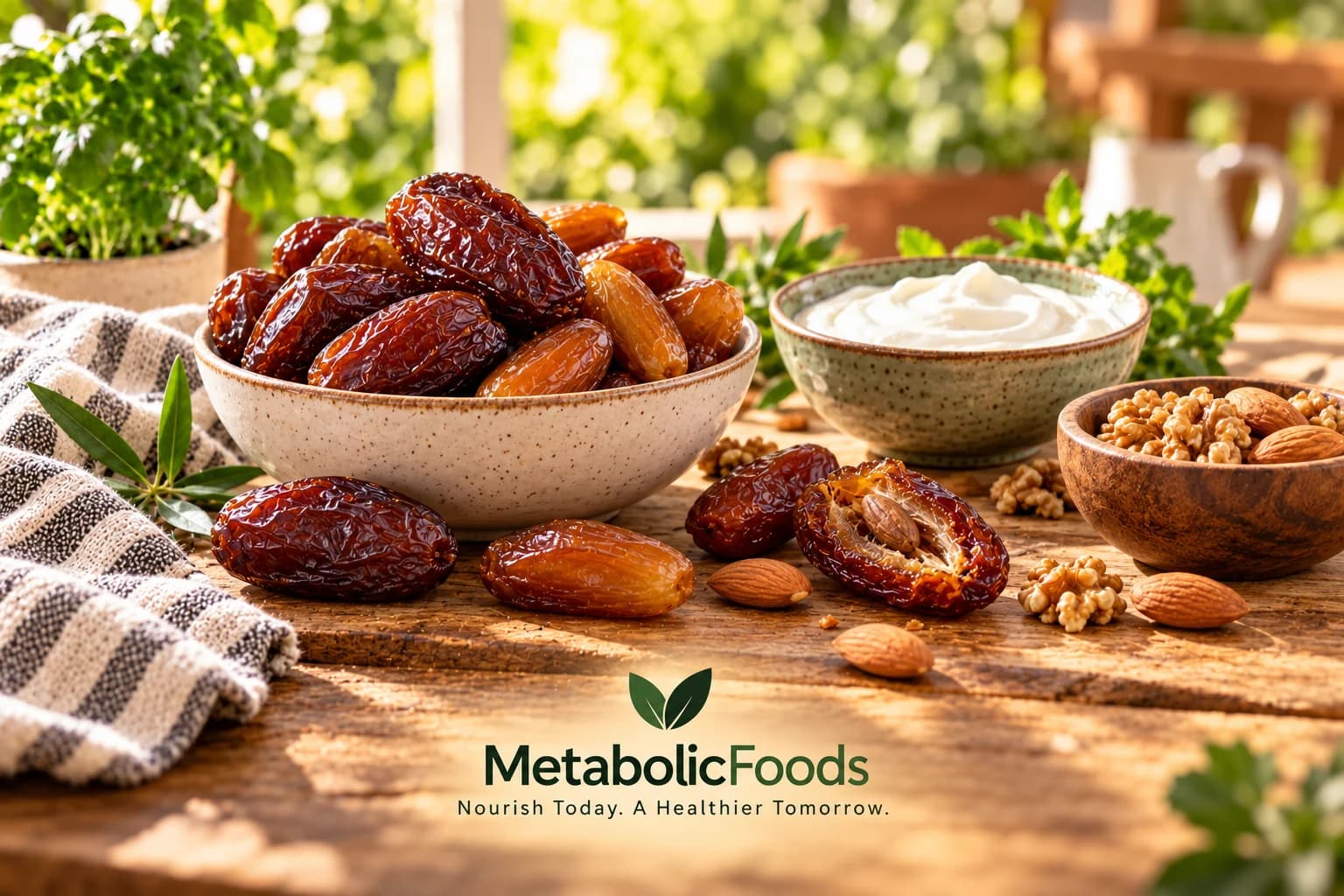
A date can taste like caramel, which makes it easy to place it in the same category as candy. Yet whole dates provide fiber, potassium, and plant compounds alongside their naturally occurring sugars. The useful question is not whether dates are “good” or “bad.” It is how much you eat, which type you choose, and what else is on the plate.
Dates can fit into a real-food eating pattern, including for many people who pay attention to blood sugar. They are also concentrated dried fruit, so a handful can add up quickly. Both facts matter.
What is in a date?
Dates are the fruit of the date palm. Most dates sold in U.S. grocery stores are dried or partially dried, which gives them their dense texture and long shelf life. Plain whole or pitted dates are minimally processed.
USDA data list one pitted Medjool date at about 24 grams. At that size, it provides roughly 66 calories, 18 grams of carbohydrate, 16 grams of naturally occurring sugar, 1.6 grams of fiber, and 167 milligrams of potassium. Smaller Deglet Noor dates contain less per piece, so comparing portions by weight is more useful than comparing only the number of dates.
Dates also contain magnesium and a range of polyphenols. Their exact composition varies with the cultivar, growing conditions, and stage of ripeness, so no single nutrition profile represents every date equally.
Are dates low glycemic?
Not always. Glycemic index studies show meaningful variation among date varieties. In one study of 17 varieties, the average GI was 55.2, while individual results ranged from 42.8 to 74.6. That range crosses the usual low, medium, and high GI categories. Another small study of five varieties found GI values from about 46 to 55 in healthy adults.
These studies help explain why the sweetness of a date does not predict one universal glucose response. Variety matters, and so do ripeness, portion size, preparation, the rest of the meal, and the individual eating it. Our guide to glycemic index and glycemic load explains why the amount of available carbohydrate in a serving is as important as the GI value.
Research in people with type 2 diabetes is limited but does not support treating dates as automatically forbidden. In a 12-week randomized trial, 79 adults with type 2 diabetes were assigned either 60 grams of dates or 60 grams of raisins daily; 61 completed the study. Neither group improved or worsened HbA1c or fasting glucose. A separate 16-week trial found that three dates daily did not significantly change HbA1c compared with avoiding dates.
Those findings do not prove that any amount of dates will work for everyone. They show that moderate portions can be compatible with diabetes management in a controlled study setting. People who count carbohydrates or monitor glucose should treat dates as a carbohydrate-containing food and use their own plan and response data.
What benefits do dates offer?
Dates are not a high-protein food or a treatment for a health condition. Their value is more practical: they add sweetness while contributing fiber, minerals, and phytochemicals.
Fiber and digestive regularity
One Medjool date provides about 1.6 grams of fiber. Two dates contribute a little over 3 grams—useful, though still only one part of a fiber-rich day.
A small crossover trial asked 22 healthy adults to eat about 50 grams, or seven dates, daily for 21 days. Stool frequency increased, but the study did not find significant changes in the measured bacterial groups or short-chain fatty acids. The result supports a modest claim about regularity, not a promise that dates will transform the gut microbiome.
If your usual fiber intake is low, increase fiber gradually and drink enough fluids. Dates work best as part of a varied pattern that includes vegetables, beans, whole grains, berries, nuts, and seeds.
Potassium and other nutrients
Potassium helps nerves and muscles function normally. A Medjool date provides about 167 milligrams, while a typical portion of several dates supplies more. Dates also provide smaller amounts of magnesium.
People with chronic kidney disease may need an individualized potassium limit. NIDDK lists dates among higher-potassium fruits for a standard serving of dried fruit, so follow the plan given by your clinician or renal dietitian rather than adding them for potassium on your own.
A whole-fruit way to add sweetness
Chopped dates can sweeten plain yogurt, oatmeal, or a grain bowl while keeping some fiber and texture. That is different from adding a concentrated syrup, although it does not make the sugar disappear. The rest of the meal still determines the overall balance.
Whole dates versus date sweeteners
Whole dates retain their fiber and food structure. Date paste is made from blended whole dates and may retain some fiber depending on the product. Date syrup is more concentrated and easier to pour in a large amount. Date sugar is usually made from dried, ground dates, but it still contributes carbohydrate and sweetness to a recipe.
These products can be useful ingredients, but “made from dates” does not mean metabolically neutral. When comparing packaged foods, check the serving size, total carbohydrate, fiber, and Added Sugars line. Our guide to hidden sugar ingredients explains how syrups and fruit concentrates appear on labels.
What portion makes sense?
There is no universal serving that fits every person. A practical starting point is one or two large Medjool dates, or a similar weight of smaller dates, as part of a snack or meal. Two Medjool dates provide about 36 grams of carbohydrate, so the portion is nutritionally meaningful even though the food is whole fruit.
Pairing dates with foods that contribute protein, fat, or additional fiber can make a more complete snack. Try one or two dates with walnuts, a date filled with natural peanut butter, or chopped dates in plain Greek yogurt. This approach follows the same structure used in a lower-glycemic meal: consider the carbohydrate portion and the rest of the plate together.
If you use dates in a smoothie, count the number before blending. One date may provide enough sweetness alongside yogurt or milk, berries, and chia or flax. Six dates in a drink are much easier to consume quickly and provide roughly six times the carbohydrate of one.
For baking, dates can add moisture and sweetness to oatmeal bars, energy bites, and sauces. Evaluate the finished recipe rather than assuming it is low sugar because the sweetener came from fruit.
Who may need a different approach?
People managing diabetes or prediabetes can often include dates, but carbohydrate targets, medications, and glucose responses differ. Start with a measured portion and use guidance from your clinician or registered dietitian when needed.
People using GLP-1 medications may become full quickly or find dense, very sweet foods less comfortable. One chopped date in yogurt or oatmeal may be easier than a larger portion. Meeting protein, fluid, fiber, and overall nutrient needs remains the priority.
Anyone advised to restrict potassium because of kidney disease or certain medications should check whether dates fit the prescribed plan. Packaged chocolate-covered dates, date bars, and flavored date snacks also deserve a label check because added sugar, saturated fat, sodium, and serving size can differ substantially from plain dates.
Practical ways to use dates
Think of dates as an ingredient with a job: adding sweetness, chew, or depth to a balanced meal.
- Chop one date into overnight oats with chia seeds and Greek yogurt.
- Fill one or two dates with peanut butter and add a few walnuts.
- Dice dates into a lentil-and-grain bowl with roasted vegetables and tahini.
- Blend one date into a vinaigrette for a slightly sweet salad dressing.
- Add a measured amount to homemade oat bars, then portion the finished batch.
Dates do not need a health halo, and they do not need to be avoided simply because they taste sweet. They are a fiber-containing, potassium-rich dried fruit with a concentrated carbohydrate load. Choose a portion you can see, account for it in the meal, and let your goals and individual response guide how often it fits.
Sources
- Valorization of Date Fruit (Phoenix dactylifera L.) as a Potential Functional Food and Ingredient: Characterization of Fiber, Oligosaccharides, and Antioxidant PolyphenolsMoleculesSeptember 30, 2024Verified
- Dates, medjool (FDC ID 168191)USDA FoodData CentralVerified
- Impact of palm date consumption on microbiota growth and large intestinal health: a randomised, controlled, cross-over, human intervention studyBritish Journal of NutritionOctober 28, 2015Verified
- Effects of Daily Low-Dose Date Consumption on Glycemic Control, Lipid Profile, and Quality of Life in Adults with Pre- and Type 2 Diabetes: A Randomized Controlled TrialNutrientsJanuary 15, 2020Verified
- Effect of Date Fruit Consumption on the Glycemic Control of Patients with Type 2 Diabetes: A Randomized Clinical TrialNutrientsAugust 25, 2022Verified
- Glycemic indices of five varieties of dates in healthy and diabetic subjectsNutrition JournalMay 28, 2011Verified
- Glycemic indices, glycemic load and glycemic response for seventeen varieties of dates grown in Saudi ArabiaAnnals of Saudi MedicineNovember 1, 2016Verified
- Potassium: Tips for People with Chronic Kidney DiseaseNational Institute of Diabetes and Digestive and Kidney DiseasesSeptember 1, 2011Verified
Continue reading
Hidden Sugar Ingredients to Spot on Food Labels
Learn which ingredient names signal added sugar, how concentrates and sugar alcohols are labeled, and how to compare packaged foods in context.
Is Sourdough Bread Low Glycemic? What the Research Shows
Is sourdough bread low glycemic? Sometimes. Fermentation may soften the blood sugar response compared with similar yeast bread, but the flour, portion, and the rest of the meal matter just as much. Here is what the research shows.

8 Low Glycemic Dinner Recipes for Real Life
Low glycemic dinner recipes pair familiar carbohydrates with protein, fiber, and healthy fats. Here are 8 weeknight dinners, from salmon lentil bowls to black bean tacos, plus simple swaps that keep dinner satisfying.