Hidden Sugar Ingredients to Spot on Food Labels
Learn which ingredient names signal added sugar, how concentrates and sugar alcohols are labeled, and how to compare packaged foods in context.
By MetabolicFoods Editorial Team
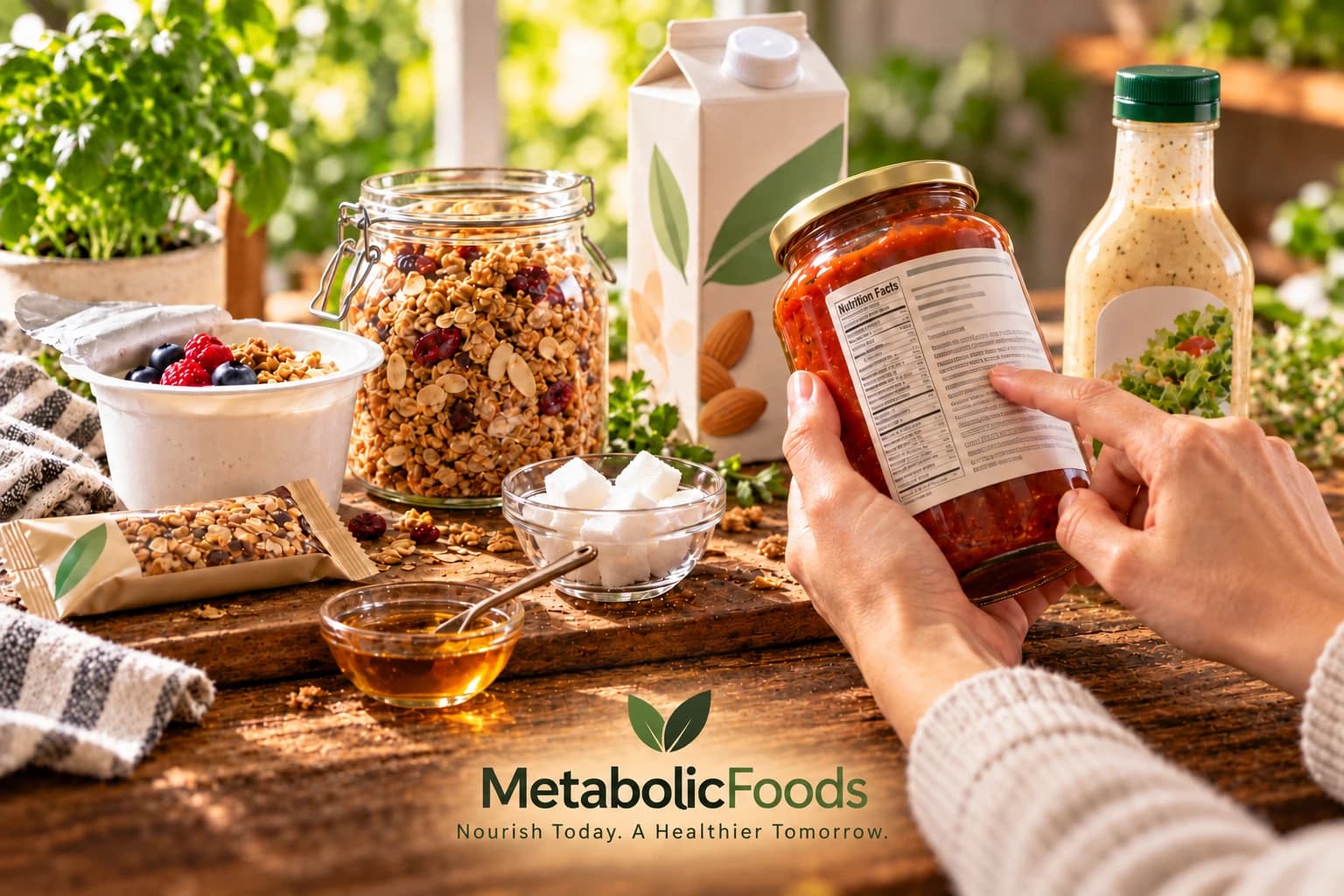
A yogurt cup can look like a practical high-protein breakfast and still contain several added sweeteners. A pasta sauce may list sugar near the middle of the ingredient panel. A granola marketed for energy can get much of its sweetness from syrups, concentrates, or sweetened fruit. None of those foods are automatically off-limits, but recognizing what is doing the sweetening gives you a clearer basis for choosing foods that fit your metabolic health goals.
The useful question is not whether an ingredient sounds familiar or natural. It is whether it functions as an added source of sugar, how much the product contains per serving, and what else the food provides—especially protein, fiber, and nutrients that help make a meal more satisfying.
What “hidden” sugar really means
Hidden sugar does not mean sugar is secret or inherently harmful. On packaged foods in the United States, added sugars are listed on the Nutrition Facts label, which makes the total amount relatively easy to find once you know where to look. The ingredient list adds another layer of context: it shows the forms of sweetener used and, roughly, how prominent they are in the recipe.
“Hidden” usually describes sugar that appears under a name people do not immediately recognize, or sugar in foods not expected to taste especially sweet. Salad dressings, sandwich bread, flavored oatmeal, protein bars, marinades, coffee drinks, and plant-based milks are common examples. A product can also contain several sweeteners in smaller amounts, so no single sugar name appears near the top of the ingredient list.
For everyday decisions, start with the Added Sugars line on the Nutrition Facts label. Then use the ingredient list to understand where those grams may be coming from. This approach is more reliable than judging a product solely by its front-of-package claims.
Hidden sugar ingredients commonly found in packaged foods
Many ingredient names refer to the same basic nutritional role: adding sweetness, improving texture, helping with browning, or extending shelf life. You do not need to memorize every possible name. Learning a few broad categories makes label reading much faster.
Familiar sugars and syrups
Sugar, cane sugar, brown sugar, raw sugar, turbinado sugar, and confectioners’ sugar are all added sugars. So are honey, maple syrup, agave nectar, coconut sugar, and date syrup. These ingredients may differ in flavor, processing, or trace compounds, but they are still concentrated sweeteners.
Syrup-based ingredients are especially common in cereals, snack foods, sauces, and beverages. Look for corn syrup, high-fructose corn syrup, rice syrup, tapioca syrup, malt syrup, barley malt syrup, and glucose syrup. Their exact composition varies, but their presence tells you that the food includes an added sweetening ingredient.
Ingredients ending in “-ose”
Several common sugars end in “-ose.” Examples include glucose, fructose, sucrose, dextrose, maltose, lactose, and galactose. Some occur naturally in foods, such as lactose in milk or fructose in fruit. When they appear as standalone ingredients, however, they may have been added as sweeteners or functional carbohydrates.
Dextrose is a frequent one to miss because it sounds technical rather than sweet. It is a form of glucose and often appears in baked goods, seasoning blends, cured meats, and sports products.
The “-ose” ending is a useful clue, but it is not a complete rule. The Added Sugars line on the Nutrition Facts label remains the best way to determine how much added sugar a serving contains.
Juice concentrates and fruit-based sweeteners
Fruit juice concentrate, apple juice concentrate, pear juice concentrate, and grape juice concentrate can be used to sweeten foods. Under U.S. labeling rules, sugars from concentrated fruit or vegetable juice count as added sugars when they exceed the amount expected from the equivalent volume of the same type of 100% juice. That distinction is why the Nutrition Facts label is more useful than the ingredient name alone.
This is different from eating intact fruit. Whole fruit contains water and fiber, while juice concentrate is a concentrated ingredient used in a different form. Unsweetened applesauce, for example, is not nutritionally identical to a spoonful of apple juice concentrate, even though both begin with apples.
Less obvious sweetening ingredients
Molasses, evaporated cane juice, malt extract, caramel syrup, and caramel sauce can also contribute added sugar. The word “caramel” needs context: caramel syrup or sauce may be a sweetener, while caramel color is primarily used for appearance and does not necessarily indicate a meaningful amount of sugar.
An ingredient’s name alone cannot tell you how much added sugar is in a serving. The Nutrition Facts label provides that amount directly.
Do not confuse added sugar with every fast-digesting carbohydrate
Maltodextrin is sometimes included in online lists of “hidden sugars,” but it is not classified as an added sugar on the Nutrition Facts label. It is a carbohydrate ingredient and contributes to total carbohydrate, so it belongs in a broader carbohydrate discussion rather than a list of added sugars.
Refined starches deserve the same distinction. White flour, rice flour, potato starch, and tapioca starch are not added sugars. Our guide to glycemic index and glycemic load explains how the type, amount, and context of a carbohydrate can shape the post-meal response.
If blood-sugar awareness is one of your goals, look beyond added sugars to the full carbohydrate picture, fiber content, protein, portion size, and the meal you build around the food.
Do not confuse sugar with every sweet-tasting ingredient
A lower-sugar product is not automatically a better fit for every person. Some products replace sugar with sugar alcohols such as erythritol, xylitol, sorbitol, or maltitol. These carbohydrates generally provide fewer calories and produce a smaller rise in blood glucose than traditional sugar, but they can cause gas, bloating, or diarrhea for some people, particularly in larger servings. Individual responses vary, and different sugar alcohols do not affect everyone in the same way.
High-intensity sweeteners and other low-calorie sweeteners—including stevia-derived sweeteners, monk fruit extract, sucralose, and acesulfame potassium—are not hidden sugars. They may help reduce added sugar in a product, but they also do not turn a low-fiber, highly refined snack into a nutrient-dense food.
A practical way to read the label at the store
You do not need to turn every grocery trip into an ingredient investigation. Use a short sequence when comparing similar products.
First, check the serving size. A bottled drink or bag of snack food may contain more than one serving, making the listed grams look lower than what you would actually consume.
Next, look at Total Sugars and Added Sugars. Total Sugars includes naturally occurring sugars, such as lactose in plain dairy yogurt or sugars in fruit, as well as any added sugars. Added Sugars identifies sugars introduced during processing. As a quick guide, 5% Daily Value or less is considered low, while 20% Daily Value or more is considered high.
Then scan the ingredient list. Ingredients are listed in descending order by weight, so ingredients near the beginning generally make up more of the food than those near the end. If several forms of sugar appear early, that is useful context even when no individual sweetener is listed first.
Finally, assess what you get in return. A flavored Greek yogurt with some added sugar and 15 grams of protein has a different nutritional profile from a low-sugar pastry with little protein or fiber. A sweetened cereal can be paired with plain Greek yogurt, milk, nuts, or berries, but a higher-fiber cereal may also be an easier regular choice. Food decisions work better when you compare the whole package, not one number in isolation.
Where added sugar matters most
Sugar-sweetened beverages are among the leading sources of added sugars in the U.S. diet. Soda, sweet tea, energy drinks, flavored coffees, sweetened waters, and some smoothies can add up quickly. Choosing water, sparkling water, unsweetened tea, or a less-sweetened version can reduce added sugar without requiring changes to the rest of a meal.
For foods such as yogurt, oatmeal, sauces, and cereal, a useful strategy is to buy a plain or lightly sweetened base and add your own flavor. Cinnamon, vanilla, berries, chopped apple, peanut butter, nuts, seeds, and unsweetened cocoa can make food enjoyable while contributing more than sweetness alone.
There is room for foods made with sugar, including foods chosen for celebration, convenience, or simple enjoyment. The goal is not perfect avoidance. It is making added sugar visible enough that your everyday defaults can support the way you want to eat.
Build a lower-sugar pattern, not a perfect cart
A food with added sugar can still have a place in a balanced eating pattern. The better comparison is usually between realistic alternatives: one barbecue sauce versus another, plain yogurt with fruit versus a heavily sweetened version, or a snack that provides fiber and protein versus one that is mostly refined carbohydrate and sweetener.
Meals can include foods such as beans, vegetables, eggs, fish, poultry, tofu, whole grains, fruit, nuts, and unsweetened dairy or fortified alternatives without requiring every packaged item to be sugar-free. Reading ingredient lists is not about policing every bite. It is a practical skill for finding foods that make your usual meals easier to understand and easier to repeat.
Sources
- Added Sugars on the Nutrition Facts LabelU.S. Food and Drug AdministrationVerified
- Added SugarsCenters for Disease Control and PreventionApril 29, 2026Verified
- Interactive Nutrition Facts Label — Sugar AlcoholsU.S. Food and Drug AdministrationOctober 1, 2021Verified
- 21 CFR 101.4 — Food; designation of ingredientsU.S. Food and Drug Administration (eCFR)Verified
- Changes to the Nutrition Facts LabelU.S. Food and Drug AdministrationVerified
- Aspartame and Other Sweeteners in FoodU.S. Food and Drug AdministrationVerified
- 21 CFR 101.9 — Nutrition labeling of foodU.S. Food and Drug Administration (eCFR)Verified
Continue reading
Are Dates Healthy? Benefits, Sugar, and Portions
Dates provide fiber, potassium, and polyphenols along with concentrated natural sugar. Learn what the research says about blood sugar, portions, and practical ways to eat them.
Is Sourdough Bread Low Glycemic? What the Research Shows
Is sourdough bread low glycemic? Sometimes. Fermentation may soften the blood sugar response compared with similar yeast bread, but the flour, portion, and the rest of the meal matter just as much. Here is what the research shows.

8 Low Glycemic Dinner Recipes for Real Life
Low glycemic dinner recipes pair familiar carbohydrates with protein, fiber, and healthy fats. Here are 8 weeknight dinners, from salmon lentil bowls to black bean tacos, plus simple swaps that keep dinner satisfying.