Is Sourdough Bread Low Glycemic? What the Research Shows
Is sourdough bread low glycemic? Sometimes. Fermentation may soften the blood sugar response compared with similar yeast bread, but the flour, portion, and the rest of the meal matter just as much. Here is what the research shows.
By MetabolicFoods Editorial Team
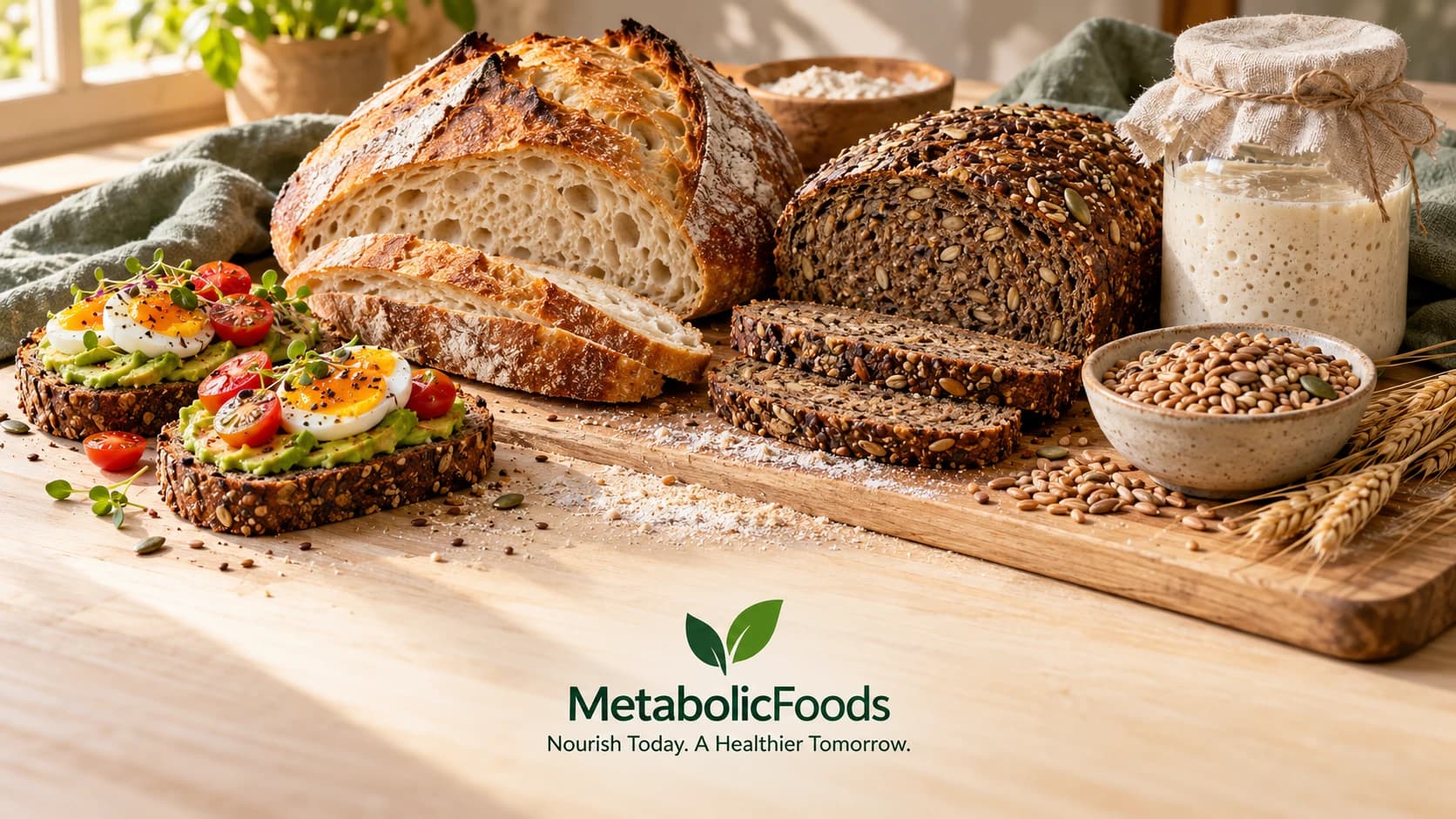
A bakery label that says "sourdough" can make a loaf sound like an automatic blood-sugar-friendly choice. But is sourdough bread low glycemic? Sometimes, compared with conventional bread made from similar flour. It is not a guarantee, and the flour, recipe, portion, and what you eat alongside it can change the result substantially.
For everyday grocery decisions, sourdough is best viewed as one potentially helpful bread format, not a free pass and not a food to fear. A real, long-fermented sourdough made with whole-grain flour may fit well into a lower-glycemic eating pattern. A large serving of soft white sourdough with little fiber may not behave very differently from other refined breads.
Is sourdough bread low glycemic?
Glycemic index, or GI, ranks carbohydrate-containing foods by how much they tend to raise blood glucose in a standardized test. Foods with a GI of 55 or below are generally classified as low GI, 56 to 69 as medium, and 70 or above as high. Glycemic load adds another useful layer by accounting for the amount of carbohydrate in a typical serving.
The research is encouraging but not settled. A 2022 systematic review and meta-analysis of 18 trials found that sourdough bread produced a smaller rise in blood glucose at 60 and 120 minutes than industrially fermented bread, with the effect most apparent for loaves made with whole wheat flour. The certainty of that evidence was rated low to very low. A 2026 systematic review of 27 studies in healthy adults went further, concluding that the evidence for a benefit of sourdough over yeast-fermented bread is "neither sufficient nor convincing." The results vary enough that "sourdough" alone cannot tell you a bread's GI.
That distinction matters because glycemic index is not a universal property stamped onto every food. It is influenced by the exact recipe, baking process, food structure, and test method. Your own response can also differ based on activity, the rest of the meal, and individual glucose regulation.
Why fermentation can change the response
Traditional sourdough starts with flour and water fermented by naturally occurring yeasts and lactic acid bacteria. Those microorganisms produce organic acids as the dough ferments. In human testing by Liljeberg and Björck, bread made with added lactic acid lowered the blood glucose response, and bread with an added organic salt, sodium propionate, appeared to do so partly by slowing how quickly the stomach emptied. Lactic acid itself did not slow stomach emptying in that study, which suggests acids influence the glucose response in more than one way. Baking kills the fermenting microbes, so sourdough is fermented but not a source of live cultures.
Fermentation also changes the dough itself. The bread's starch structure, acidity, and physical texture can differ from a quickly risen commercial loaf. These changes may help explain why sourdough can produce a lower glucose response than comparable non-sourdough bread in some studies.
The word comparable is doing real work here. A white sourdough loaf may perform better than a standard white yeast bread, yet still contain relatively little fiber. A dense, whole-grain sourdough with intact grains or seeds offers a different nutrition profile altogether. Fermentation may improve the metabolic picture, but it does not replace the benefits of fiber-rich ingredients.
Longer fermentation is not automatically better, either. Fermentation time, starter activity, hydration, flour type, and baking all interact. A tangier flavor can suggest acidity, but flavor is not a reliable measure of glycemic impact.
The flour matters as much as the starter
When shopping, start with the grain rather than the marketing language on the front of the package. Whole wheat, rye, barley, oats, and other whole grains generally contribute more fiber and a slower-digesting food structure than refined white flour. Rye sourdough, in particular, is often denser and higher in fiber than typical white sandwich bread.
Look at the Nutrition Facts panel and ingredient list together. Fiber is a practical signal, although it does not capture every feature that affects blood sugar. A bread with several grams of fiber per slice, whole grains near the beginning of the ingredient list, and a short, recognizable ingredient list is often a more useful starting point than a loaf promoted only as artisan or naturally fermented.
Also check serving size. Many packaged breads list one small slice as a serving, while a restaurant sandwich may contain two large slices or more. Glycemic load rises with the amount of digestible carbohydrate you actually eat, even when the bread has a lower GI.
A loaf can be labeled sourdough without being made through a meaningful traditional fermentation process. Some products use commercial yeast for most of the rise and add sourdough flavor, vinegar, or a small amount of cultured dough, so check the ingredient list for yeast and added acids. That does not make the bread a poor choice by default, but it does mean the label alone is not enough to predict its blood sugar effect.
How to choose a more blood-sugar-aware sourdough
For a lower-glycemic pattern, use sourdough as part of a meal-building decision. A practical approach is to prioritize four details:
- Choose whole-grain or rye sourdough when you enjoy it, especially varieties with visible whole grains, seeds, or higher fiber.
- Compare fiber and total carbohydrate per realistic portion, not only per listed serving.
- Favor denser, less fluffy loaves when the ingredients support that choice. Airy white breads are often easier to eat in larger amounts.
- Pair bread with protein, unsaturated fat, and fiber-rich produce rather than eating it alone.
That last point is often the most useful. Two slices of sourdough topped with eggs, avocado, and tomatoes will likely produce a different response than the same bread with jam. A turkey sandwich built with vegetables, beans in a side salad, and a piece of fruit is also metabolically different from bread eaten by itself as a snack.
This is not about making every meal complicated. It is about recognizing that foods are rarely consumed in isolation. Pairing carbohydrates with protein, fat, and fiber can change the post-meal glucose response compared with refined carbohydrates eaten alone. They also tend to make a meal more satisfying, which can help with practical portion awareness.
Does toasting, cooling, or freezing make a difference?
Cooking and storage can change starch structure. When starchy foods cool, a portion of their starch can become more resistant to digestion, often called resistant starch. In a small study of 10 healthy adults, freezing and thawing white bread, toasting it, or freezing and then toasting it all produced a lower blood glucose response than eating the same bread fresh. That is a real but modest effect from one small trial, and it does not turn refined bread into a low-glycemic food.
These details are interesting, but they are secondary to the bread's ingredients and serving size. If you prefer frozen sourdough for convenience, use it. If you like toasted sourdough, enjoy it. Neither strategy needs to carry more weight than it deserves.
When sourdough may not be the best fit
Sourdough is still bread, and it is not the right choice for every goal or every person. Someone aiming for a very low-carbohydrate meal may prefer a higher-protein, higher-fiber base such as eggs, Greek yogurt, beans, or a vegetable-forward meal. For people with celiac disease, wheat- or rye-based sourdough is not safe unless it is specifically certified gluten-free. Wheat, rye, and barley contain gluten, and the only treatment for celiac disease is a strict, lifelong gluten-free diet; fermentation does not change that.
Some people also find that even whole-grain sourdough raises their blood glucose more than expected. If you monitor your response, use the information as personal feedback rather than a verdict on whether the food is "good" or "bad." Patterns over time are more useful than one meal, and individualized medical questions belong with a qualified health professional.
For most shoppers, the useful question is not whether sourdough has a health halo. It is whether this particular loaf helps build a meal with enough fiber, protein, satisfaction, and flavor to support the way you want to eat. Choose the sourdough you genuinely enjoy, give the ingredients and portion a quick reality check, and let the rest of the plate do its share.
Sources
- Effects of Diet, Lifestyle, Chrononutrition and Alternative Dietary Interventions on Postprandial Glycemia and Insulin ResistanceNutrientsFebruary 16, 2022Verified
- Glycemic Index and Glycemic LoadLinus Pauling Institute, Oregon State UniversityVerified
- The impact of freezing and toasting on the glycaemic response of white breadEuropean Journal of Clinical NutritionApril 4, 2007Verified
- Delayed gastric emptying rate as a potential mechanism for lowered glycemia after eating sourdough bread: studies in humans and rats using test products with added organic acids or an organic saltAmerican Journal of Clinical NutritionDecember 1, 1996Verified
- What is Celiac Disease?Celiac Disease FoundationVerified
- Effects of sourdough and yeast fermented breads consumption on glycaemia in healthy populations: a systematic reviewFrontiers in NutritionAugust 4, 2026Verified
- Consumption of sourdough bread and changes in the glycemic control and satiety: A systematic reviewCritical Reviews in Food Science and NutritionAugust 9, 2022Verified
Continue reading

8 Low Glycemic Dinner Recipes for Real Life
Low glycemic dinner recipes pair familiar carbohydrates with protein, fiber, and healthy fats. Here are 8 weeknight dinners, from salmon lentil bowls to black bean tacos, plus simple swaps that keep dinner satisfying.

How to Read Added Sugar Labels: A Practical Guide
Learn how to read added sugar labels: where the line sits on the Nutrition Facts panel, what the Daily Value means, how serving sizes work, and which package claims need a closer look.

7 Best Low Sugar Yogurt Brands to Look For
Compare seven lower-sugar yogurt brands by protein, ingredients, and sweeteners, plus a simple label-reading method for smarter grocery choices.