Healthy Grocery Shopping Guide for Metabolic Health
Build a practical grocery cart around protein, fiber-rich plants, convenient produce, and versatile staples—then use food labels to compare packaged options without overcomplicating the trip.
By MetabolicFoods Editorial Team
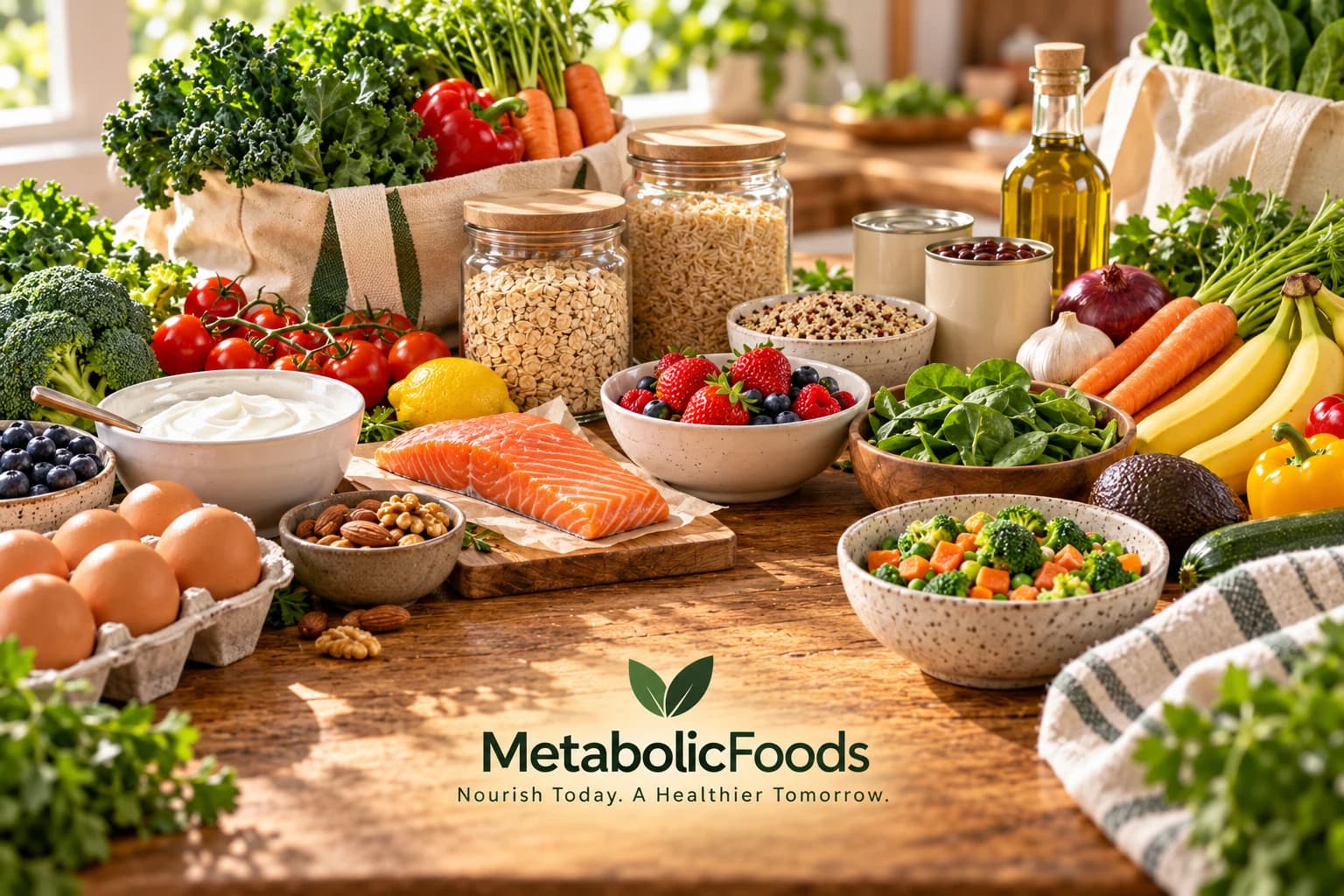
A useful grocery guide should make the next trip easier, not turn it into a nutrition exam. The aim is to leave the store with foods that can become balanced meals you will realistically prepare: protein foods, fiber-rich plants, useful carbohydrates, and a few ingredients that make everything taste good.
That does not require a perfect pantry or a cart made entirely of fresh produce. Frozen vegetables, canned beans, plain yogurt, whole-grain staples, and thoughtfully chosen packaged foods can all earn a place. The better question is whether a product helps you build meals that fit your goals, schedule, budget, and preferences.
Start with meals, not isolated “healthy” foods
Before shopping, choose a few meals you expect to make during the week. USDA MyPlate recommends checking what you already have, writing down meals, planning for busy days, and making a grocery list. That small amount of preparation can reduce forgotten ingredients and make it easier to use fresh food before it spoils.
Think in flexible combinations rather than rigid recipes:
- a protein food
- a vegetable or fruit
- a fiber-rich carbohydrate
- a source of flavor or fat
Salmon, frozen broccoli, and potatoes can become a sheet-pan dinner. Lentils, brown rice, greens, and salsa can become a bowl. Eggs, black beans, vegetables, and tortillas can cover breakfast or a quick dinner.
Choose two or three dependable breakfast and lunch options as well. Overnight oats with plain Greek yogurt and berries, or a bean salad with canned tuna, can make a busy week easier. Repeating a few meals is often a practical way to use what you buy.
Build the cart around four practical anchors
These four groups create a useful starting structure. The exact amounts will differ from one household to another.
1. Protein foods
Choose options that fit the meals you planned: eggs, fish, poultry, tofu, tempeh, plain Greek yogurt, cottage cheese, edamame, lentils, and beans. You do not need every option in one trip. Two or three versatile choices are usually easier to use than a large collection of single-purpose products.
2. Fiber-rich plants
Vegetables, fruit, beans, lentils, oats, whole grains, nuts, and seeds can help you build a more varied, fiber-rich pattern. If your current intake is low, increase fiber gradually instead of changing everything at once.
3. Convenient produce
Fresh, frozen, canned, and dried produce can all contribute. USDA guidance notes that frozen and canned fruits and vegetables can be nutritious options; for packaged produce, compare sodium, saturated fat, and added sugars. A mix of fresh and longer-lasting choices can also help reduce waste.
4. Flavor-building staples
Olive oil, nuts, spices, vinegar, salsa, tomato products, garlic, herbs, mustard, and sauces can make simple meals easier to repeat. For packaged sauces and dressings, compare similar products and choose the one that best fits how often and how much you use.
Shop the whole store
“Shop the perimeter” is incomplete advice. Produce, dairy, meat, and seafood are useful, but many practical staples sit in the center aisles: canned beans, dry lentils, oats, brown rice, quinoa, canned fish, nuts, seeds, and whole-grain breads.
The freezer aisle can help when fresh food is expensive, out of season, or likely to spoil. Plain frozen berries, spinach, green beans, broccoli, and mixed vegetables are ready when you need them and can be portioned over several meals.
Canned foods can play the same role. Look for no-salt-added or lower-sodium vegetables and beans when that matters to you. Draining and rinsing regular canned beans can reduce sodium. Canned salmon, sardines, tomatoes, pumpkin, and chickpeas can turn pantry staples into a meal quickly.
Use the Nutrition Facts label to compare similar foods
A label is most useful when you are choosing between products that serve the same purpose: two breads, two cereals, two yogurts, or two frozen meals.
Start with the serving size because the nutrient amounts on the label usually refer to one serving. Then compare the nutrients that matter for that product and your goals. Fiber, added sugars, saturated fat, sodium, and protein may all be relevant, but they do not carry equal importance in every category.
The FDA uses Percent Daily Value as a general comparison tool: 5% DV or less per serving is considered low, while 20% DV or more is considered high. That can help you compare fiber or sodium, provided the serving sizes are reasonably similar.
Added sugar deserves attention because it can appear in cereals, drinks, granola, sauces, and flavored yogurt. It is still only one part of the product. A useful comparison considers the full serving, including what the food contributes and how you intend to use it.
Read the ingredient list with context
FDA rules require ingredients to appear in descending order by weight, so the first ingredients make up the largest share of the product. That makes the list helpful when you want to know whether a bread is built mainly from whole-grain flour or whether a snack relies largely on refined flour, syrups, and starches.
A short list is not automatically better, and an unfamiliar ingredient is not automatically unsafe. Use the ingredient list to answer specific questions: What is the product mostly made from? Does it contain an allergen you avoid? Where do its sweeteners, fats, or fiber come from?
Front-of-package words such as “natural,” “plant-based,” “protein,” or “made with whole grains” do not describe the entire nutrition profile. Turn the package around and compare the serving size, Nutrition Facts, and ingredient list before deciding what role the food should have in your routine.
Make carbohydrate choices in the context of the meal
Carbohydrate foods vary in fiber, processing, portion, and preparation. Oats with yogurt, berries, and chia seeds make a different meal from a pastry eaten by itself. Potatoes served with fish and vegetables create a different plate from fries and a sugary drink.
Choose fiber-rich carbohydrate foods often, including beans, lentils, oats, intact whole grains, fruit, and starchy vegetables. Pair them with protein foods and non-starchy vegetables when that fits the meal. Our guide to building a lower-glycemic meal explains why the full meal matters more than judging one ingredient in isolation.
Portion still matters, but it is only one part of the decision. Choose an amount that fits your appetite, activity, health needs, and the rest of the plate rather than using one rule for every person or every meal.
Give packaged foods a clear job
Packaged foods can improve consistency when they solve a real problem. A frozen meal can be a useful workday backup. A can of beans can shorten dinner preparation. A whole-grain cracker can make tuna or hummus easier to turn into a snack.
Convenience does not make a food nutritionally weak, just as an attractive health claim does not make it a strong everyday choice. Decide what the product is for, then compare realistic alternatives. For more on misleading sweetness cues and label language, see our guide to hidden sugar ingredients.
Build a list for real life
Organize the list around your schedule, budget, cooking skills, and household preferences. Start with ingredients for the meals you planned, then add durable backups for days when the plan changes.
A practical list might include:
- two or three protein foods
- several fresh vegetables or fruits you will use first
- frozen or canned produce for later in the week
- one or two whole-grain or starchy staples
- beans or lentils
- breakfast and snack basics
- flavor staples you are running low on
Compare unit prices when choosing between package sizes, but only buy the larger size if you expect to use it. Store brands can be good options when their ingredients and nutrition profile fit the same purpose. Shopping after eating may also make it easier to follow the list; USDA MyPlate specifically includes eating before shopping as a practical way to reduce impulse purchases.
A useful grocery cart does not need to look impressive. It needs to make tomorrow’s breakfast, lunch, and dinner more likely to happen. Plan a few meals, mix fresh foods with durable staples, compare labels where comparison adds value, and choose foods your household will actually eat.
Sources
- Serving Size on the Nutrition Facts LabelU.S. Food and Drug AdministrationVerified
- Types of Food IngredientsU.S. Food and Drug AdministrationVerified
- MyPlate Planning for Healthy Eating and Savings: Fruits and Veggies EditionUSDA MyPlateVerified
- Make a PlanUSDA MyPlateVerified
- Boost the Benefits with BeansUtah State University ExtensionVerified
- How to Understand and Use the Nutrition Facts LabelU.S. Food and Drug AdministrationVerified
- Dietary Guidelines for Americans, 2025–2030U.S. Department of Agriculture and U.S. Department of Health and Human ServicesVerified
Continue reading
What Are Functional Foods, Really?
"Functional food" appears on packaging with a confidence the term hasn't earned. Here is how researchers use it, why it is not an FDA category, and what the label claims behind it actually mean.
Are Dates Healthy? Benefits, Sugar, and Portions
Dates provide fiber, potassium, and polyphenols along with concentrated natural sugar. Learn what the research says about blood sugar, portions, and practical ways to eat them.
Hidden Sugar Ingredients to Spot on Food Labels
Learn which ingredient names signal added sugar, how concentrates and sugar alcohols are labeled, and how to compare packaged foods in context.