Are Sugar Alcohols Healthy? What to Know
Are sugar alcohols healthy? It depends on which one, how much, and your gut. Here is how erythritol, xylitol, and maltitol differ for blood sugar, digestion, and safety.
By MetabolicFoods Editorial Team
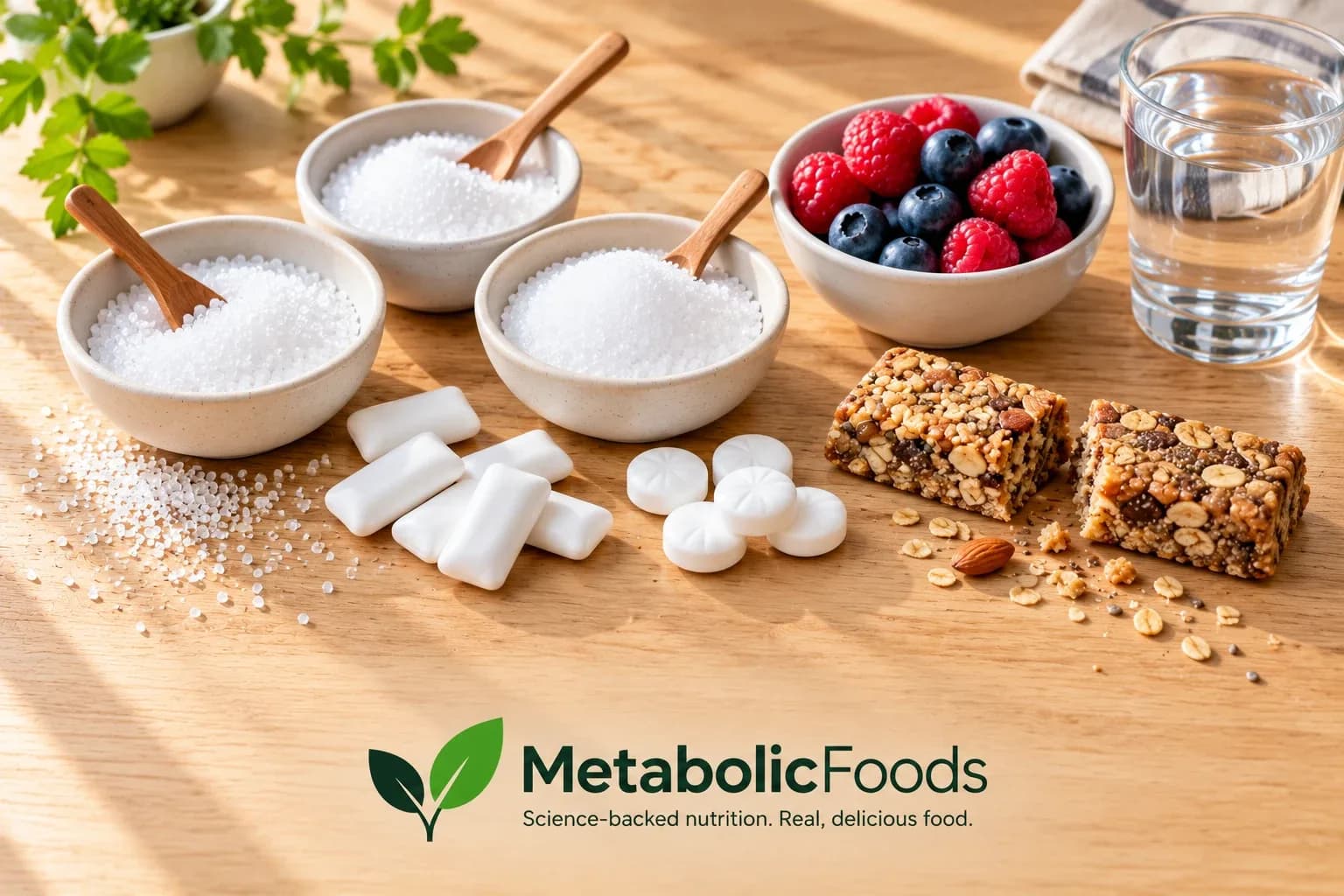
A protein bar can say “zero sugar” and still leave you with a stomachache. A sugar-free mint may be gentler on your teeth than a sugary one, while a keto-friendly candy can raise blood glucose more than its front label suggests. So, are sugar alcohols healthy? For most people, they can be useful tools, but the answer depends on the specific ingredient, the portion, your digestive tolerance, and the rest of the food.
Sugar alcohols—also called polyols—are not the same as drinking alcohol, and they are not simply “fake sugar.” They are carbohydrates with a structure that tastes sweet but is absorbed and metabolized differently from table sugar. You will find them most often in sugar-free candy, gum, mints, protein bars, low-sugar baked goods, drink mixes, and some ice creams.
For people aiming to lower added sugar or make blood-sugar-aware choices, they may have a place. They are not a blanket health halo, though. A low-sugar product built around refined starches, saturated fat, or a large dose of poorly tolerated sugar alcohols may still not fit your everyday needs.
What Sugar Alcohols Do in the Body
Most sugar alcohols are only partly absorbed in the small intestine. The portion that is not absorbed moves to the large intestine, where gut microbes can ferment it. That is why many have fewer calories than sugar and a smaller effect on blood glucose, but can also cause gas, bloating, or loose stools.
Their effects vary substantially. “Sugar alcohol” is a category, not a single ingredient. Reading the ingredient list matters more than assuming every sugar-free food works the same way.
Erythritol is absorbed more completely than most other sugar alcohols—most of it passes into the blood and leaves the body unchanged in urine—so it is generally less likely to cause digestive symptoms at modest amounts. It contributes very few calories and usually has little effect on blood glucose. Xylitol has a modest calorie value and a relatively low glycemic effect compared with sugar. It is common in gum and oral-care products because sugar alcohols do not promote tooth decay the way sugar does; the FDA allows a dental health claim for sugar-free foods sweetened with them.
Sorbitol, mannitol, isomalt, and maltitol tend to be more likely to cause gastrointestinal symptoms, especially in larger servings. Maltitol deserves particular attention for blood-sugar-aware shoppers: it generally raises blood glucose more than erythritol or xylitol. A candy labeled sugar-free can still contain enough maltitol to matter if you are monitoring your response to carbohydrate-containing foods.
Are Sugar Alcohols Healthy for Blood Sugar?
Replacing a sugar-sweetened food with one that uses certain sugar alcohols can reduce added sugar and may lessen the immediate blood glucose rise. That can be helpful when the alternative is regular candy, sweetened gum, or a dessert that is high in added sugar.
But lower impact does not mean no impact. Maltitol and, to a lesser extent, some other sugar alcohols contribute digestible carbohydrate and calories. Individual responses also differ based on serving size, what else you ate, activity, sleep, and your own glucose regulation.
Think about the food matrix, too. A small amount of erythritol in plain Greek yogurt is a different choice from a large “low-carb” cookie made with refined flour, fats, and several sweeteners. For steady energy and fullness, foods with protein, fiber, and minimally processed ingredients usually do more work than a sugar-free label alone.
Sugar alcohols should not replace the broader habits that support metabolic health: eating enough fiber, including protein at meals, choosing minimally processed carbohydrates more often, and building balanced meals around real foods such as beans, vegetables, fruit, fish, eggs, yogurt, nuts, and whole grains when they fit your eating pattern.
The Digestive Trade-Off Is Real
The most common downside of sugar alcohols is digestive discomfort. Because unabsorbed amounts draw water into the intestine and can be fermented by gut bacteria, they may trigger bloating, cramping, gas, or diarrhea. The effect is dose-dependent for many people, but tolerance varies widely.
People with irritable bowel syndrome, a sensitive gut, or a history of symptoms with high-FODMAP foods may be especially likely to notice problems from polyols. In fact, polyols are one of the carbohydrate groups often limited during a clinically guided low-FODMAP trial. That does not mean everyone needs to avoid them. It means a “healthy” ingredient is not healthy in the same way for every digestive system.
A practical approach is to start small with a new product. Have one serving, not several, and see how you feel over the next day. Be particularly cautious with sugar-free gummies, candies, and large protein bars, where a single package can provide a concentrated dose.
If a product regularly causes symptoms, do not force it because the nutrition panel looks favorable. A piece of fruit with nuts, plain yogurt with berries, or a homemade snack with oats and peanut butter may be a more comfortable everyday option.
What About Erythritol Safety Headlines?
Erythritol drew attention after a 2023 study in Nature Medicine found that higher blood erythritol levels were associated with a greater risk of heart attack and stroke in people who already had elevated cardiovascular risk. In the same paper, laboratory tests linked erythritol to increased platelet reactivity, and a small experiment in eight healthy volunteers showed that an erythritol-sweetened drink caused a marked, sustained rise in blood erythritol. These findings are worth following, but they do not prove that eating erythritol causes heart disease.
One reason for caution in interpreting the headlines is that blood erythritol does not come only from food: the body also makes it from glucose. People with existing cardiometabolic risk may have different baseline physiology, making cause and effect difficult to separate in observational research. Studies using typical food intakes and longer-term clinical outcomes are still needed.
For now, there is no clear reason for most people to panic over occasional erythritol-containing gum, a beverage, or a snack. At the same time, it is reasonable not to treat erythritol as a health food or rely on large amounts every day. If you have cardiovascular disease, clotting concerns, or complex medical needs, discuss frequent use of sugar-alcohol-heavy products with your healthcare professional.
A Grocery-Store Framework That Works
When comparing sweetened products, start with the ingredient itself. Erythritol and xylitol will often have a lower blood glucose effect than maltitol. Then look beyond the sweetener: check serving size, total carbohydrate, fiber, protein, added sugar, and the overall ingredient list.
Avoid doing “net carb” math too mechanically. Nutrition labels include sugar alcohols within total carbohydrate, and listing them on their own line is optional unless the package makes a claim about sugar or sugar alcohols. “Net carbs” is not a term the FDA defines, so brands can use different approaches to estimating it. If you use a glucose monitor, your own response can add useful context, especially with foods containing maltitol. If you do not, use portions and how satisfied you feel as more practical signals.
Also check whether a product contains allulose. It is often grouped with low-sugar sweeteners in marketing, but allulose is technically a rare sugar, not a sugar alcohol. The FDA lets manufacturers leave it out of the Total Sugars and Added Sugars lines, though it still counts toward total carbohydrate. It has its own digestive tolerance considerations, so a label that says “keto-friendly” still deserves a closer look.
For dental health, sugar-free gum containing xylitol can be a practical choice after meals, particularly when brushing is not convenient. One non-negotiable safety point: xylitol is highly toxic to dogs. Keep gum, mints, baked goods, some nut butters, and other xylitol-containing foods securely away from pets.
When Sugar Alcohols Make Sense
Sugar alcohols can be useful when they help you reduce added sugar without making your eating pattern feel restrictive. They are often most helpful in small, targeted roles: a piece of gum, an occasional dessert, or a protein snack that genuinely fits your needs and agrees with your digestion.
They are less useful when they become the foundation of a highly processed diet or when avoiding sugar leads to frequent overeating of “free” foods. Sugar-free does not mean portion-free, and low glycemic does not automatically mean nutrient-dense.
Choose sugar alcohols as an option, not an obligation. The best fit is the product that supports your goals, tastes good, sits well, and leaves room for the real foods that make everyday eating satisfying.
Sources
- 21 CFR 101.80 — Health claims: dietary noncariogenic carbohydrate sweeteners and dental cariesU.S. Food and Drug Administration (eCFR)Verified
- The artificial sweetener erythritol and cardiovascular event riskNature MedicineFebruary 27, 2023Verified
- Guidance for Industry: The Declaration of Allulose and Calories from Allulose on Nutrition and Supplement Facts LabelsU.S. Food and Drug AdministrationOctober 19, 2020Verified
- High and low FODMAP foodsMonash University FODMAPVerified
- A Systematic Review of the Effects of Polyols on Gastrointestinal Health and Irritable Bowel SyndromeAdvances in NutritionJuly 14, 2017Verified
- Erythritol is a pentose-phosphate pathway metabolite and associated with adiposity gain in young adultsProceedings of the National Academy of SciencesMay 8, 2017Verified
- Paws Off Xylitol; It's Dangerous for DogsU.S. Food and Drug AdministrationVerified
- Health potential of polyols as sugar replacers, with emphasis on low glycaemic propertiesNutrition Research ReviewsDecember 1, 2003Verified
- 21 CFR 101.9 — Nutrition labeling of foodU.S. Food and Drug Administration (eCFR)Verified
Continue reading
12 Best Low Sugar Condiments for Everyday Meals
The best low sugar condiments add acid, heat, and savory depth without much added sugar. Here are 12 to keep on hand and how to compare labels at the store.
Balanced Plate Meal Example for Better Energy
A balanced plate meal example you can actually cook: salmon, lentils, and vegetables, plus three everyday variations and simple fixes when a meal leaves you hungry.
Are Dates Healthy? Benefits, Sugar, and Portions
Dates provide fiber, potassium, and polyphenols along with concentrated natural sugar. Learn what the research says about blood sugar, portions, and practical ways to eat them.