Protein Bars vs Shakes: Which Fits Your Day?
Protein bars vs shakes: neither wins every time. Learn when a bar makes more sense, when a shake does, and how to compare labels for protein, fiber, added sugar, and sweeteners.
By MetabolicFoods Editorial Team
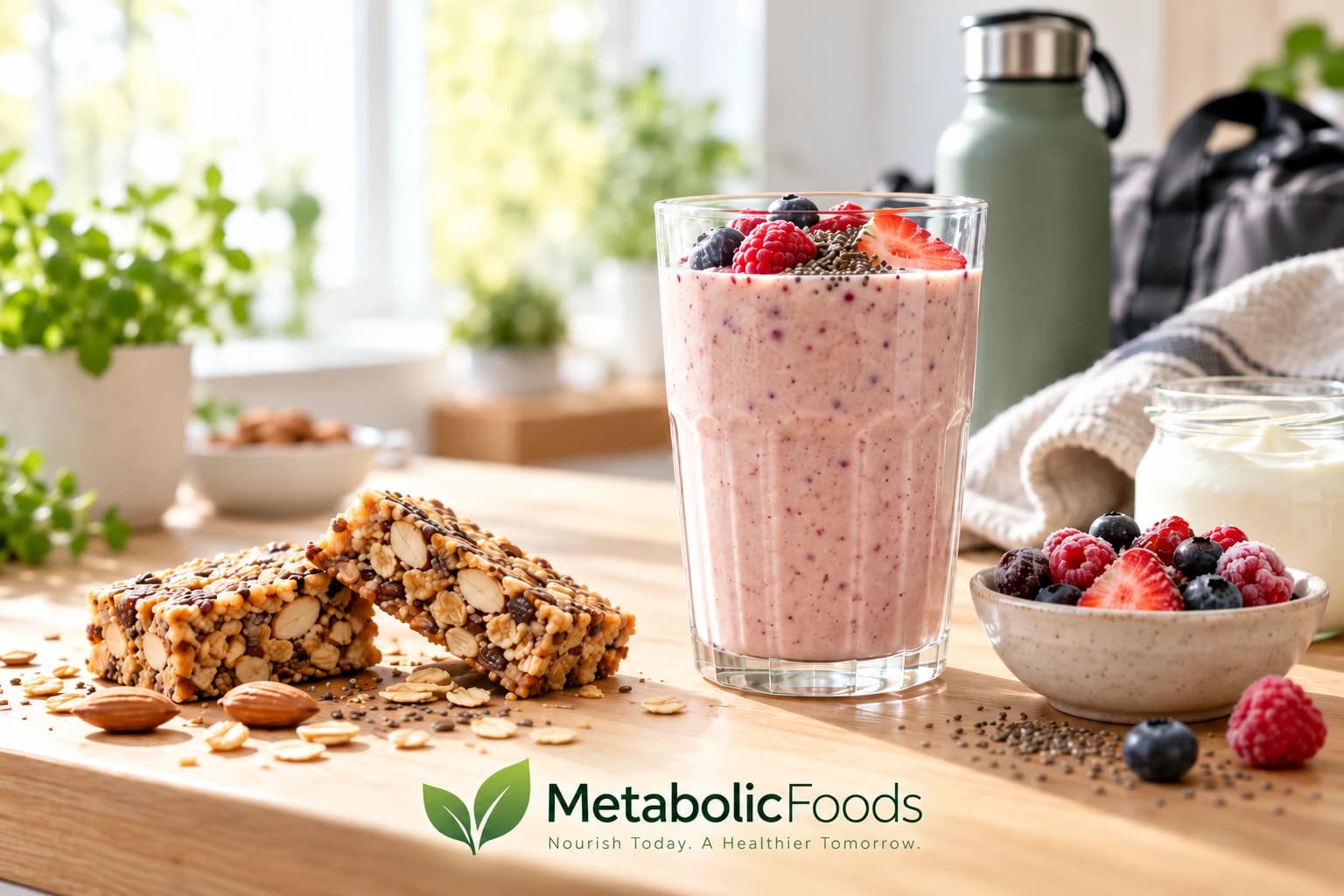
A 3 p.m. meeting, a long commute, or a rushed morning can turn protein planning into a convenience decision. In the protein bars vs shakes question, neither option wins every time. The better choice depends on what the product adds to your day: meaningful protein, satisfying nutrition, manageable ingredients, and a realistic place in your routine.
For many people, protein bars and shakes are tools rather than meals in themselves. They can help close a protein gap, make a snack more filling, or provide an option when cooking is not practical. But the nutrition label matters. Some products are close to a balanced mini-meal, while others are mostly sweeteners, refined starches, or calories in a health-focused package.
Protein Bars vs Shakes: The Main Difference
The most practical difference is how you consume them. A bar requires chewing, often takes longer to eat, and may include fiber, nuts, seeds, or whole-food ingredients. A shake is faster and can be easier to tolerate when appetite is low or time is short. Those differences can affect how full you feel and whether the product actually holds you over until your next meal.
Grams of protein are not the whole story. A 20-gram shake and a 20-gram bar may look equivalent on paper, but their total nutrition can be very different. The bar may bring 8 grams of fiber and some fat from nuts, or it may contain sugar alcohols that cause digestive discomfort. The shake may be low in added sugar and easy to customize, or it may provide little fiber and disappear quickly.
Start with the question behind the purchase. Do you need a portable snack between meals, a post-workout option, a quick breakfast backup, or help building a more substantial meal? That context is more useful than treating bars and shakes as interchangeable.
When a Protein Bar Makes More Sense
A protein bar can be the stronger choice when you need something that feels like food and travels well. Chewing tends to slow eating, and research comparing the same food as a solid, a purée, and a juice found the solid version the most filling and the drink the least. A bar with protein, fiber, and some unsaturated fat may therefore be more satisfying than a drink with the same protein count. This can be especially useful during a busy afternoon, on travel days, or when vending-machine snacks are the alternative.
Look beyond the protein number. For a snack-sized bar, 10 to 20 grams of protein is often a useful range, but the rest of the label determines how it fits your goal. A bar with a few grams of fiber and limited added sugar will generally offer a steadier option than one built around syrups and refined grains.
Ingredients deserve a quick scan, too. Nuts, seeds, oats, nut butters, and fruit can contribute texture and nutrients. Added fibers such as chicory root fiber (inulin) and sugar alcohols such as maltitol or sorbitol work well for some people but can cause gas, bloating, or loose stools for others, and the effect grows with the amount eaten. Erythritol is usually better tolerated, though large amounts can still bother some people. If you are increasing fiber for gut health, do it gradually and drink enough fluids rather than relying on several high-fiber bars in one day.
Bars also have a clear limitation: many are calorie-dense. That is not inherently negative. A 250-calorie bar may be appropriate as a light meal bridge or after a long workout. But if you only want a small snack, a dense bar can exceed what you expected. Portion and purpose should match.
When a Protein Shake Makes More Sense
A shake is hard to beat for speed. It can be ready in minutes, easy to drink on the way out the door, and useful after exercise when you may not be ready for solid food. For adults working toward higher protein intake, a ready-to-drink shake or a simple homemade blend can make consistency easier.
Shakes are also easier to customize. Blending plain Greek yogurt or an unsweetened protein powder with milk or fortified soy milk, frozen berries, and a spoonful of chia or ground flax can create a more balanced option than many packaged products. The berries add flavor and polyphenols; the chia or flax adds fiber and fat; the dairy or soy base contributes additional protein.
That said, liquid calories are not always as filling as solid food. A shake may support a meal, but it may not replace one comfortably for everyone. If a shake leaves you hungry an hour later, pair it with something chewable, such as an apple, a handful of nuts, or whole-grain toast with peanut butter. This is not a failure of shakes. It is simply a sign that your body may respond better to protein alongside fiber and texture.
For blood-sugar awareness, check both total carbohydrate and added sugar. A shake with 25 to 30 grams of added sugar—half or more of the 50-gram Daily Value—can behave more like a sweet beverage than a balanced protein option, even if it contains protein. A lower-sugar shake that includes at least 20 grams of protein can be a practical choice, particularly when paired with a meal or fiber-rich food.
Compare the Label, Not the Marketing
The front of a package may emphasize high protein, keto-friendly, natural, or low net carbs. Those claims do not tell the full story. Turn the package over and compare the nutrition facts panel and ingredient list.
For everyday use, assess five things together:
- Protein amount and source. Dairy proteins such as whey and casein, soy protein, pea protein, and blended plant proteins can all contribute. If you eat mostly plant-based, blends often provide a more balanced amino acid profile than a single plant protein alone.
- Fiber and carbohydrate quality. Fiber from foods such as oats, nuts, seeds, and fruit is often easier to build into a satisfying routine. Added functional fibers can still be useful, but tolerance varies.
- Added sugar. There is no universal cutoff for every product, but lower added sugar leaves more room for the naturally occurring carbohydrates in real foods.
- Calories and serving size. A small bottle, oversized bar, or two-serving package can make comparisons misleading.
- Sodium, sweeteners, and ingredients you personally tolerate. The best option is one you can use consistently without digestive issues or flavor fatigue.
Protein quality matters, but perfection is unnecessary. Most people benefit more from regularly eating enough total protein across meals than from searching for a flawless bar or powder. A product that you enjoy, tolerate, and use as intended has more practical value than one with an impressive label that stays in the pantry.
Build a Better Snack or Light Meal
Neither a bar nor a shake needs to carry your entire nutrition plan. Think of each as an anchor, then add what is missing. A lower-fiber protein shake can be paired with fruit. A bar that is modest in protein can sit alongside cottage cheese or plain yogurt. If breakfast is a shake, add oats, berries, or eggs later in the morning when time allows.
This approach can be especially helpful for people taking appetite-affecting medications or simply dealing with low appetite. Smaller, protein-forward eating occasions may be easier than large meals, but fiber, hydration, and overall food variety still matter. Persistent nausea, trouble eating enough, or unintentional weight loss deserves guidance from a qualified clinician or registered dietitian.
Cost is another real-world consideration. Single-serve products offer convenience but often cost more per serving than food-based protein sources such as eggs, Greek yogurt, canned fish, tofu, beans, or chicken. Keep a few shelf-stable bars or shakes for true convenience needs, then rely on real-food meals most of the time. That balance supports both your budget and dietary variety.
Choose for the Situation, Then Check the Label
Choose a protein bar when you need portability, a more chewable snack, and a product that can include fiber. Choose a shake when speed, easy digestion, or customization matters most. If your goal is sustained fullness, either option usually works better alongside fruit, vegetables, whole grains, nuts, seeds, or another source of fiber.
The useful standard is not whether bars or shakes are healthier in the abstract. It is whether the option in your hand helps you eat enough protein, supports steady energy, and fits a pattern built mostly from real foods. A quick label check before you buy can make that convenience choice one you feel good about repeating.
Sources
- Added Sugars on the Nutrition Facts LabelU.S. Food and Drug AdministrationVerified
- Serving Size on the Nutrition Facts LabelU.S. Food and Drug AdministrationVerified
- Gastrointestinal tolerance of chicory inulin productsJournal of the American Dietetic AssociationJune 1, 2010Verified
- Effects of food form and timing of ingestion on appetite and energy intake in lean young adults and in young adults with obesityJournal of the American Dietetic AssociationMarch 1, 2009Verified
- A Systematic Review of the Effects of Polyols on Gastrointestinal Health and Irritable Bowel SyndromeAdvances in NutritionJuly 14, 2017Verified
- Protein content and amino acid composition of commercially available plant-based protein isolatesAmino AcidsAugust 30, 2018Verified
Continue reading
Protein Per Meal Guide for Everyday Eating
How much protein per meal is practical? Turn a daily target into a repeatable protein anchor at breakfast, lunch, and dinner—with real food portions and simple ways to upgrade lower-protein meals.
12 Best Cottage Cheese Snacks: Easy High-Protein Ideas
Twelve sweet and savory cottage cheese snacks that pair its protein with fiber-rich produce, beans, whole grains, nuts, and seeds—plus how to compare labels for sodium and added sugar.

High Protein Foods on a Budget: Staples That Stretch Every Dollar
High protein foods on a budget are less about one bargain product and more about staples like eggs, Greek yogurt, lentils, canned fish, and tofu that deliver protein, fiber, and staying power per dollar.