12 Best Cottage Cheese Snacks: Easy High-Protein Ideas
Twelve sweet and savory cottage cheese snacks that pair its protein with fiber-rich produce, beans, whole grains, nuts, and seeds—plus how to compare labels for sodium and added sugar.
By MetabolicFoods Editorial Team
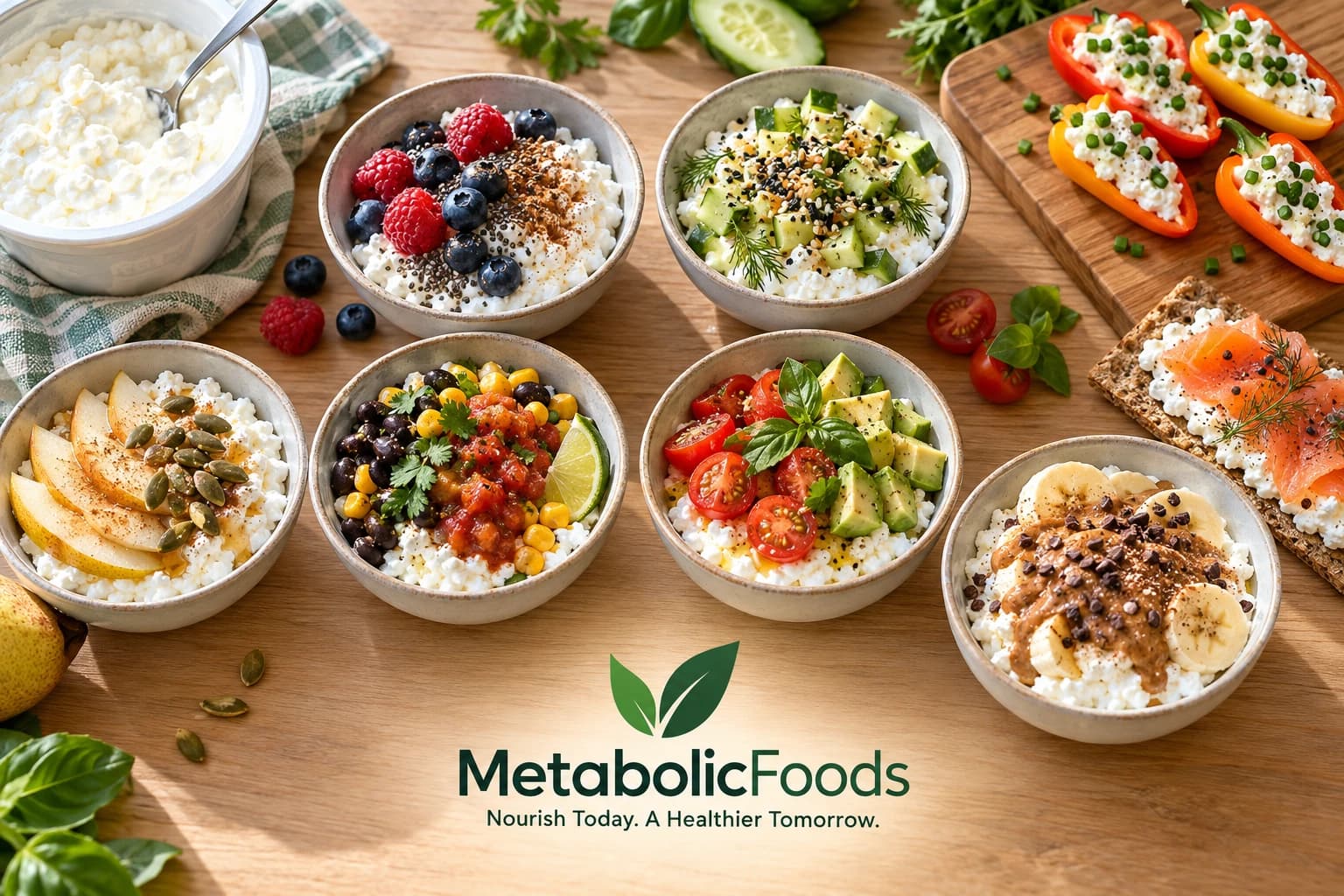
A tub of cottage cheese can do more than fill a gap between meals. The best cottage cheese snacks pair its protein with fiber-rich produce, whole-food carbohydrates, or healthy fats, creating options that are more likely to keep hunger manageable than a snack built around refined starch alone.
Cottage cheese is not a magic food, and the best choice depends on your needs. A plain, lower-sodium option may suit someone watching sodium intake, while a full-fat version may be more satisfying for someone who tends to feel hungry soon after eating. The useful starting point is simple: choose plain cottage cheese, then build flavor and texture with real foods.
Why Cottage Cheese Works as a Snack
Cottage cheese is a concentrated source of dairy protein, most of it casein. USDA data put a half-cup serving of standard lowfat cottage cheese at roughly 12 to 14 grams of protein, although labels vary by brand and fat level. In controlled studies, protein-containing snacks have kept people satisfied modestly longer than carbohydrate-only snacks, which is a big part of why cottage cheese earns a place between meals. It also provides calcium, and some brands add live and active cultures.
Protein alone is not the whole picture for metabolic health. Cottage cheese is naturally low in fiber, so combining it with berries, vegetables, beans, seeds, or whole-grain foods makes the snack more balanced. This approach adds volume, texture, and carbohydrates that digest more gradually.
One practical watch-out is sodium. In USDA data, a half cup of regular cottage cheese provides roughly 350 to 460 milligrams of sodium, while no-salt-added versions contain only a small fraction of that. If sodium is a priority for you, compare labels rather than assuming every tub is similar. Flavored varieties can also contain added sugars that are easy to miss.
12 Best Cottage Cheese Snacks to Make on Repeat
1. Berries, chia, and cinnamon
Top cottage cheese with blueberries, raspberries, or sliced strawberries, then add chia seeds and cinnamon. Berries contribute fiber and naturally sweet flavor without turning the snack into dessert-level sugar. Chia adds more fiber and a small amount of plant-based omega-3 fat.
This is a strong option when you want something sweet after lunch or need a quick breakfast component. If berries alone do not feel substantial enough, add a small handful of walnuts for more staying power.
2. Apple slices with peanut butter
Use cottage cheese as a dip for crisp apple slices and add a spoonful of natural peanut butter. The apple provides fiber and crunch, while the peanut butter adds unsaturated fat and makes the snack feel more complete.
Portion matters here because nut butter is calorie-dense, but it does not need to be avoided. One to two teaspoons is often enough to add flavor and satisfaction alongside a generous serving of cottage cheese and apple.
3. Savory cucumber and everything seasoning
For a snack that feels more like a mini meal, spoon cottage cheese into a bowl and top it with diced cucumber, cracked pepper, and everything bagel seasoning. Add chopped dill, scallions, or a squeeze of lemon if you have them.
This combination is refreshing, high in volume, and especially useful when you want a savory alternative to crackers or chips. Because everything seasoning can be salty, use a light hand if your cottage cheese already has substantial sodium.
4. Tomato, avocado, and basil
Cherry tomatoes, diced avocado, basil, and cottage cheese make a simple bowl with protein, fiber, and satisfying fat. A splash of balsamic vinegar or red wine vinegar can bring the ingredients together without requiring a sugary bottled dressing.
Avocado is not essential, but it adds staying power. This is a good choice for afternoons when a plain protein snack would likely leave you looking for more food soon after.
5. Whole-grain crispbread with smoked salmon
Spread cottage cheese over a whole-grain crispbread and add smoked salmon, cucumber ribbons, and fresh herbs. You get protein from both the dairy and fish, plus a measured portion of whole-grain carbohydrate.
Smoked salmon is flavorful but usually high in sodium, so this works best as an occasional option or with lower-sodium cottage cheese. For a lower-sodium variation, use leftover cooked salmon instead.
6. Pear, pumpkin seeds, and cardamom
Slice a ripe pear over cottage cheese and finish with pumpkin seeds and a pinch of cardamom or cinnamon. Pears bring soluble and insoluble fiber, while pumpkin seeds add crunch, magnesium, and a little extra protein.
This snack is a useful reminder that fruit does not need to be treated as a problem food. Pairing whole fruit with protein and fat makes it more filling than fruit juice or candy eaten on their own.
7. Roasted chickpeas and chopped peppers
Add roasted chickpeas, diced bell pepper, parsley, and a little cumin to cottage cheese. Chickpeas bring fiber and plant protein, while bell peppers add crunch and vitamin C. It is a practical savory bowl that can be prepped from leftovers.
Choose roasted chickpeas that are not heavily sweetened or fried, or roast canned chickpeas at home with olive oil and spices. This is one of the best cottage cheese snacks for people who prefer substantial textures over creamy ones.
8. Pineapple, lime, and toasted coconut
Cottage cheese with pineapple, fresh lime zest, and unsweetened toasted coconut can satisfy a craving for something bright and tropical. Pineapple is sweeter than berries, but the protein-rich base makes the snack more balanced than pineapple alone.
Keep the coconut unsweetened, and use fresh pineapple or canned pineapple packed in juice rather than syrup. If you are especially blood-sugar aware, use a smaller portion of pineapple and add hemp seeds or chopped almonds.
9. Mini pepper boats
Halve mini sweet peppers, remove the seeds, and fill them with cottage cheese. Finish with black pepper, chives, or a small spoonful of salsa. The peppers act like a crunchy, fiber-containing alternative to chips.
This is easy to pack for work if you keep the filling and peppers separate until you are ready to eat. It also works well for people who find raw vegetables more appealing with a creamy dip.
10. Oats, walnuts, and tart cherries
Stir a few tablespoons of rolled oats into cottage cheese, then add walnuts and unsweetened tart cherries. Let the mixture sit for 10 to 15 minutes if you prefer softer oats. The combination offers protein, fiber, and a more substantial carbohydrate source than fruit alone.
Dried tart cherries are convenient but concentrated in sugar, even when no sugar is added. Fresh or frozen cherries are a better fit when available; otherwise, use a small portion of dried fruit and lean on the oats and walnuts for volume.
11. Black beans, corn, and salsa
Turn cottage cheese into a quick Southwest-style snack with black beans, corn, salsa, cilantro, and lime. Beans are especially helpful here because they add fiber and resistant starch, which digest more slowly than refined starches.
Use no-salt-added or rinsed canned beans when possible. This snack is filling enough to bridge a long stretch between lunch and dinner, particularly if you add sliced avocado or serve it with a small whole-grain tortilla.
12. Cocoa, banana, and almond butter
Mix unsweetened cocoa powder into cottage cheese, then top with banana slices and a small drizzle of almond butter. The cocoa adds a chocolate note without relying on flavored cottage cheese or syrup-heavy toppings.
Banana can be a useful carbohydrate choice before a walk, workout, or active afternoon. If your goal is a lower-sugar snack, use half a small banana and add raspberries or chopped nuts instead of increasing the fruit portion.
How to Choose a Cottage Cheese That Fits Your Goals
Plain cottage cheese is generally the most flexible choice because you control the sweetness and flavor additions. Check the Nutrition Facts label for protein, sodium, saturated fat, and added sugars. As a quick guide, 5% Daily Value or less per serving is considered low and 20% or more is considered high. A product with no added sugar and a protein amount that fits your meal pattern is usually a practical place to start.
Fat percentage is a preference, not a moral ranking. Nonfat cottage cheese can offer more protein per calorie, while 2% or 4% cottage cheese may be more satisfying and less likely to leave you grazing afterward. Your overall meal pattern, hunger level, and food preferences matter more than choosing the lowest number on the label.
If you are lactose intolerant, look for lactose-free or lactose-reduced cottage cheese or consider whether a smaller serving is comfortable for you. People with kidney disease, a medically prescribed sodium restriction, or a specific protein limit should follow guidance from their healthcare team rather than relying on general snack advice.
The most useful cottage cheese snack is the one you can keep stocked, enjoy regularly, and pair with foods that add fiber, color, and real satisfaction. Start with one sweet option and one savory option this week, then let your appetite and routine decide what earns a permanent place in the refrigerator.
Sources
- Cheese, cottage, lowfat, 1% milkfat, no sodium added (FDC 168114)USDA Agricultural Research Service, FoodData CentralVerified
- How to Understand and Use the Nutrition Facts LabelU.S. Food and Drug AdministrationVerified
- Cheese, cottage, lowfat, 1% milkfat (FDC 173417)USDA Agricultural Research Service, FoodData CentralVerified
- Milk protein fractions moderately extend the duration of satiety compared with carbohydrates independently of their digestive kinetics in overweight subjectsBritish Journal of NutritionJune 23, 2014Verified
- Cheese, cottage, lowfat, 2% milkfat (FDC 172182)USDA Agricultural Research Service, FoodData CentralVerified
- Cheese, cottage, lowfat, 1% milkfat, lactose reduced (FDC 167703)USDA Agricultural Research Service, FoodData CentralVerified
Continue reading
Protein Per Meal Guide for Everyday Eating
How much protein per meal is practical? Turn a daily target into a repeatable protein anchor at breakfast, lunch, and dinner—with real food portions and simple ways to upgrade lower-protein meals.
High Protein Foods on a Budget: Staples That Stretch Every Dollar
High protein foods on a budget are less about one bargain product and more about staples like eggs, Greek yogurt, lentils, canned fish, and tofu that deliver protein, fiber, and staying power per dollar.
High Protein Vegetarian Meal Prep That Lasts
A practical high protein vegetarian meal prep plan: pick two protein anchors, prep one fiber-rich base, and turn them into five meals that hold up through the week, with USDA-based protein estimates and safe storage tips.