Is Quinoa Low Glycemic? What the GI Tells You
Plain cooked quinoa can fit a lower-glycemic eating pattern, but serving size, preparation, and the rest of the meal still matter.
By MetabolicFoods Editorial Team
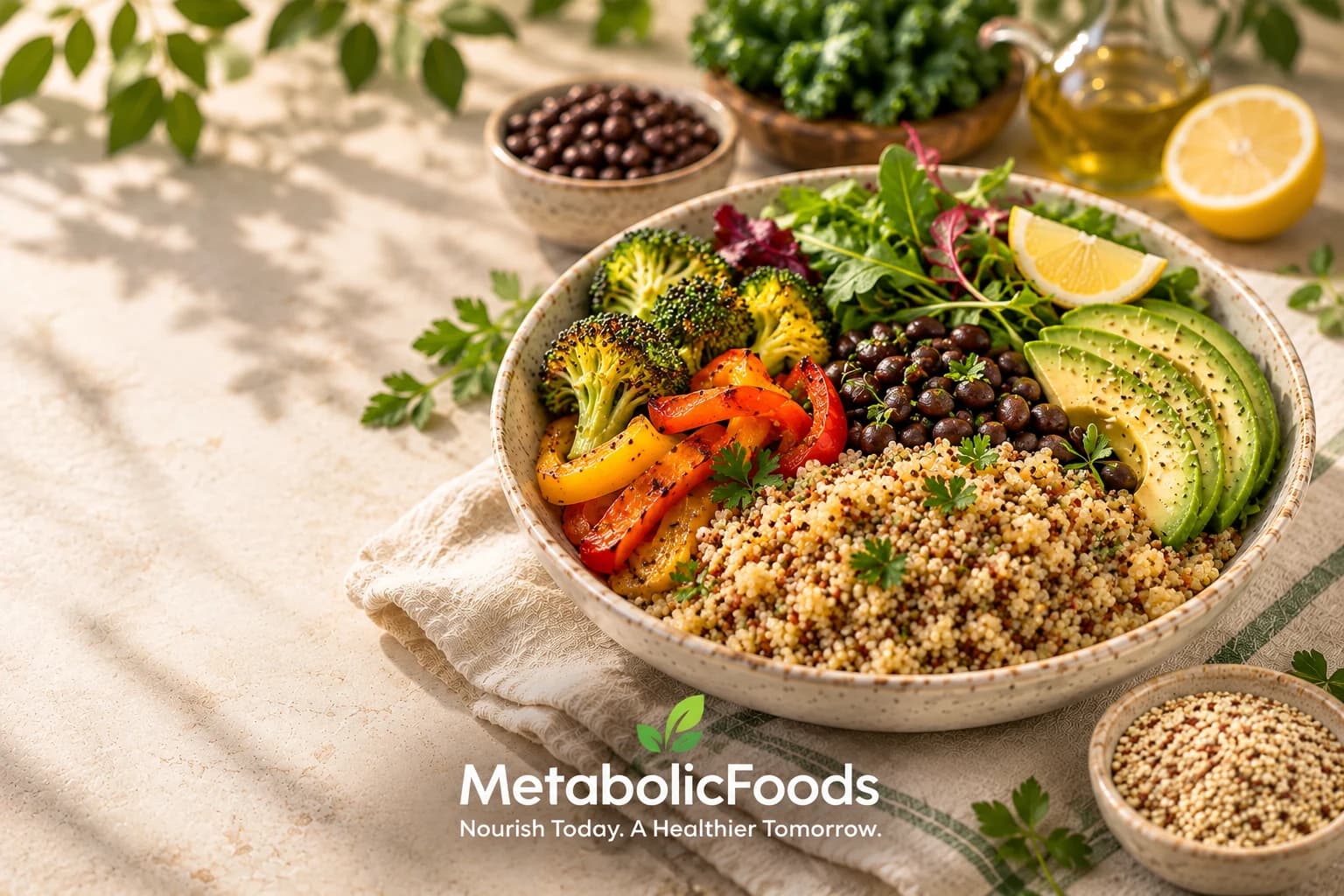
Plain cooked quinoa can fit a lower-glycemic eating pattern, but “low glycemic” is not a promise about every portion or person. Serving size, preparation, and the foods alongside it all matter.
Is quinoa low glycemic?
The glycemic index (GI) ranks carbohydrate-containing foods by the blood-glucose response measured under standardized conditions. A GI of 55 or below is generally classified as low, 56–69 as medium, and 70 or above as high.
Published quinoa values are often around the low-to-medium boundary, with many references placing plain cooked quinoa near 50–55. Results can differ by variety, cooking method, portion, and testing protocol. GI is measured using a fixed amount of available carbohydrate; a normal home serving and a mixed meal are not the same test.
Quinoa is a minimally processed seed used like a grain. It provides carbohydrate, fiber, and protein, but it is not carbohydrate-free and will not produce the same response in every person.
Glycemic index vs. glycemic load for quinoa
GI describes carbohydrate quality. Glycemic load (GL) also incorporates the amount of available carbohydrate in a serving, so portion size becomes part of the discussion.
USDA FoodData Central lists about 39 grams of total carbohydrate, 5 grams of fiber, and 8 grams of protein in 1 cup of cooked quinoa. These are approximate database values, not a guarantee for every recipe or serving. Subtracting fiber leaves roughly 34 grams of available carbohydrate, so a full cup can produce a meaningful glycemic load even when the food’s GI is relatively low.
That does not make quinoa a poor choice. It means “low glycemic” should not be interpreted as “unlimited.” A half-cup to three-quarter-cup cooked portion is a practical starting point for many meals, then adjust it to appetite, activity, and the rest of the plate.
Why quinoa can compare favorably with refined starches
Quinoa keeps more of its seed structure than refined flours and many instant starch products. Its fiber and protein also contribute to the meal’s overall composition. Those features can help explain why plain cooked quinoa may have a lower GI than some refined grain products, but they do not erase its digestible carbohydrate.
One cup of cooked quinoa provides about 8 grams of protein, more than some cooked grains but less than a typical serving of beans, eggs, yogurt, fish, or tofu. Use quinoa as one part of a meal rather than treating its protein content as a reason to skip other protein foods.
Quinoa flour, puffed quinoa, sweetened quinoa cereal, snack bars, and instant products are not automatically low glycemic. Check the whole ingredient list, serving size, fiber, added sugar, and total carbohydrate.
The meal matters more than quinoa alone
A GI score cannot predict the exact glucose response to a burrito bowl, salad, or breakfast porridge. Portion, protein, fat, fiber, acidity, cooking method, sleep, stress, movement, and individual physiology can all contribute.
A quinoa bowl with roasted vegetables, black beans, chicken or tofu, avocado, and vinaigrette is a different meal from a large bowl topped with a sweet sauce. The practical lesson is to build the plate, not chase one number. Our guide to building a lower-glycemic meal uses the same approach.
How cooking and processing may change the response
Cook quinoa until tender and use the texture you enjoy. Evidence for a precise GI change from small differences in quinoa cooking time is limited, so avoid presenting “al dente” or “very soft” as a guaranteed metabolic result.
Cooling cooked starches can change some of the starch structure through retrogradation and may increase resistant starch. The evidence is stronger for some other cooked starches than for quinoa specifically. Treat chilled quinoa as a useful meal-prep option, not a blood-sugar shortcut. Learn more in our guide to resistant starch.
Rinse dry quinoa before cooking if you prefer its flavor; this removes naturally occurring saponins. It does not turn quinoa into a lower-GI food. Red, white, black, and tricolor quinoa differ in taste and texture, but there is not enough consistent evidence to call one color reliably best for glucose control.
Practical ways to use quinoa
- Start with the portion that fits the meal, often about one-half cup cooked when beans, vegetables, or another starch are also present.
- Add protein and vegetables: lentils with broccoli, salmon with greens, tofu with roasted vegetables, or plain yogurt with berries at breakfast.
- Compare packaged products by serving size, added sugar, sodium, fiber, and total carbohydrate.
- Rotate quinoa with beans, lentils, oats, barley, brown rice, and other whole-food carbohydrate sources for variety.
When quinoa may not be the best fit
Quinoa is nutritious, but no single food works for every goal. If you follow a very-low-carbohydrate plan, even a moderate serving may use much of your carbohydrate budget. If you manage diabetes or use glucose-lowering medication, your measured response and your clinician’s guidance should take priority over a general GI classification.
Some people prefer the taste, price, or texture of brown rice, farro, barley, beans, or steel-cut oats. A sustainable pattern is one you can enjoy consistently and portion realistically.
Frequently asked questions
Is quinoa better than white rice for blood sugar?
Plain quinoa may be the steadier choice in some meals because it often has a lower GI and provides more fiber and protein. White rice varies by type and preparation. Compare portions and build either option into a meal with vegetables and a protein food.
Is quinoa better than brown rice?
Both can fit a blood-sugar-aware pattern. Quinoa generally provides more protein per cooked cup, while brown rice may be less expensive or easier to find. Rotate them and let the full meal and your personal response guide the choice.
Can quinoa raise blood sugar?
Yes. Quinoa contains digestible carbohydrate, so it can raise blood sugar, especially in a large serving or when eaten alone. A lower-GI classification suggests a slower average response than a high-GI food; it does not mean no response.
Think of quinoa as a versatile whole-food carbohydrate, not a metabolic exception. A measured serving alongside vegetables, protein, and satisfying fats can be a practical choice you return to throughout the week.
Sources
- Quinoa, cooked — FoodData Central food 168917U.S. Department of AgricultureVerified
- New definition of resistant starch types from the gut microbiota perspectives - a reviewCritical Reviews in Food Science and NutritionJanuary 25, 2022Verified
- Nutrition Facts LabelU.S. Food and Drug AdministrationVerified
- Carbohydrate quality and human health: a series of systematic reviews and meta-analysesThe LancetJanuary 10, 2019Verified
- International Tables of Glycemic Index and Glycemic Load Values: 2008Diabetes CareDecember 1, 2008Verified
- Glycemic Index and Glycemic LoadLinus Pauling Institute, Oregon State UniversityVerified
- About Glycemic IndexUniversity of Sydney, Glycemic Index Research and GI DatabaseVerified
Continue reading
Best Fiber Supplement: How to Choose the Right Type
The best fiber supplement depends on your goal. Compare psyllium, methylcellulose, wheat dextrin, inulin, and PHGG for evidence, tolerance, and safety.
10 Best Beans for Fiber—and How to Use Them
Compare 10 fiber-rich beans using approximate cooked-cup values, then learn how to choose canned or dry beans, prepare kidney beans safely, and add legumes gradually.

Best High-Fiber Cereal: How to Choose a Better Bowl
Learn how to choose a high-fiber cereal by comparing fiber %DV, serving size, added sugar, grain structure, added fibers, protein, and the rest of your breakfast.