10 Best Beans for Fiber—and How to Use Them
Compare 10 fiber-rich beans using approximate cooked-cup values, then learn how to choose canned or dry beans, prepare kidney beans safely, and add legumes gradually.
By MetabolicFoods Editorial Team
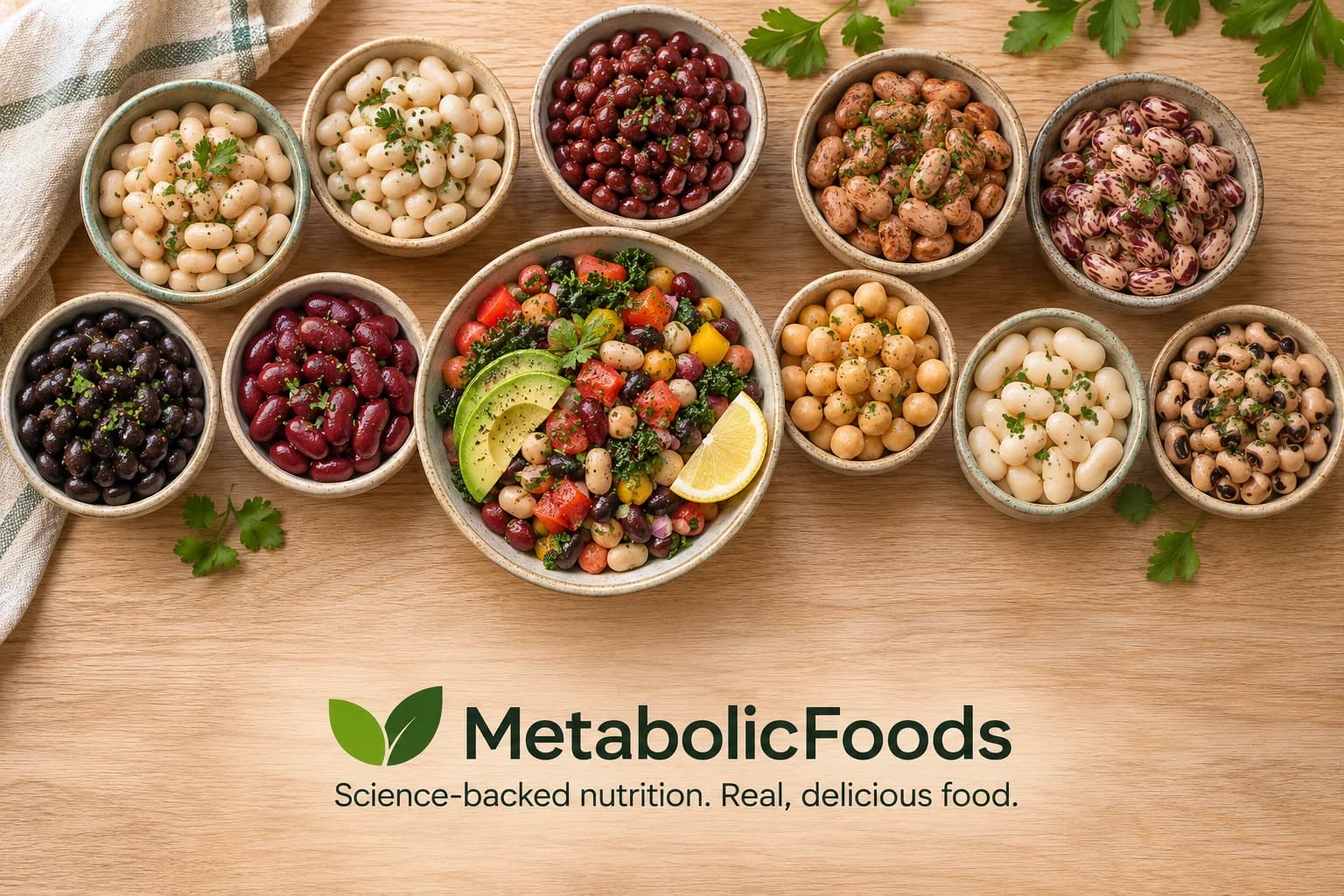
A can of beans can turn a low-fiber lunch into a more substantial meal in minutes. The best beans for fiber are not necessarily the rarest variety or the one with the largest number in a database. They are beans you enjoy, can afford, and use often enough for their fiber to contribute to your overall eating pattern.
Beans, peas, and lentils occupy a useful place in both the vegetable and protein-food groups. They provide fiber, plant protein, folate, potassium, magnesium, and carbohydrate in the same food. The exact nutrition varies by variety and preparation, but almost any cooked mature bean can make a meaningful fiber contribution.
How We Compared the Beans
The figures below use approximate USDA legacy values for one cup of mature beans cooked from dry, boiled, drained, and prepared without salt. They are reference values, not promises about every bowl.
A cup is not the same weight for every bean. Navy beans, adzuki beans, chickpeas, and black beans pack differently into a measuring cup, so ranking by one cooked cup can produce a different order from ranking by 100 grams. Brand, variety, moisture, cooking time, and whether the beans are canned also change the number.
For most meals, a half cup is a more familiar starting portion. It generally supplies roughly half the fiber listed for one cup. Check the Nutrition Facts label when using canned beans because the labeled serving and values belong to that specific product.
This list highlights 10 useful, fiber-rich options rather than claiming to identify a permanent global ranking.
1. Navy Beans: About 19 Grams per Cooked Cup
Navy beans are among the most fiber-rich commonly available cooked beans in the USDA legacy data. Their mild flavor and creamy texture work well in tomato-based soups, white chili, bean salads, and blended dips.
If you prefer less noticeable bean texture, blend some of the cooked beans into the soup base and leave the rest whole. That thickens the dish without requiring cream or flour.
2. Small White Beans: About 18.5 Grams per Cooked Cup
Small white beans are sometimes sold as small white or pea beans, and naming can overlap with navy beans depending on the market. USDA lists them separately, but shoppers should use the package label rather than assuming two differently named bags are nutritionally distinct.
They work well in Mediterranean-style salads, pasta dishes, vegetable soups, and braises with tomatoes, garlic, herbs, and olive oil.
3. Adzuki Beans: About 17 Grams per Cooked Cup
Adzuki beans are small, reddish beans with a mildly sweet flavor. They appear in both sweet and savory East Asian dishes. For an everyday high-fiber meal, choose plain cooked adzuki beans rather than a sweetened bean paste.
Use them in grain bowls, vegetable soups, curries, or salads with cabbage, carrots, scallions, and a sesame-ginger dressing.
4. Pinto Beans: About 15.5 Grams per Cooked Cup
Pinto beans are affordable, widely available, and easy to use in tacos, burrito bowls, soups, salads, and homemade refried beans. Their availability may matter more in practice than a small difference in fiber between varieties.
For refried beans, mash cooked pinto beans with seasonings and enough cooking liquid to reach the texture you want. Added lard is traditional in some recipes but not required; the final nutrition depends on how the dish is prepared.
5. Cranberry Beans: About 15 Grams per Cooked Cup
Cranberry beans, also called borlotti beans, have a creamy interior and a nutty flavor. USDA legacy values place them close to pinto and black beans when compared by a cooked cup, rather than near 17 grams as some summaries report.
They are especially good in rustic soups, pasta e fagioli-style dishes, braises, and warm bean salads with herbs and olive oil.
6. Black Beans: About 15 Grams per Cooked Cup
Black beans combine substantial fiber with broad availability. They fit naturally into tacos, bowls, soups, salads, breakfast scrambles, and dishes with salsa, corn, peppers, eggs, rice, or avocado.
For a fast meal, drain and rinse canned black beans, then warm them with cumin, garlic, lime, and a small amount of water or unsalted broth.
7. Red Kidney Beans: About 13 Grams per Cooked Cup
Red kidney beans hold their shape in chili, soups, taco bowls, and cold salads. Their USDA cooked-cup value is about 13.1 grams of fiber—not 15 grams, which is closer to the value for black or pinto beans.
Dry kidney beans require special food-safety attention. FDA advises soaking them for at least five hours, discarding the soaking water, and boiling them in fresh water for at least 30 minutes to destroy phytohaemagglutinin, a lectin that can cause severe gastrointestinal symptoms. Do not rely on a slow cooker alone for raw kidney beans. Commercially canned kidney beans are already fully cooked.
8. Chickpeas: About 12.5 Grams per Cooked Cup
Chickpeas do not lead the cup-for-cup list, but their versatility makes them one of the most useful high-fiber pantry foods. Add them to curries, soups, salads, and grain bowls, roast them for a crunchy topping, or blend them into hummus.
Their firmer texture works well when you want a bean that stays distinct after mixing or meal prep.
9. Great Northern Beans: About 12.5 Grams per Cooked Cup
Great Northern beans are larger than navy beans and have a delicate flavor with a creamy but intact texture. Their fiber value is lower than navy or small white beans in the USDA reference data, which is a useful reminder that “white bean” is not one nutritionally identical category.
Use them in white chili, vegetable soup, casseroles, or a simple skillet with greens, lemon, garlic, and olive oil.
10. Black-Eyed Peas: About 11 Grams per Cooked Cup
Black-eyed peas are cowpeas rather than garden peas. Their USDA cooked-cup value is closer to 11 grams of fiber than 13 grams. They remain a strong source and cook relatively quickly from dry.
Their tender texture works well with greens, tomatoes, onions, corn, herbs, and vinegar-based dressings.
What About Lima Beans and Lentils?
Lima beans are another fiber-rich option and can easily fit the same meal pattern. Values differ between baby and large lima beans and between cooked and canned products, which makes one universal cup number less useful. Their buttery texture suits soups, succotash-style dishes, and roasted-vegetable plates.
Lentils are legumes but are not technically beans. They deserve a place in a high-fiber pantry because they cook quickly and work in soups, curries, salads, sauces, and bowls. This list stays focused on foods commonly sold as beans, chickpeas, or cowpeas rather than treating every pulse as the same category.
Canned or Dry: Which Is Better?
Both can be useful. Dry beans generally cost less per cooked serving and let you control texture and added salt, but they require planning and cooking time. Canned beans are already cooked, shelf-stable, and easy to add to meals in minutes.
Sodium varies widely among canned products. Compare labels and choose no-salt-added or lower-sodium options when that fits your needs. Draining and rinsing regular canned beans can remove a meaningful portion of the sodium; Utah State University Extension cites a reduction of about 41% in tested canned beans. The exact reduction depends on the product and rinsing method.
Rinsing does not remove most of the fiber or protein. It may wash away some water-soluble nutrients and starch from the canning liquid, but convenience and regular use can matter more than a small difference between formats.
Beans, Resistant Starch, and Blood-Sugar Context
Beans contain a mixture of digestible starch, fiber, and resistant starch. The exact resistant-starch amount varies with bean variety, cooking, cooling, reheating, and laboratory method, so this article does not assign a fixed resistant-starch number to each bean.
Beans can be a useful carbohydrate source in a blood-sugar-aware meal, but they are not a standalone treatment. Portion, medication, the rest of the plate, and individual response still matter. Build the meal around beans plus non-starchy vegetables, flavor-building fats, and another protein source when needed. Our balanced-plate example shows how legumes can fit without eliminating other carbohydrates.
People using insulin or other glucose-lowering medication should follow individualized guidance when making substantial changes to carbohydrate and fiber intake.
Add Beans Gradually if Your Current Intake Is Low
Beans contain fermentable carbohydrates, including galactooligosaccharides, that can cause gas or bloating for some people. A sudden increase in total fiber can also change bowel habits.
Start with about a quarter to half cup and increase gradually rather than beginning with a very large bean-heavy meal. Drink enough fluids, and vary your fiber sources with vegetables, fruit, oats, nuts, seeds, and whole grains.
Canned and rinsed legumes may be easier for some people to tolerate because some fermentable carbohydrates move into the canning liquid. That does not make canned beans symptom-free or universally low FODMAP. Serving size and individual tolerance remain important.
Cooking dry beans thoroughly is essential for safety and may improve texture and tolerance, but ginger, cumin, fennel, or other seasonings should be used for flavor—not promised as a treatment for gas. Our guide to increasing fiber gradually offers a step-by-step approach.
People with irritable bowel syndrome, inflammatory bowel disease, a medically prescribed low-potassium diet, or persistent digestive symptoms may need individualized advice from a clinician or registered dietitian.
Easy Ways to Use More Beans
Beans work best when they have a clear role in a meal. Try these combinations:
- Fold navy or Great Northern beans into vegetable soup and finish with olive oil and lemon.
- Add black beans to scrambled eggs or tofu with spinach and salsa.
- Toss chickpeas with cucumber, tomatoes, herbs, and a lemon-tahini dressing.
- Replace part of the meat in chili with kidney or pinto beans.
- Add cranberry beans to pasta with greens and tomato sauce.
- Build a bowl with adzuki beans, brown rice, cabbage, carrots, and sesame dressing.
- Serve black-eyed peas with collard greens, tomatoes, and a vinegar-based sauce.
You do not need a full cup at every meal. A half cup in a soup, salad, grain bowl, or taco plate can make a substantial fiber contribution. Keeping two or three varieties in the pantry lets you choose according to the recipe instead of forcing every meal around the same bean.
The most useful high-fiber bean is the one that makes it from your shelf to your plate. Start with a variety you already enjoy, add it to one familiar meal, and let consistency—not a perfect ranking—do the nutritional work.
Sources
- Beans, Peas, and LentilsUSDA MyPlateVerified
- USDA National Nutrient Database for Standard Reference Legacy — Total Dietary FiberU.S. Department of AgricultureApril 1, 2018Verified
- Eating, Diet, & Nutrition for ConstipationNational Institute of Diabetes and Digestive and Kidney Diseases (NIH)Verified
- Natural Toxins in FoodU.S. Food and Drug AdministrationVerified
- Carbohydrate quality and human health: a series of systematic reviews and meta-analysesThe LancetJanuary 10, 2019Verified
- Boost the Benefits with BeansUtah State University ExtensionVerified
- USDA National Nutrient Database for Standard Reference, Release 28 DocumentationUSDA Agricultural Research ServiceSeptember 1, 2015Verified
- Including legumes on a low FODMAP dietMonash University FODMAPVerified
Continue reading

Best High-Fiber Cereal: How to Choose a Better Bowl
Learn how to choose a high-fiber cereal by comparing fiber %DV, serving size, added sugar, grain structure, added fibers, protein, and the rest of your breakfast.
12 High Fiber Snacks to Buy (and How to Read the Label)
The best high fiber snacks to buy are the ones you will actually eat. Here are 12 practical options, from roasted chickpeas and berries to popcorn and whole-grain crackers, plus how to read fiber, sugar, and sodium on the label.
How to Increase Fiber Gradually Without Gut Upset
Adding fiber too fast can bring gas, bloating, and cramps. Here is how to increase it step by step, read labels, and choose gentler starting foods.