12 High Fiber Snacks to Buy (and How to Read the Label)
The best high fiber snacks to buy are the ones you will actually eat. Here are 12 practical options, from roasted chickpeas and berries to popcorn and whole-grain crackers, plus how to read fiber, sugar, and sodium on the label.
By MetabolicFoods Editorial Team
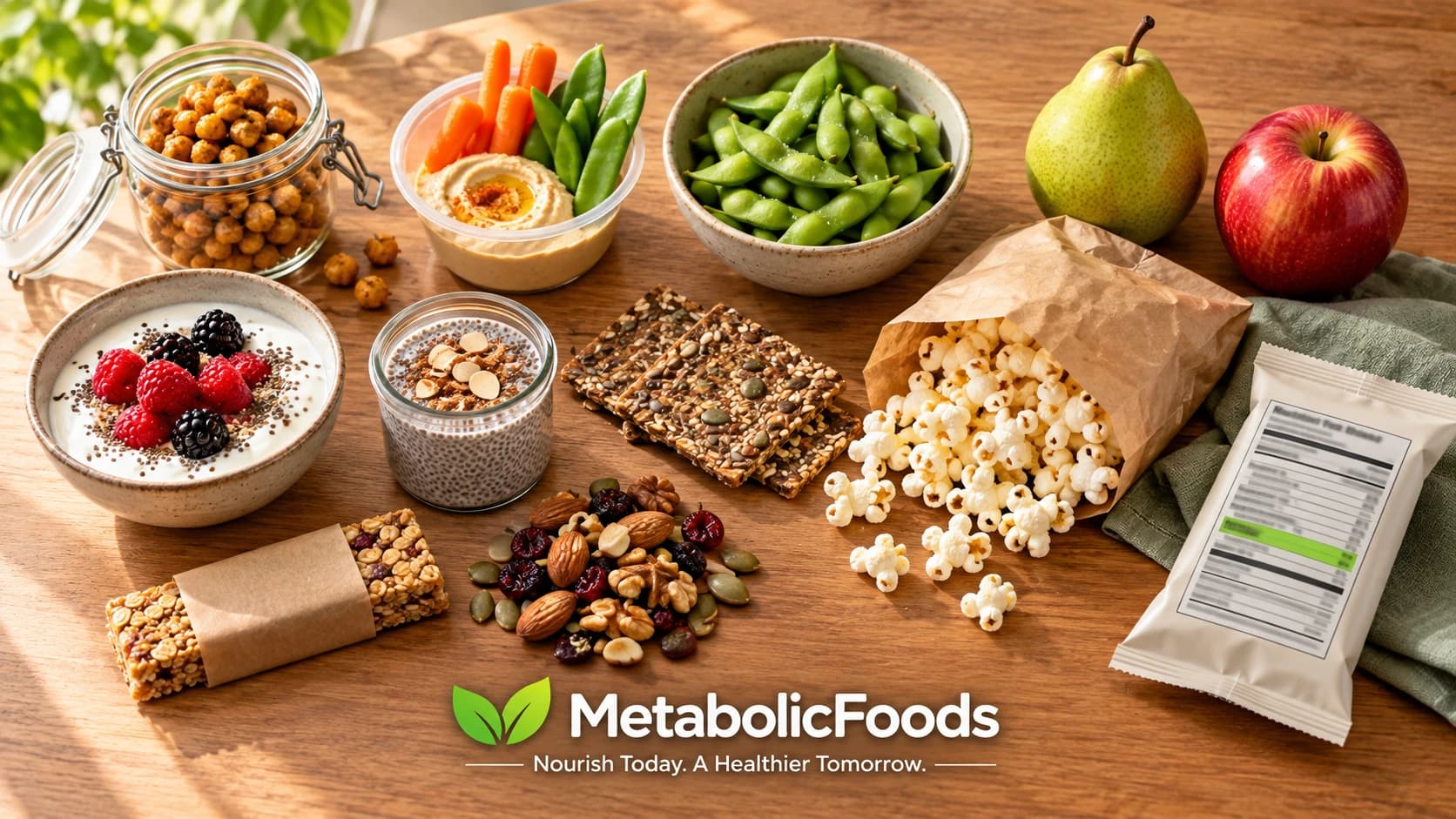
A snack aisle can make fiber look simpler than it is. Packages highlight whole grains, seeds, and digestive health, but the amount of fiber per serving can still be modest, and the serving size can be surprisingly small. The best high fiber snacks to buy are the ones you will actually keep on hand, enjoy regularly, and use to close the gap between the fiber you need and the fiber your usual meals provide.
For most adults, the Daily Value for fiber is 28 grams per day. Most Americans fall short; one review estimates that only about 5% of the population meets fiber recommendations. Fiber-rich snacks can help, particularly when they are built around beans, fruit, whole grains, nuts, seeds, or minimally processed plant foods. They can also support fuller, more satisfying eating patterns without turning snack time into a nutrition project.
What Makes a Snack Truly High in Fiber?
A useful starting point is 3 grams of fiber per serving, which qualifies as a "good source" under FDA labeling rules. A snack with 5 grams or more provides a more meaningful contribution toward the Daily Value; for a package to call itself "high fiber," it needs at least 20% of the Daily Value, or about 5.6 grams per serving. That does not make a 2-gram snack a bad choice, but it is unlikely to move your overall intake very far unless the rest of your day is already fiber-forward.
Look at the Nutrition Facts panel before the front-of-package claims. Compare the fiber grams with the actual portion you would eat. Then check added sugar, sodium, and protein. There is no single ideal formula: a fruit-based snack may have little protein but still be a strong choice, while a bean snack may offer fiber and protein but more sodium. The right fit depends on what the rest of your day looks like.
If your current fiber intake is low, increase it gradually and drink enough fluids. A sudden jump from a low-fiber pattern to very high-fiber bars, cereals, and legumes can cause gas or bloating for some people.
12 High Fiber Snacks to Buy
1. Roasted chickpeas
Crunchy roasted chickpeas are one of the more useful shelf-stable options because they provide both fiber and plant protein. Plain or lightly seasoned versions tend to make it easier to manage sodium. They work well when you want a savory alternative to chips, though, like most legumes, they can be hard on sensitive digestion in large portions.
2. Single-serve hummus with vegetables
Hummus gets its fiber from chickpeas, while baby carrots, snap peas, bell pepper strips, or broccoli add volume and more plant variety. Buying individual hummus cups can make this combination easier for workdays and travel. Choose a portion that feels satisfying rather than treating a two-tablespoon serving as a complete snack.
3. Edamame
Frozen, steam-in-bag edamame is an overlooked snack with fiber, protein, and a short ingredient list. Dry-roasted edamame is another portable option. For packaged versions, compare sodium levels, especially if you snack on them often or pair them with other salty foods.
4. Pears, apples, and oranges
Whole fruit is among the simplest high-fiber foods available, and it requires little label reading. Keep the skin on apples and pears when possible, since the skin adds fiber. Pairing fruit with nuts, cheese, or plain Greek yogurt can add protein or fat for people who find fruit alone does not keep them full between meals.
5. Berries with plain yogurt
Raspberries and blackberries are especially fiber-rich for their size. Fresh berries are ideal when convenient, but frozen berries are often more affordable and keep their fiber. Stir them into plain Greek yogurt or unsweetened soy yogurt, then add chia seeds if you want a more substantial snack.
6. Chia seed pudding or chia cups
Chia seeds provide a concentrated source of fiber and form a gel-like texture when mixed with liquid, a hallmark of soluble fiber. Ready-to-eat chia cups can be convenient, but check for added sugars. Making chia pudding or berry chia overnight oats at home with milk or an unsweetened dairy-free alternative gives you more control over sweetness and portion size.
7. High-fiber whole-grain crackers
Crackers can be a practical choice when the ingredient list starts with a whole grain and the fiber amount is meaningful. Seeded crispbreads and whole-grain crackers often offer more fiber than standard buttery crackers. Add tuna, cottage cheese, nut butter, or hummus to make the snack more filling.
8. Air-popped or lightly seasoned popcorn
Popcorn is a whole grain, and its large volume can make a modest serving feel generous. Plain air-popped popcorn is the most flexible option because you can season it yourself. Ready-made popcorn can work too, but some varieties add enough oil, sodium, or sugar to change the snack's role from everyday staple to occasional treat.
9. Oat-based snack bars
An oat-based bar can be useful in a desk drawer or bag, but it is one category where the label matters most. Look for at least 3 to 5 grams of fiber and a recognizable source such as oats, nuts, seeds, or dried fruit. Bars relying heavily on syrups, refined starches, or isolated fibers may still fit occasionally, but they do not always provide the same satisfaction as foods built from whole ingredients.
10. Trail mix with nuts, seeds, and dried fruit
A simple trail mix can bring together fiber, unsaturated fats, and minerals. The trade-off is energy density: nuts and dried fruit are nutritious, but it is easy to eat several servings while distracted. Buying portioned packs or dividing a larger bag at home can make this snack more practical.
11. Bean-based chips or pea snacks
Bean and pea snacks can offer more fiber and protein than conventional potato chips. They are not automatically healthier in every respect, since flavorings may contribute substantial sodium and oils. Still, they can be a useful bridge snack for people who want a familiar crunchy format with a better nutrient profile.
12. High-fiber cereal
A bowl of high-fiber cereal with milk or fortified soy milk can be a fast snack, especially after workouts or during a busy afternoon. Some cereals use wheat bran, while others combine whole grains, nuts, and seeds. Check both fiber and added sugar, and notice whether the stated serving size matches the bowl you usually pour.
How to Read Labels for High Fiber Snacks to Buy
Start with fiber grams, then use the ingredient list to understand where that fiber comes from. Foods based on beans, oats, bran, fruit, nuts, seeds, and intact whole grains generally offer more than just added fiber. Ingredients such as inulin, chicory root fiber, soluble corn fiber, or resistant dextrin can increase a product's fiber count, and the FDA allows many of these isolated fibers to be included in the Dietary Fiber line. They may be useful for some people. Others find certain added fibers cause digestive discomfort; inulin and chicory root fiber are fructans, one of the FODMAP groups that can trigger symptoms in people with IBS.
Added sugar deserves context rather than a blanket rule. A fruit-and-nut bar may contain natural sugars from dates along with meaningful fiber. A snack with several teaspoons of added sugar and only a small amount of fiber is less likely to deliver the steady energy and satisfaction many people are seeking. For savory snacks, sodium is usually the more relevant comparison.
Also consider protein when a snack needs to hold you over for several hours. Fiber helps you feel full, but a snack that combines fiber with protein can be more satisfying than a carbohydrate-only option. Think apple with peanut butter, berries with yogurt, or crispbreads with hummus rather than expecting one packaged item to do every job.
Make Fiber Easy to Repeat
The most effective approach is not finding one perfect product. It is building a short rotation: one fruit-based option, one crunchy savory option, one fridge-friendly protein-and-fiber option, and one shelf-stable backup. This reduces decision fatigue and makes it easier to eat well when meals do not go exactly as planned.
Keep a few choices visible at home and within reach at work. A bowl of pears, frozen edamame, single-serve hummus, and a dependable whole-grain snack can do more for your routine than an expensive product you buy once and forget. Choose the options that fit your budget, digestion, and preferences, then let repetition do the useful work.
Sources
- Daily Value on the Nutrition and Supplement Facts LabelsU.S. Food and Drug AdministrationVerified
- High and low FODMAP foodsMonash University FODMAPVerified
- Fiber (MedlinePlus Medical Encyclopedia)MedlinePlus, U.S. National Library of MedicineVerified
- Questions and Answers on Dietary FiberU.S. Food and Drug AdministrationVerified
- 21 CFR 101.54 — Nutrient content claims for "good source," "high," "more," and "high potency"U.S. Food and Drug Administration (Code of Federal Regulations)Verified
- Closing America's Fiber Intake Gap: Communication Strategies From a Food and Fiber SummitAmerican Journal of Lifestyle MedicineJuly 7, 2016Verified
Continue reading
How to Increase Fiber Gradually Without Gut Upset
Adding fiber too fast can bring gas, bloating, and cramps. Here is how to increase it step by step, read labels, and choose gentler starting foods.
High-Fiber Foods With Resistant Starch: What to Eat and Why
Discover high-fiber foods with resistant starch, how cooking and cooling affect starch, and simple ways to add more fiber to everyday meals.
What Is Resistant Starch? Foods, Benefits, and How It Works
Resistant starch is the portion of starch that skips digestion in the small intestine. Here is how it is classified, what the research links to it, and where it shows up in ordinary food.