Best High Fiber Tortillas: What to Look For
Compare high-fiber tortillas by fiber amount, ingredients, digestion, protein, sodium, texture, and how they fit into balanced meals.
By MetabolicFoods Editorial Team
# Best High Fiber Tortillas: What to Look For
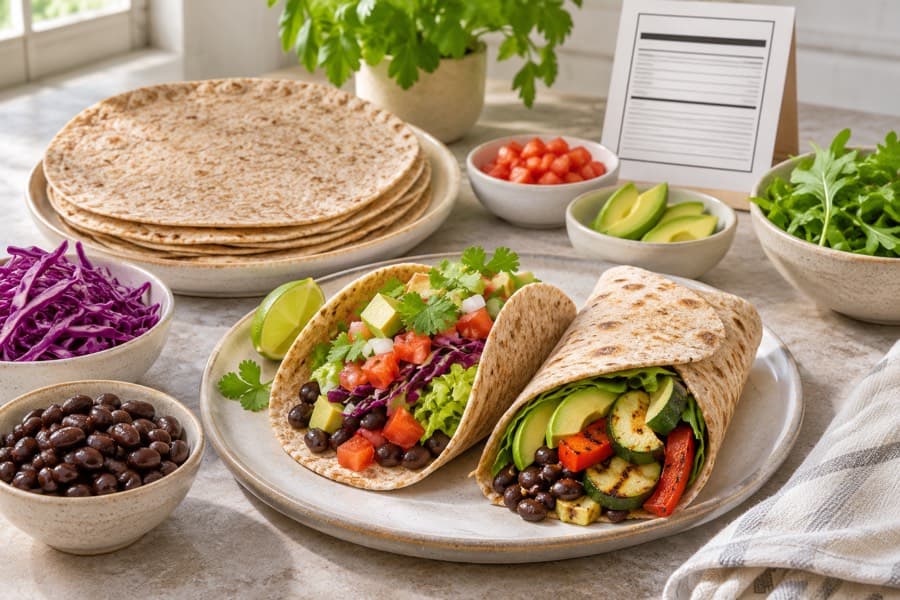
A tortilla can be a small but useful step toward more fiber at meals. The best high-fiber tortillas make tacos, wraps, quesadillas, and breakfast burritos more satisfying without requiring a perfect diet.
What counts as high fiber?
A practical label benchmark is 20 percent Daily Value or more. Since the current fiber Daily Value is 28 grams, that equals about 5 grams per serving. Compare fiber per tortilla as well as per serving because brands may list one large tortilla or two smaller ones.
Check the fiber source
Fiber may come from whole grains, beans, vegetable fibers, oat fiber, wheat fiber, flax, psyllium, or resistant starch. Whole-grain and legume-based tortillas can provide a recognizable food base, while added-fiber formulas may offer a soft wrap with fewer net carbohydrates. Neither is automatically best. Increase fiber gradually if added fibers cause gas or bloating, and drink enough fluids.
Look beyond net carbs
Net carbs should not replace the full Nutrition Facts panel. Check total carbohydrate, fiber, calories, protein, sodium, and serving size. A tortilla works best as part of a meal with protein, vegetables, and a satisfying fat source. Eggs with black beans and peppers, or chicken with cabbage and avocado, will usually be more filling than a tortilla with a small amount of cheese alone.
Compare protein, calories, and sodium
Some tortillas contribute a few grams of protein, but the filling should do most of the work. Choose a size that fits the meal instead of automatically choosing the lowest-calorie option. Sodium can add up when tortillas are combined with deli meat, cheese, canned beans, salsa, and packaged sauces, so compare similar products when the tortilla is a daily staple.
Read ingredients and consider gluten
A longer ingredient list is not automatically a problem because binders and conditioners can keep a high-fiber wrap flexible. If you prefer minimally processed foods, look for whole grains, beans, or other recognizable plant ingredients near the beginning. People who need gluten-free foods should choose certified gluten-free options and still check the fiber line because gluten-free does not automatically mean high fiber.
Match the tortilla to the meal
Small tortillas work well for tacos, large flexible wraps suit breakfast burritos, and a tortilla that crisps without turning gummy is better for quesadillas. Test one package in a normal meal before buying in bulk. The most useful option is one that tastes good and gets used repeatedly.
Build a higher-fiber meal
Use the tortilla as a starting point and add black beans or lentils, avocado, cabbage, peppers, spinach, tomatoes, and salsa. Spread fiber across the day rather than trying to eat a very large amount at one meal. A practical store check is simple: aim for about 5 grams of fiber per serving, review the ingredients, compare sodium and serving size, and choose a product your household will actually eat.
Further reading
Sources
- Food Labeling GuideU.S. Food and Drug AdministrationVerified
- Daily Value on the Nutrition and Supplement Facts LabelsU.S. Food and Drug AdministrationVerified
- Dietary Guidelines for Americans, 2020-2025Dietary Guidelines for AmericansVerified
- Healthy Eating for a Healthy WeightCenters for Disease Control and PreventionVerified
- Eating, Diet, and Nutrition for ConstipationNational Institute of Diabetes and Digestive and Kidney DiseasesVerified
Continue reading
Added Sugars: How to Spot Them on Food Labels
Learn how to spot added sugars on food labels, compare servings, recognize hidden sweeteners, and build more satisfying meals.
Plant vs. Whey Protein: Which Is Right for Your Goals?
Compare plant and whey protein powders by protein quality, digestion, metabolic-health fit, labels, and everyday practicality.
How to Cook Potatoes for Resistant Starch
Cooked-and-cooled potatoes can contain more resistant starch. Learn the practical cook–cool–serve method, food-safety limits, and what it may mean for blood sugar.