Low-Glycemic Fruits: A Practical Guide to Whole Fruit
Discover which whole fruits commonly fall in the low-GI range, why portions and fruit form matter, and how to build satisfying fruit snacks and meals.
By MetabolicFoods Editorial Team
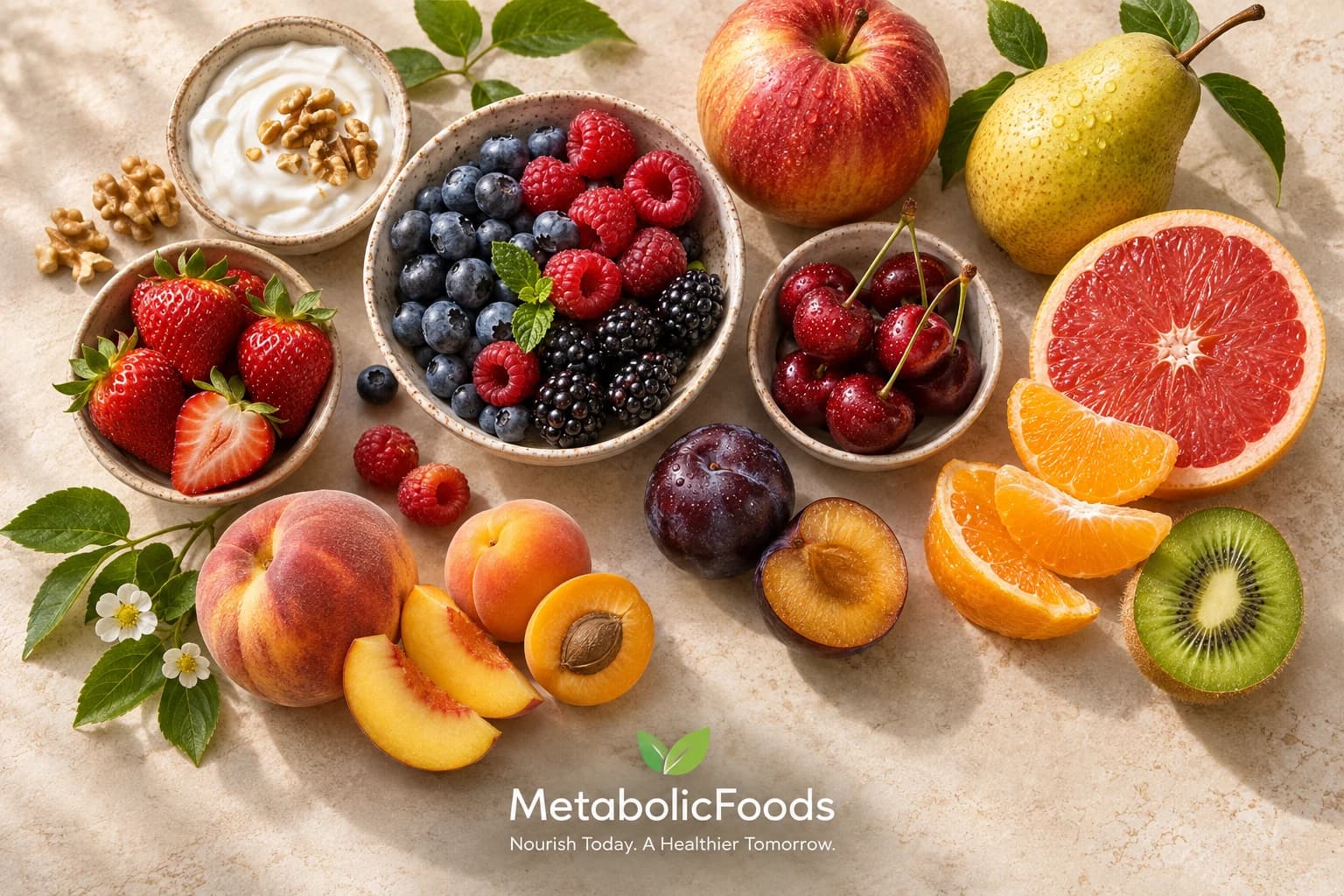
Berries at breakfast and an apple in the afternoon can fit comfortably into a blood-sugar-aware eating pattern. Many whole fruits fall in the low-glycemic range, and fruit also contributes water, fiber, vitamins, minerals, and a food structure that is very different from a sweetened drink or refined snack.
The useful question is not whether fruit is “good” or “bad.” It is which fruit, form, and portion fit your meal, appetite, and individual needs. Glycemic index can help with that decision, but it is only one part of the picture.
What Makes a Fruit Low Glycemic?
The glycemic index, or GI, ranks carbohydrate-containing foods according to their blood-glucose response compared with a reference food, usually glucose. On the glucose scale, a GI of 55 or less is generally classified as low, 56 to 69 as medium, and 70 or above as high.
Standard GI testing uses a portion containing a fixed amount of available carbohydrate, commonly 50 grams. That makes foods easier to compare under controlled conditions, but the test portion may not resemble the amount someone normally eats.
Glycemic load adds the available carbohydrate in a serving to the calculation. This is why portion still matters: a fruit’s GI does not tell you how much carbohydrate is in the amount on your plate.
Exact values can also vary with the cultivar, growing conditions, ripeness, processing, and testing method. The 2021 international GI tables show that many fruits test in the low-GI range, but they do not support one permanent number for every apple, banana, or bowl of berries. Treat GI as a comparison tool rather than a guarantee of an individual glucose response.
Whole Fruits Commonly Found in the Low-GI Range
The groups below are practical starting points based on published GI data. They are not a complete list, and a low GI does not make one fruit nutritionally superior to every other fruit.
Berries
Strawberries, raspberries, blackberries, and blueberries are easy to use in yogurt, oatmeal, or a snack bowl. They provide fiber and water in a relatively small-carbohydrate serving, although exact nutrition and GI values still depend on the berry and portion.
Use fresh or plain frozen berries. Sweetened frozen fruit, pie filling, and fruit sauces are different products, so check the ingredient list and Nutrition Facts label.
Apples and Pears
Apples and pears commonly appear in the low-GI range. Keeping the edible skin adds fiber, and the whole-fruit format requires more chewing than juice or puree.
Eat them on their own when that is satisfying, or pair slices with peanut butter, walnuts, cheese, or plain yogurt for a more substantial snack.
Oranges, Grapefruit, and Other Citrus
Whole oranges, grapefruit, clementines, and tangerines provide water and retain the fruit’s pulp and membranes. Their whole-fruit structure makes them different from drinking the extracted juice, even when the juice has no added sugar.
Grapefruit can interact with some medicines. If a medication label or clinician advises avoiding grapefruit, choose another fruit rather than assuming the interaction is minor.
Cherries and Stone Fruit
Cherries, peaches, plums, and apricots commonly have low published GI values. They can add sweetness to plain yogurt, cottage cheese, oats, salads, and savory meals without added sugar.
Fresh, frozen, and canned versions can all be useful. For canned fruit, choose products packed in water, their own juice, or 100% juice rather than heavy syrup when practical.
Kiwi
Kiwi is another whole fruit commonly found in the low-GI range. It works well in yogurt bowls, chia pudding, or alongside a protein-containing snack. Its seeds and flesh contribute fiber; the skin is edible, though eating it is a matter of preference.
What About Bananas, Mangoes, Grapes, and Melons?
These fruits do not need to be placed on a forbidden list. Published GI values vary, and the amount eaten can matter as much as the category assigned to the fruit.
Banana is a useful example of why details matter. A small study in people with type 2 diabetes found a lower glucose response to under-ripe bananas than to over-ripe bananas at the tested portion. That result supports treating ripeness as one possible factor—not promising that every slightly green banana will produce a specific response.
Mango, pineapple, grapes, watermelon, and cantaloupe can also fit into an overall nutritious pattern. Use a portion that fits the meal, and notice whether the fruit is satisfying on its own or works better alongside other foods. A measured bowl served with lunch is different from repeatedly grazing from a large container, regardless of the fruit’s GI category.
Whole Fruit, Puree, Smoothies, and Juice Are Not Identical
Processing changes how fruit is eaten. In a randomized crossover study in healthy adults, whole apples emptied from the stomach more slowly and produced greater fullness than equal-calorie apple puree or juice. That does not prove that every whole fruit always produces a lower glucose response than every juice, but it does show why form matters beyond the ingredient name.
Juice is easy to drink quickly and contains little of the intact fiber and structure found in whole fruit. Current American Diabetes Association guidance emphasizes whole fruit and recommends water over juice and other sugar-containing beverages for people with diabetes or at risk for diabetes.
A smoothie retains more of the fruit than extracted juice, but the recipe and serving size still matter. Combining several fruits with juice, sweetened yogurt, honey, or a large amount of dried fruit can create a concentrated drink that is easy to consume quickly.
For a more balanced smoothie, start with one practical portion of fruit, add a protein source such as plain Greek yogurt or an unsweetened protein powder, and include an ingredient such as chia, ground flax, or nut butter if it suits your needs. The goal is a satisfying meal or snack—not a claim that adding protein or fat cancels the carbohydrate.
Dried Fruit Is Concentrated, Not Automatically “Bad”
Removing water makes dried fruit compact. A small amount can contain the carbohydrate from a much larger volume of fresh fruit, which makes portions easy to underestimate.
That does not mean raisins, dates, dried apricots, or prunes are automatically high GI or unsuitable. Published values vary, and a randomized acute-feeding study found low-to-moderate GI values for several dried fruits. The practical issue is portion and product formulation. Choose unsweetened versions when available, check sweetened cranberries and dried mango for added sugar, and portion dried fruit before adding it to oatmeal, trail mix, or a snack plate.
How to Build a More Satisfying Fruit Snack
Fruit can be part of a snack or meal rather than a stand-alone carbohydrate every time. Protein, fat, and additional fiber may change digestion and can make the combination more filling, but no pairing guarantees a particular glucose result.
Simple combinations include:
- Berries with plain Greek yogurt and walnuts.
- A sliced apple or pear with peanut or almond butter.
- An orange with pistachios or cheese.
- Cherries with cottage cheese.
- Kiwi with chia pudding.
- A peach with plain yogurt and pumpkin seeds.
At meals, add citrus segments to a lentil and salmon salad, fold berries into a high-protein breakfast bowl, or serve grilled peaches with chicken and vegetables. Our guide to building a lower-glycemic meal explains why the full meal matters more than chasing one number.
Shopping and Storage Details That Help
Fresh and plain frozen fruit are both practical options. Frozen berries and cherries can reduce waste and move directly from the freezer to oatmeal, yogurt, or a smoothie.
For canned fruit and fruit cups, compare the ingredient list and choose fruit packed in water, its own juice, or 100% juice when available. For applesauce and fruit puree, look for unsweetened products rather than assuming every version is free of added sugar.
Keep several formats that match how you actually eat: portable apples or clementines, frozen berries for breakfast, and one seasonal fruit for variety. A realistic fruit routine is more useful than buying an idealized list that goes uneaten.
A Practical Bottom Line
Many berries, apples, pears, citrus fruits, cherries, peaches, plums, apricots, and kiwi commonly fall in the low-GI range. But cultivar, ripeness, processing, portion, and the rest of the meal can all change the context.
Choose whole fruit most often, use juice and dried fruit with attention to portion, and pair fruit with other foods when that makes the meal more satisfying. If you monitor glucose closely, use insulin or another glucose-lowering medicine, or have a condition that changes your nutrition needs, a registered dietitian or qualified clinician can help tailor fruit portions and timing without turning fruit into a food to fear.
Sources
- International tables of glycemic index and glycemic load values 2021: a systematic reviewThe American Journal of Clinical NutritionJuly 13, 2021Verified
- Added Sugars on the Nutrition Facts LabelU.S. Food and Drug AdministrationVerified
- Processing Apples to Puree or Juice Speeds Gastric Emptying and Reduces Postprandial Intestinal Volumes and Satiety in Healthy AdultsThe Journal of NutritionAugust 20, 2020Verified
- Effect of dried fruit on postprandial glycemia: a randomized acute-feeding trialNutrition & DiabetesDecember 11, 2018Verified
- Grapefruit Juice and Some Drugs Don't MixU.S. Food and Drug AdministrationVerified
- About Glycemic IndexUniversity of Sydney, Glycemic Index Research and GI DatabaseVerified
- Influence of ripeness of banana on the blood glucose and insulin response in type 2 diabetic subjectsDiabetic MedicineOctober 1, 1992Verified
- Facilitating Positive Health Behaviors and Well-being to Improve Health Outcomes: Standards of Care in Diabetes—2026Diabetes CareVerified
Continue reading
Is Brown Rice Low Glycemic? Not Always
Brown rice is not consistently low glycemic. See how variety, processing, portion, cooking, cooling, and the complete meal shape the practical answer.
Is Oatmeal Low Glycemic? It Depends on the Oats
Oatmeal can be low or moderate glycemic depending on the oat format, processing, portion, and complete meal. Learn how steel-cut, rolled, and instant oats differ.
12 Low-Glycemic Breakfast Ideas for Real Mornings
Build a lower-glycemic breakfast with 12 practical ideas featuring yogurt, oats, beans, lentils, eggs, tofu, fruit, nuts, seeds, and vegetables.