Is Brown Rice Low Glycemic? Not Always
Brown rice is not consistently low glycemic. See how variety, processing, portion, cooking, cooling, and the complete meal shape the practical answer.
By MetabolicFoods Editorial Team
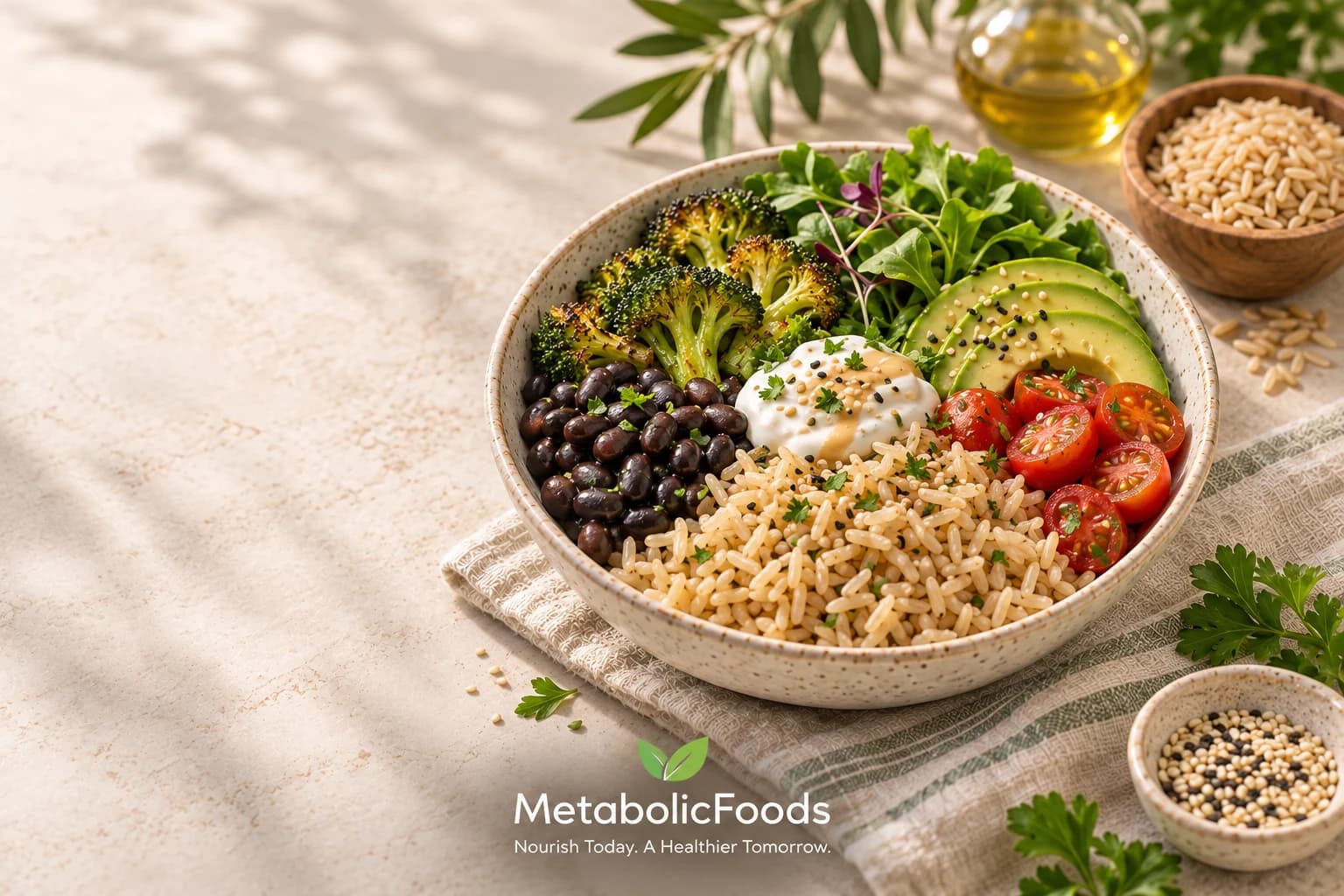
Is brown rice low glycemic? Not reliably. Brown rice can test low, medium, or even high on the glycemic index depending on the variety, starch structure, processing, and preparation. Keeping the bran layer makes it a whole grain, but “whole grain” and “low GI” are not interchangeable labels.
That does not make brown rice a poor choice. It means the useful decision is more specific: choose a rice product that suits your goals, keep the portion visible, and consider the complete meal rather than expecting the color of the grain to predict your blood-glucose response.
What “Low Glycemic” Means
The glycemic index, or GI, ranks carbohydrate-containing foods by the blood-glucose response they produce compared with a reference food, usually glucose. On the glucose scale, a GI of 55 or less is classified as low, 56 to 69 as medium, and 70 or more as high.
GI testing uses a portion containing a standardized amount of available carbohydrate. That is useful for comparing foods under controlled conditions, but it may require a larger or smaller portion than you normally eat. Glycemic load also considers how much available carbohydrate is in the amount eaten, making portion size part of the calculation.
A systematic review of rice studies found GI values ranging from 48 to 93 across the rice varieties and preparations examined. That span crosses all three GI categories, which is why one number should not be assigned to all brown rice.
Why Brown Rice GI Varies
Rice is not one uniform starch. Several factors can change its measured response.
Variety and Starch Structure
Rice cultivars differ in their proportions and structures of amylose and amylopectin. Higher amylose content is often associated with slower starch digestion, but cultivar and other grain characteristics also matter. Grain length or a name such as “basmati” can be useful product information, but neither guarantees a low GI without testing that specific rice.
Processing
Brown rice retains the bran and germ that are removed to make white rice. However, milling is only one part of the answer. Parboiling changes the starch before the grain reaches your kitchen and can reduce glycemic response in some rice products. A package that identifies the variety or says “parboiled” provides more actionable information than color alone, although the exact response remains product-specific.
Cooking, Storage, and Reheating
Water, heat, cooking time, storage, and reheating can change how accessible rice starch is to digestive enzymes. The evidence does not support a simple home rule such as “firm brown rice is always low GI” or “soft rice is always high GI.” Cooking instructions also differ because varieties need different amounts of water and time.
The most defensible approach is to cook rice safely according to the package, avoid assigning a GI from texture alone, and treat published values as descriptions of the tested product—not a guarantee for every pot of rice.
Is Brown Rice Better Than White Rice for Blood Sugar?
Brown rice often contributes more fiber and retains more of the grain than white rice, but those nutritional differences do not ensure a lower glucose response in every comparison.
In the rice-processing systematic review, brown rice produced a lower post-meal glucose and insulin response than white rice when both were compared at identical cooking times. At the longer cooking times normally used for brown rice, however, the differences were smaller and inconsistent.
Longer-term evidence also needs restraint. A 2022 systematic review combined prospective cohort studies with randomized trials. Higher brown-rice intake was associated with lower type 2 diabetes risk in three U.S. cohorts, but observational associations do not prove cause and effect. In substitution trials, replacing white rice with brown rice produced inconsistent changes in cardiometabolic risk factors.
So brown rice can be a useful whole-grain option, but it should not be presented as a treatment or as a guaranteed low-glycemic substitute.
Portion and the Complete Meal Matter
Rice is a concentrated carbohydrate food. Even when a rice tests low or medium GI, the amount served still affects the carbohydrate load of the meal. There is no universal cup measurement that works for every person, medication plan, appetite, or activity level.
Use the package serving size as a reference, then compare it with the amount you actually plate. If glucose management is a priority, a practical rice bowl can include:
- a visible rice portion rather than an unmeasured base;
- a protein source such as fish, chicken, tofu, eggs, lentils, or beans;
- plenty of non-starchy vegetables;
- flavor from herbs, spices, citrus, yogurt, tahini, avocado, nuts, or seeds; and
- sauces counted as part of the meal, especially when they contain added sugar.
Protein, fat, fiber, and food structure can change the response to a mixed meal, but they do not cancel the carbohydrate in rice. Our guide to building a lower-glycemic meal explains this complete-plate approach in more detail.
Does Cooling and Reheating Rice Lower Its Glycemic Impact?
Cooling cooked starch can produce resistant starch through retrogradation, but the rice evidence is specific and mixed. It should not be turned into a promise that leftover brown rice will always cause a smaller glucose rise.
In a crossover study of 32 people with type 1 diabetes, long-grain white rice that was refrigerated for 24 hours and reheated produced a lower post-meal glucose response than freshly cooked rice. The same study also reported more hypoglycemia when participants used their standard insulin dose. This result involved white rice, a small clinical population, and a defined protocol; it is particularly important not to generalize it into insulin-dosing advice.
Other studies complicate the picture. In 21 healthy adults, two refrigerated-and-reheated white-rice preparations with very different resistant-starch contents did not produce significantly different GI results. In another study, refrigerated-and-reheated parboiled rice did not produce a significantly different glucose response from freshly cooked parboiled rice, although both parboiled conditions produced a lower response than the tested medium-grain white rice.
Cooling can still be a convenient way to prepare leftovers, and you can read more about the mechanism in What Is Resistant Starch?. Treat any glycemic effect as a possible product- and person-specific difference, not a free pass for a larger serving.
Store and Reheat Rice Safely
Food safety comes before a metabolic experiment. Refrigerate cooked rice within two hours—within one hour if the air temperature is above 90°F/32°C—in shallow containers at 40°F/4°C or below. Use refrigerated leftovers within three to four days and reheat them to 165°F/74°C.
If you use insulin or another medicine that can cause hypoglycemia, do not change the dose because rice was cooled or reheated. Discuss meal-related dose adjustments with your diabetes-care team.
How to Shop for Brown Rice
When comparing packages, look for information you can actually use:
1. Specific variety: long-grain, short-grain, basmati, jasmine, or another named cultivar is more informative than “brown rice” alone, but still not a GI guarantee. 2. Processing: parboiled rice may behave differently from conventionally milled rice. 3. Serving size: compare packages using the amount you expect to eat. 4. Total carbohydrate and fiber: read both on the Nutrition Facts label rather than relying on front-of-package claims. 5. Added ingredients: seasoned pouches can include sauces, sweeteners, fats, and sodium that plain rice does not. 6. Preparation directions: ready-to-eat, quick-cooking, and traditional rice are processed differently.
Published GI data for the exact product can add context when available. A GI value from a different cultivar, country, or preparation method is not a precise measurement of the rice in your cupboard.
What About Other Grains?
Switching grains can change taste, texture, cooking time, fiber, and the meal’s glycemic profile, but category names still do not guarantee one response. Barley, bulgur, quinoa, farro, and wild rice can all be useful alternatives depending on the product and portion. Legumes can also replace some or all of the rice while adding protein and fiber.
Choose based on the full meal and what you will eat consistently. Rotating grains and legumes is often more practical than searching for one “perfect” carbohydrate.
The Bottom Line
Brown rice is not consistently low glycemic. Published rice values span low, medium, and high GI categories, and the result depends on the cultivar, starch structure, processing, cooking, storage, and test conditions.
Brown rice can still fit a blood-sugar-aware eating pattern. Keep the portion visible, read the specific product label, build the plate with protein and vegetables, and do not assume that cooling or reheating guarantees a lower response. If you monitor glucose, your own repeatable response to a defined meal may be more useful than a generic rice number.
If you use insulin, take glucose-lowering medication, are pregnant, or have medical nutrition needs, work with a registered dietitian or qualified clinician to personalize the portion and meal.
Sources
- International tables of glycemic index and glycemic load values 2021: a systematic reviewThe American Journal of Clinical NutritionJuly 13, 2021Verified
- Effect of variety and cooking method on resistant starch content of white rice and subsequent postprandial glucose response and appetite in humansAsia Pacific Journal of Clinical NutritionVerified
- How do I reheat leftover take-out food?USDA Food Safety and Inspection ServiceVerified
- Effects of Diet, Lifestyle, Chrononutrition and Alternative Dietary Interventions on Postprandial Glycemia and Insulin ResistanceNutrientsFebruary 16, 2022Verified
- How to Understand and Use the Nutrition Facts LabelU.S. Food and Drug AdministrationVerified
- Effect of Cold Storage and Reheating of Parboiled Rice on Postprandial Glycaemic Response, Satiety, Palatability and Chewed Particle Size DistributionNutrientsMay 10, 2017Verified
- Influence of resistant starch resulting from the cooling of rice on postprandial glycemia in type 1 diabetesNutrition & DiabetesApril 16, 2022Verified
- A systematic review of the influence of rice characteristics and processing methods on postprandial glycaemic and insulinaemic responsesBritish Journal of NutritionVerified
- About Glycemic IndexUniversity of Sydney, Glycemic Index Research and GI DatabaseVerified
- White rice, brown rice and the risk of type 2 diabetes: a systematic review and meta-analysisBMJ OpenSeptember 27, 2022Verified
- How do I handle leftovers safely?USDA Food Safety and Inspection ServiceVerified
Continue reading
Is Oatmeal Low Glycemic? It Depends on the Oats
Oatmeal can be low or moderate glycemic depending on the oat format, processing, portion, and complete meal. Learn how steel-cut, rolled, and instant oats differ.

12 Low-Glycemic Breakfast Ideas for Real Mornings
Build a lower-glycemic breakfast with 12 practical ideas featuring yogurt, oats, beans, lentils, eggs, tofu, fruit, nuts, seeds, and vegetables.

Low-Glycemic Snacks: 10 Satisfying Ideas
Build low-glycemic snacks with practical combinations of fruit, vegetables, legumes, dairy or soy foods, nuts, seeds, and intact grains.