Is Oatmeal Low Glycemic? It Depends on the Oats
Oatmeal can be low or moderate glycemic depending on the oat format, processing, portion, and complete meal. Learn how steel-cut, rolled, and instant oats differ.
By MetabolicFoods Editorial Team
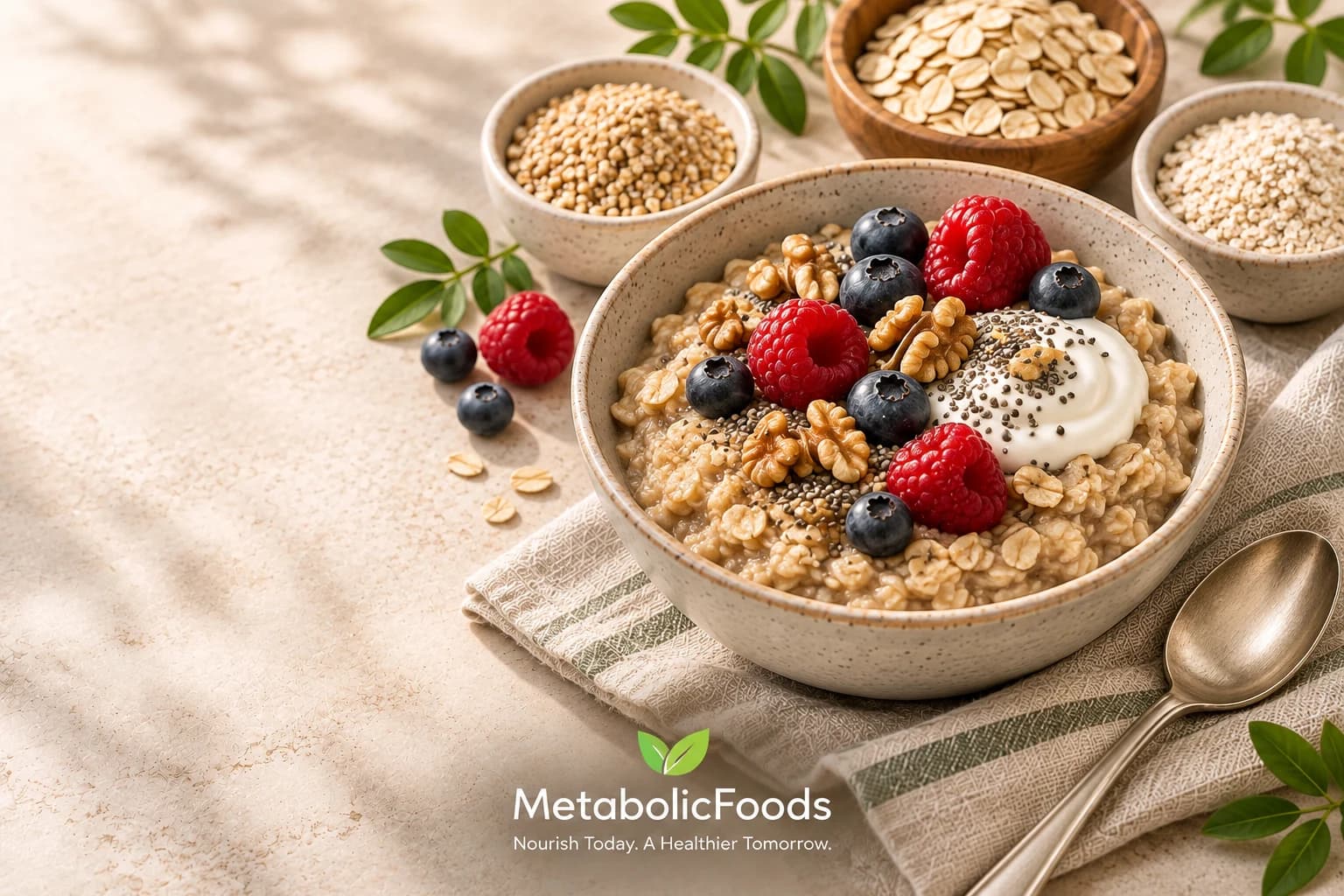
Is oatmeal low glycemic? Sometimes—but “oatmeal” is not one food with one glycemic-index value. The physical structure of the oats, how much processing they receive, the portion, and the rest of the bowl can all change the practical answer.
Steel-cut oats and thicker oat flakes have the strongest evidence for a lower post-meal glucose response than more disrupted oat products. Old-fashioned rolled oats can also be a practical choice, while quick or instant oats are more variable and often produce a faster response. None of those labels guarantees what will happen for every person or every product.
What Does “Low Glycemic” Mean?
The glycemic index, or GI, ranks carbohydrate-containing foods by their blood-glucose response compared with a reference food, usually glucose. On the glucose scale, values of 55 or less are generally classified as low, 56 to 69 as medium, and 70 or above as high.
GI testing uses a portion containing a standardized amount of available carbohydrate. That makes it useful for comparing foods, but it is not the same as measuring your usual breakfast. Glycemic load adds the available carbohydrate in the amount eaten, bringing portion size into the calculation.
Published GI values for oat products span more than one category. Variety, flake thickness, milling, pre-cooking, recipe, and testing differences are among the reasons a single number should not be assigned to all oatmeal.
Steel-Cut, Rolled, Quick, and Instant Oats
The clearest distinction is not that one oat is “good” and another is “bad.” It is how much of the grain’s physical structure remains when you eat it.
Steel-Cut Oats
Steel-cut oats are groats cut into coarse pieces. In a randomized crossover trial of 30 adults without diabetes, steel-cut oatmeal produced a lower glucose peak than instant oatmeal and a ready-to-eat oat cereal when the tested portions contained the same available carbohydrate. Its glucose response over time was also lower than the refined-rice cereal control.
This supports steel-cut oats as a strong option when a chewier texture and longer cooking time work for you. It does not establish one universal GI for every brand or recipe.
Old-Fashioned Rolled Oats
Rolled oats are steamed and flattened into flakes. They retain more structure than thin quick-cooking flakes, but thickness varies among products.
A systematic review and meta-analysis of randomized trials found that intact oat kernels and thick oat flakes produced lower post-meal glucose and insulin responses than refined-grain controls. Thin, quick, and instant flakes did not show the same advantage as a group. That evidence favors less-disrupted oats, but it does not mean every rolled-oat product will test as low GI.
Quick and Instant Oats
Quick oats are usually cut smaller or rolled thinner so they cook faster. Instant oats may also be pre-cooked. Those changes make the starch more accessible during digestion, which helps explain why more processed oat formats can produce a higher response.
Convenience still matters. Plain quick or instant oats can fit a balanced breakfast, especially when they make breakfast realistic. Treat them as product-specific foods: compare the serving size, total carbohydrate, fiber, protein, and added sugars rather than relying on the word “oats” alone.
Flavored packets add another variable. The packet may contain added sugars and a smaller or larger oat serving than the product beside it. Front-of-package language such as “whole grain,” “protein,” or “maple” does not replace the Nutrition Facts panel.
Are Overnight Oats Low Glycemic?
Overnight oats are not automatically low glycemic, but one randomized controlled trial offers useful evidence. In adults without diabetes, rolled oats soaked overnight in skim milk produced lower glucose and insulin responses than a cream-of-rice comparison meal containing the same available carbohydrate. The difference remained when both meals included sugar, nuts, and seeds.
The finding applies to the recipes and participants studied; it does not prove that every overnight-oats jar is low GI. The trial also involved researchers affiliated with a contract glycemic-testing laboratory and employees of an oat manufacturer, which the paper disclosed.
For a practical jar, start with plain rolled oats and an unsweetened liquid, then add ingredients for flavor and balance. Plain yogurt, nuts, seeds, and whole berries are options. Large amounts of syrup, sweetened yogurt, juice, or dried fruit can substantially change the carbohydrate content of the finished meal.
What About Oat Beta-Glucan?
Oats contain beta-glucan, a soluble fiber that can increase viscosity in the digestive tract. Food structure and beta-glucan both contribute to how oat foods behave, but beta-glucan content alone does not erase the effect of processing.
The U.S. Food and Drug Administration allows an authorized health claim for eligible whole-oat foods that provide a specified amount of beta-glucan soluble fiber per serving and meet other requirements. That claim concerns coronary heart disease risk in the context of a qualifying diet; it is not a guarantee that an oat product has a low GI.
How to Build a More Balanced Bowl
Begin with the oat format you will actually eat. Steel-cut or thick rolled oats preserve more structure, while plain quick oats may be the workable choice on a rushed morning. Then consider the whole meal:
- Use the package serving size as a reference and compare it with the amount in your bowl.
- Include a clear protein source, such as plain Greek yogurt, cottage cheese, milk, fortified soy milk, eggs, or tofu.
- Add texture and fiber with berries, chia, ground flax, walnuts, almonds, or peanut butter.
- Sweeten for taste rather than assuming honey, maple syrup, coconut sugar, or date syrup is metabolically neutral.
- Count granola, dried fruit, sweetened yogurt, and flavored milk as part of the bowl, not as invisible toppings.
Protein, fat, and fiber can change the response to a mixed meal and may improve fullness, but they do not “cancel” the carbohydrate in a large oat portion. The useful question is whether the complete breakfast fits your appetite, preferences, and glucose-management needs.
Savory oatmeal is another option. Top plain oats with an egg or tofu, greens, mushrooms, avocado, herbs, and pepper. This changes the flavor profile without requiring a sweetener.
For more complete morning combinations, see our low-glycemic breakfast ideas and guide to protein at breakfast.
A Grocery Checklist for Oatmeal
When comparing oat products, check:
1. Oat format: steel-cut, thick rolled, old-fashioned, quick, or instant. 2. Serving size: packages do not all define one serving the same way. 3. Total carbohydrate and fiber: read both in the context of the portion you eat. 4. Added sugars: especially in flavored packets, cups, and “protein oatmeal.” 5. Protein: compare actual grams rather than the product name. 6. Ingredients: plain oats may list only oats; multi-ingredient products need a fuller label review.
A plain product is easier to customize, but a flavored packet is not automatically off-limits. The tradeoff may be worth it for convenience or taste. Compare like with like, then decide what supports the meal you are trying to build.
Portion and Personal Response Still Matter
A food can have a favorable GI result in standardized testing while a large serving still delivers substantial carbohydrate. Conversely, a modest serving of a more processed oat product may fit someone’s meal plan. GI and glycemic load describe different parts of that picture.
Individual responses also vary with glucose regulation, medication, sleep, activity, stress, and what else is eaten. If you use insulin or another glucose-lowering medicine, are pregnant, or manage a condition that changes your nutrition needs, a registered dietitian or qualified clinician can help personalize the portion and meal.
The practical answer is not that all oatmeal is low glycemic. Choose a less-disrupted oat format when it suits you, keep the portion visible, read flavored-product labels, and build the complete bowl around your needs.
Sources
- International tables of glycemic index and glycemic load values 2021: a systematic reviewThe American Journal of Clinical NutritionJuly 13, 2021Verified
- Added Sugars on the Nutrition Facts LabelU.S. Food and Drug AdministrationVerified
- Impact of oat processing on glycaemic and insulinaemic responses in healthy humans: a randomised clinical trialBritish Journal of NutritionMay 9, 2019Verified
- Effects of Diet, Lifestyle, Chrononutrition and Alternative Dietary Interventions on Postprandial Glycemia and Insulin ResistanceNutrientsFebruary 16, 2022Verified
- Food Labeling GuideU.S. Food and Drug AdministrationVerified
- A Systematic Review and Meta-Analysis of Randomized Controlled Trials on the Effects of Oats and Oat Processing on Postprandial Blood Glucose and Insulin ResponsesThe Journal of NutritionDecember 8, 2020Verified
- How to Understand and Use the Nutrition Facts LabelU.S. Food and Drug AdministrationVerified
- About Glycemic IndexUniversity of Sydney, Glycemic Index Research and GI DatabaseVerified
- Glycaemic and insulinaemic impact of oats soaked overnight in milk vs. cream of rice with and without sugar, nuts, and seeds: a randomized, controlled trialEuropean Journal of Clinical NutritionOctober 5, 2018Verified
Continue reading
12 Low-Glycemic Breakfast Ideas for Real Mornings
Build a lower-glycemic breakfast with 12 practical ideas featuring yogurt, oats, beans, lentils, eggs, tofu, fruit, nuts, seeds, and vegetables.
Low-Glycemic Snacks: 10 Satisfying Ideas
Build low-glycemic snacks with practical combinations of fruit, vegetables, legumes, dairy or soy foods, nuts, seeds, and intact grains.
Low-Glycemic Fruits: A Practical Guide to Whole Fruit
Discover which whole fruits commonly fall in the low-GI range, why portions and fruit form matter, and how to build satisfying fruit snacks and meals.