12 High-Fiber Breakfast Ideas That Actually Satisfy
Build a practical high-fiber breakfast with oats, beans, lentils, fruit, vegetables, whole grains, nuts, and seeds—without relying on rigid targets.
By MetabolicFoods Editorial Team
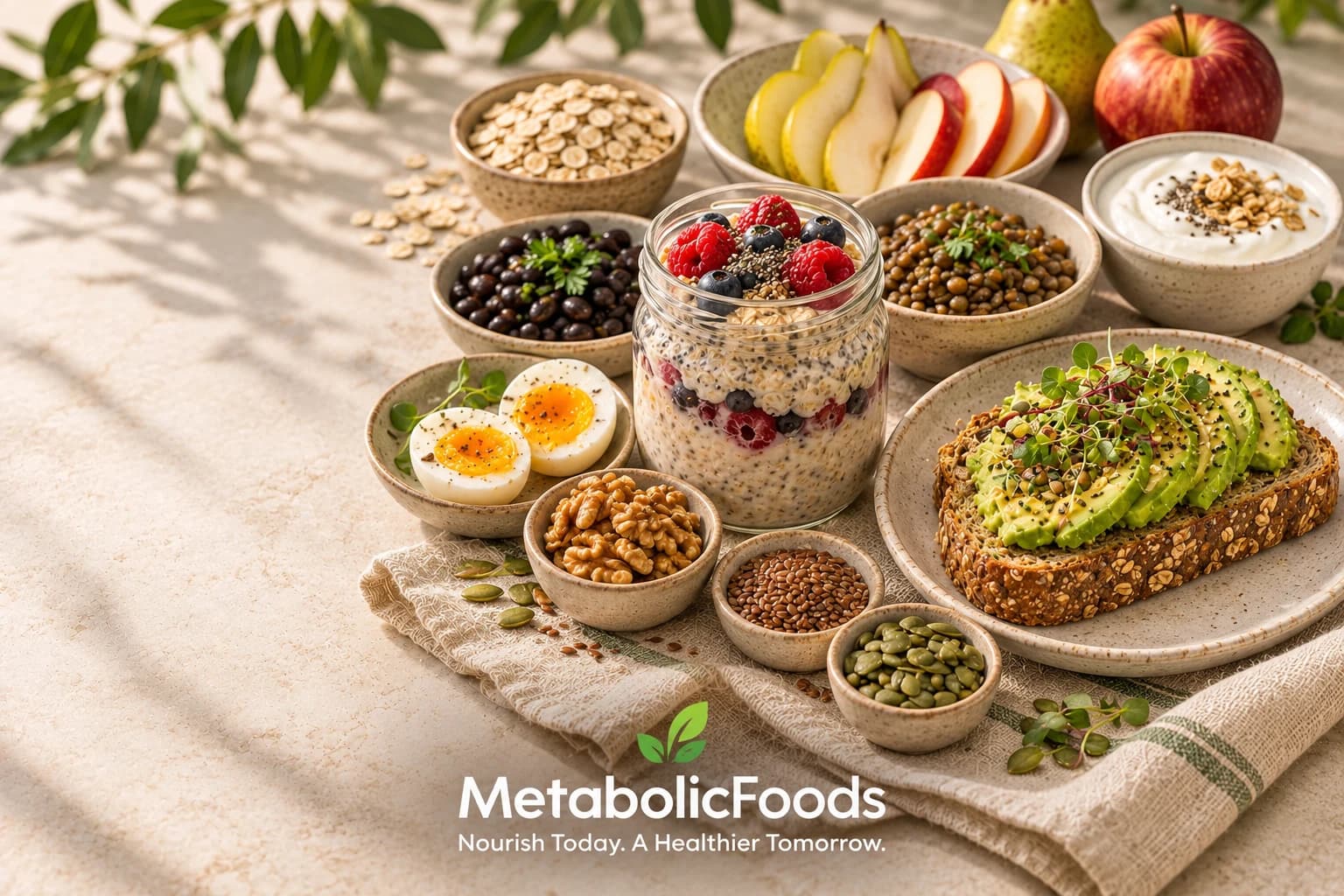
Breakfast is an easy place to add fiber without turning the meal into a project. Oats, beans, lentils, fruit, vegetables, whole grains, nuts, and seeds can make a morning meal more substantial while adding different types of fiber.
Fiber needs vary. The FDA Daily Value on the Nutrition Facts label is 28 grams per day, while NIDDK gives a general adult range of 22 to 34 grams depending on age and sex. A breakfast does not need to carry the whole day’s target. Choose a combination you enjoy, then build the rest of the day around varied plant foods.
What makes a breakfast high in fiber?
The most dependable sources are minimally processed plant foods: oats, bran cereal, beans, lentils, berries, pears, apples with the skin, avocado, chia, flax, nuts, seeds, and whole-grain breads. Check the Nutrition Facts panel because “whole grain” does not guarantee a large amount of fiber, and serving sizes differ.
For a more balanced meal, pair a fiber source with a protein food such as Greek yogurt, eggs, cottage cheese, tofu, milk, or unsweetened soy yogurt. Nuts, seeds, or avocado can add flavor and fat. There is no single required combination; appetite, culture, schedule, budget, and tolerance all matter.
12 high-fiber breakfast ideas for real mornings
1. Overnight oats with berries and chia
Combine rolled oats, milk or soy milk, plain Greek yogurt, chia seeds, and fresh or frozen berries. Add walnuts if you like. Warm the mixture briefly or bake the same ingredients if you prefer a different texture.
2. Savory oatmeal with egg and vegetables
Cook steel-cut or rolled oats in water or broth. Top with an egg, sautéed spinach, mushrooms, and avocado. Salsa or chili crisp can add flavor; compare sodium if you use packaged sauces often.
3. Yogurt bowl with pear, flax, and nuts
Start with plain Greek yogurt or unsweetened soy yogurt. Add a pear with the skin, ground flaxseed, cinnamon, and almonds or pistachios. Compare flavored yogurts for added sugar and fiber per serving.
4. Black bean breakfast tacos
Fill warm corn tortillas with seasoned black beans, scrambled eggs or tofu, pico de gallo, cabbage, and avocado. Rinse canned beans before warming if you want to reduce some of the sodium, then season with cumin, garlic, and lime.
5. Whole-grain toast with avocado and white beans
Mash avocado with lemon and pepper. Spread it on whole-grain toast, then add lightly mashed white beans and sliced tomato. Compare fiber per slice because bread serving sizes vary.
6. A high-fiber smoothie built around whole foods
Blend unsweetened milk, plain yogurt or tofu, berries, spinach, oats, and chia or ground flax. Juice, sweetened yogurt, several bananas, and sweetened protein powder can quickly raise added or total sugar, so check the label and recipe. If a liquid breakfast does not keep you satisfied, pair it with something you chew, such as nuts or an egg.
7. Bran cereal with fruit and milk
Choose a bran cereal with a simple ingredient list and compare fiber, added sugar, and serving size. Serve it with milk or fortified soy milk and add raspberries, banana, or apple. If you are new to higher-fiber meals, start with a smaller portion and increase gradually.
8. Breakfast quinoa bowl with apple and peanut butter
Reheat cooked quinoa with milk, cinnamon, and diced apple, then add peanut butter. Prep extra quinoa at dinner for a quick breakfast. Add chia or a small amount of dried fruit if you want more fiber or sweetness.
9. Vegetable and lentil egg muffins
Whisk eggs with cooked lentils, bell pepper, spinach, onion, and a little cheese, then bake in a muffin pan. Pair two or three muffins with fruit or whole-grain toast. Lentils make the muffins more fiber-forward than vegetables alone.
10. Cottage cheese with kiwi, berries, and seeds
Top cottage cheese with kiwi, berries, pumpkin seeds, and chia. Cottage cheese supplies protein but little fiber by itself, so the fruit and seeds are doing the fiber work. Compare sodium across brands if that matters for you.
11. Peanut butter banana toast with hemp and flax
Spread natural peanut butter on whole-grain toast, then add banana, hemp hearts, and ground flaxseed. For more fiber, replace part of the banana with berries or add an apple on the side.
12. Leftover lentil bowl with a breakfast egg
Reheat leftover lentils or a lentil-grain salad, then add an egg or tofu, greens, avocado, and yogurt or tahini sauce. A breakfast can be assembled from prepared components; it does not need to follow a narrow morning-food script.
Increase fiber gradually and drink enough fluid
A sudden jump in fiber can cause gas, bloating, or changes in bowel habits. NIDDK recommends adding fiber a little at a time and drinking enough liquids to help it work better. The right fluid amount depends on your health, activity, environment, and any fluid restriction.
Variety matters as much as the total. Rotate oats, beans, lentils, fruit, whole grains, nuts, and seeds so breakfast stays practical and does not depend on one ingredient. If you have a digestive condition, a history of bowel narrowing, a swallowing problem, or individualized medical nutrition needs, ask a qualified clinician for advice. Persistent or severe symptoms need evaluation rather than repeated breakfast changes.
The bottom line
The best high-fiber breakfast is one you can repeat. Start with a plant-food fiber source, add a protein food if it works for you, compare labels on packaged ingredients, and increase portions gradually. Use the ideas above as flexible templates—not promises that one meal will produce a particular health or blood-sugar outcome.
For more practical guidance, compare our best high-fiber cereal guide, gradual fiber increase guide, and explanation of soluble versus insoluble fiber.
Sources
- Added Sugars on the Nutrition Facts LabelU.S. Food and Drug AdministrationVerified
- Eating, Diet, & Nutrition for ConstipationNational Institute of Diabetes and Digestive and Kidney Diseases (NIH)Verified
- Carbohydrate quality and human health: a series of systematic reviews and meta-analysesThe LancetJanuary 10, 2019Verified
- How to Understand and Use the Nutrition Facts LabelU.S. Food and Drug AdministrationVerified
- Effect of short- and long-term protein consumption on appetite and appetite-regulating gastrointestinal hormones, a systematic review and meta-analysis of randomized controlled trialsPhysiology & BehaviorAugust 5, 2020Verified
- Questions and Answers on Dietary FiberU.S. Food and Drug AdministrationVerified
- Dietary Guidelines for Americans, 2020–2025U.S. Department of Health and Human Services and U.S. Department of AgricultureVerified
Continue reading
Best High Fiber Tortillas: What to Look For
Compare high-fiber tortillas by fiber amount, ingredients, digestion, protein, sodium, texture, and how they fit into balanced meals.
Added Sugars: How to Spot Them on Food Labels
Learn how to spot added sugars on food labels, compare servings, recognize hidden sweeteners, and build more satisfying meals.

Plant vs. Whey Protein: Which Is Right for Your Goals?
Compare plant and whey protein powders by protein quality, digestion, metabolic-health fit, labels, and everyday practicality.